
Quite a few years ago, now, I saw a tempting-looking dish on a Turkish language recipe website. It was called Dalyan Köfte – a Turkish meatloaf recipe – and I immediately thought, “I’m going to make that!”
But I never did. Until recently, that is…
Barry made a classic meatloaf a few months ago and we loved it. So it jogged the memory. And Dalyan Köfte is now going to be a definite regular on the menu.
It’s tender, juicy, packed with flavour, high in protein (and all the other great nutrients we get from red meat).
And you get to incorporate some vegetables, too. Always a bonus!
Not That Kind Of Dalyan Köfte
Turkish cuisine has a sizable number of dishes that are named after their place of origin.
Tekirdağ köfte, Inegöl köfte, Izmir köfte, Adana kebab, Urfa kebab, Antalya piyaz…and so on…
Dalyan köfte is not one of those dishes.
Many of us know and love the pretty southwest Turkish town of Dalyan. But this is not the place that gives our Turkish meatloaf its name.
As far as we know, our Turkish meatloaf is not named after a place, at all. But more of that as we start to make our dalyan köfte…
How We Make Dalyan Köfte
Simply put, we’re making a large köfte loaf that is going to be stuffed with mixed vegetables.
And it’s a great, easy dish to make as a centrepiece for the dinner table if you’ve got friends or the whole family to entertain on special occasions.
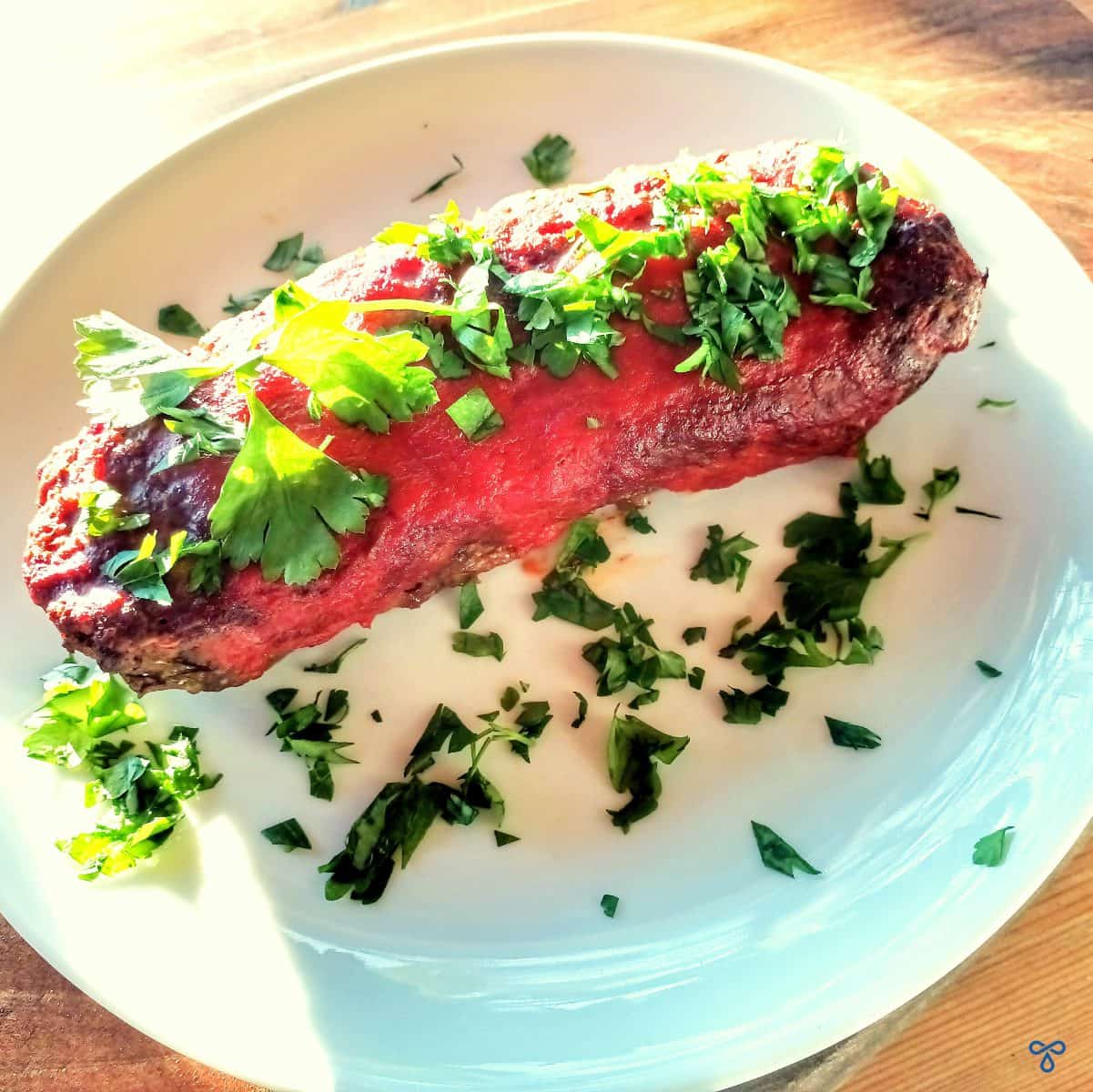
Serve it whole, as in the photo above, garnished with roughly shopped fresh parsley. Or you can cut it into thick slices it up beforehand so that everyone can help themselves.
The Meat Mixture
Because we’re making a meatloaf, we need a minced/ground meat mixture that is going to be pliable – well-kneaded so that it doesn’t crack and break up in the oven.
You can make your mixture in a large mixing bowl. Or, as we do, on a large serving plate.
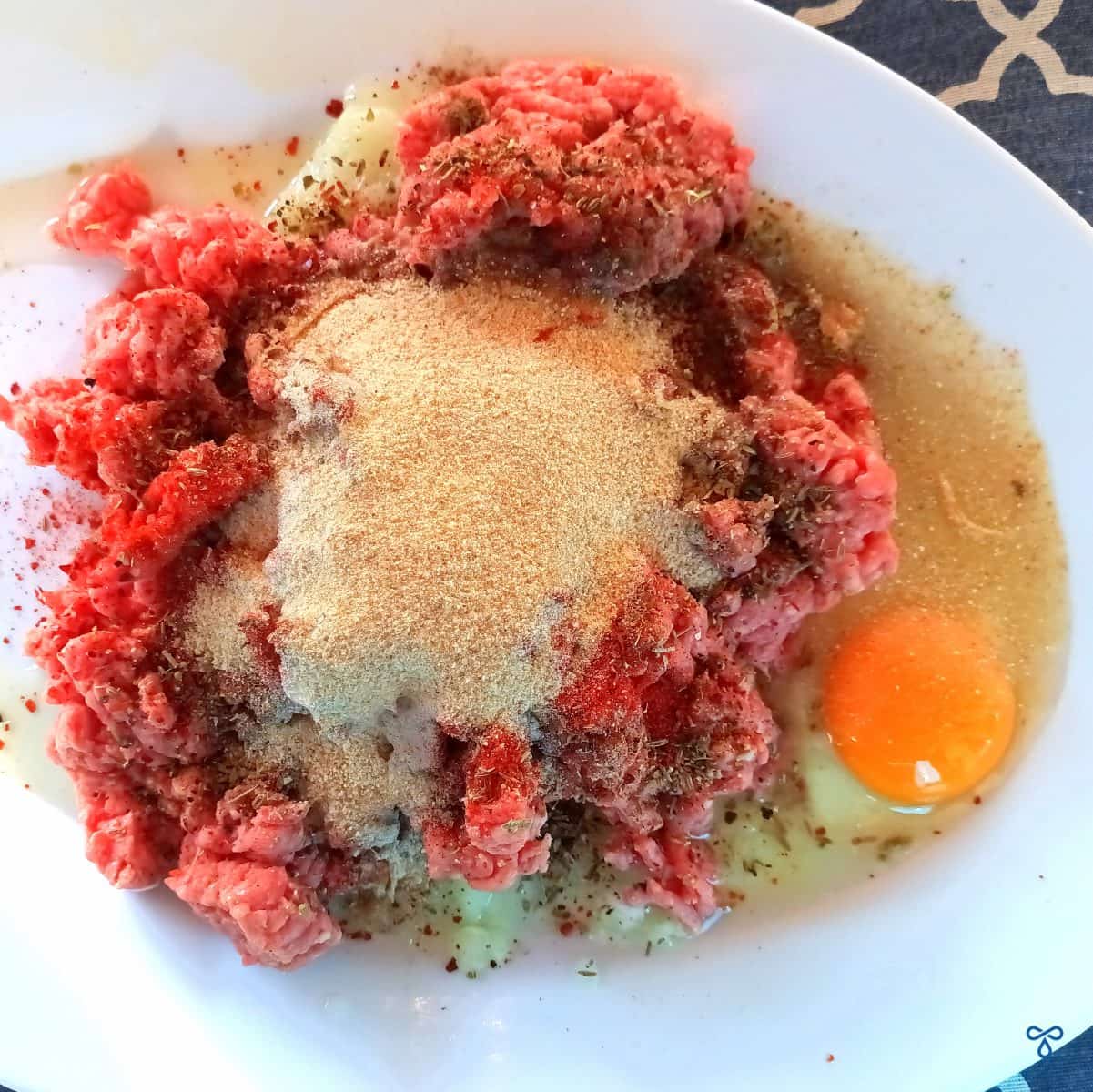
As well as our solid ingredients, we also add a splash of water to the mixture. That makes our meat more smooth and soft without it becoming too wet.
In Turkish cooking, ‘galeta unu’ is often used in köfte recipes where breadcrumbs are required. Galeta unu is very fine breadcrumbs, like a coarse flour. But you can use regular breadcrumbs if you have them to hand.
Along with salt and black pepper, we love lots of flavour in our dalyan köfte.
A generous helping of herbs and spices:
- Onion and fresh garlic
- Pul biber (hot chilli / red pepper flakes)
- Allspice
- Rosemary
- Cumin seeds
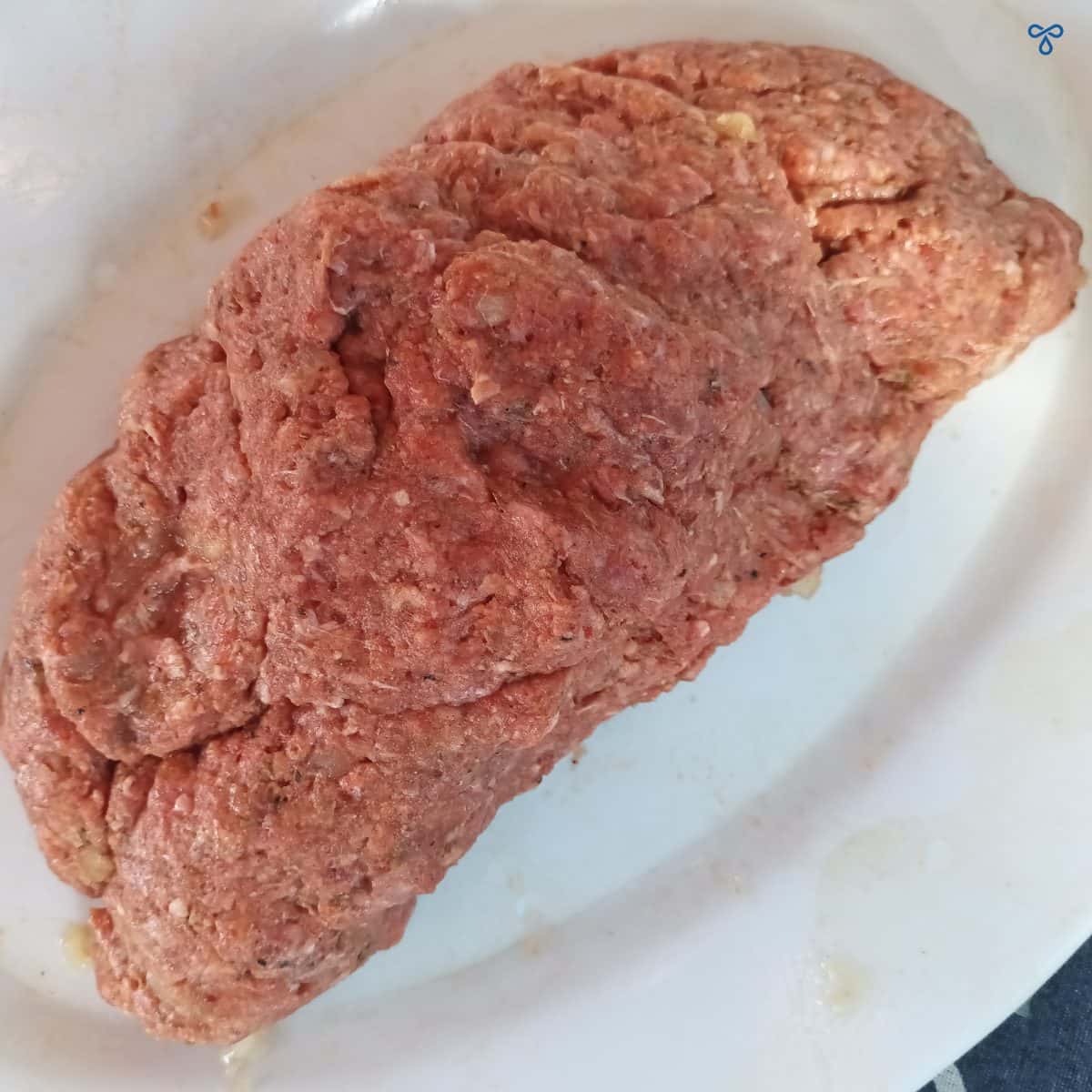
And once we’ve added all of that, we get to bringing the mince mixture together; kneading it all, adding a splash of water as we go along.
Mold The Meatloaf Shape
When we’re happy that everything is mixed well and the mixture feels soft enough to start molding it into shape, we make a rough substantial meatloaf shape.
We don’t need a loaf pan or loaf tin for dalyan köfte. It’s just a case of getting a rough, elongated köfte and placing it onto a sheet of greaseproof/baking paper.
Create A Boat
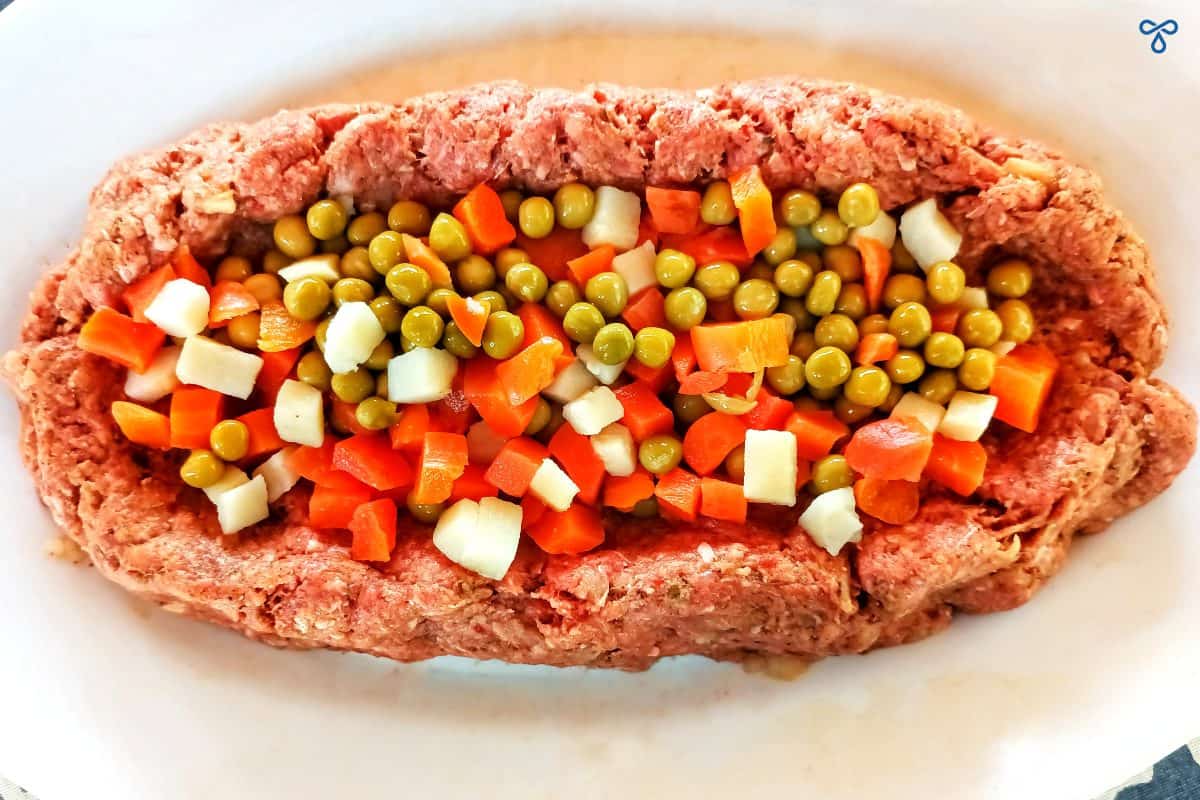
And then we make a well along the middle to create a boat. The well is going to be the nest for our mixed vegetables which, for a Turkish meatloaf recipe, is usually carrots, peas and potatoes.
For convenience, in Turkish supermarkets, this vegetable mix is called ‘garnitür’ and is sold ready-cooked in jars, packets or frozen packs.
You can make your own if you like so that you have more control over quantities and ratios. But for a quick meal prep, these packs and jars are great.
‘Dalyan’ has different meanings in Turkish. It is used in slang to describe someone who is tall and slender. It is also a long fish net or trap.
Both meanings have relevance to our meatloaf. We have a long, thin köfte as opposed to a small, circular grilled köfte. And we have our encased – trapped – vegetables in their long ‘net.’
We should add that it is common to also add a row of whole peeled boiled eggs into the well at this stage.
While we do love our Turkish egg recipes, we find their addition a bit too much for this Turkish meatloaf recipe. The meat and vegetables are enough for us.
Conceal The Vegetables
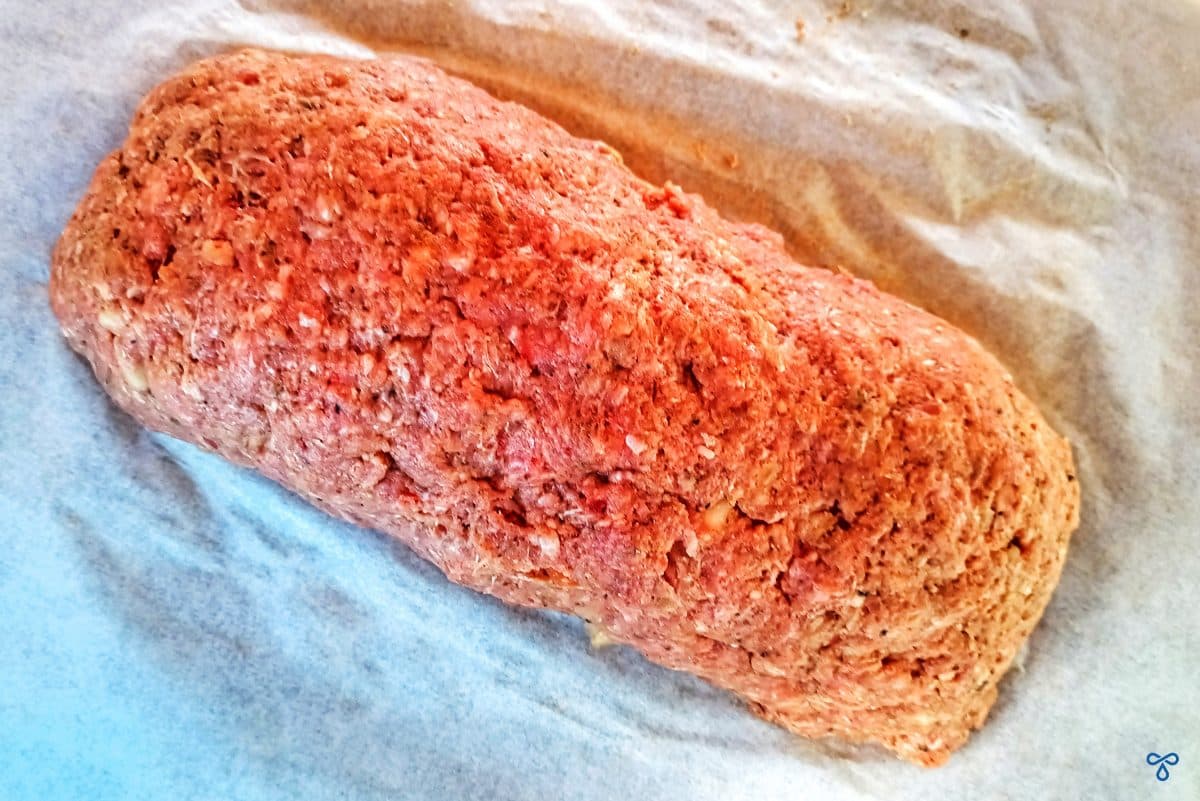
Try to resist putting too many vegetables into your meaty boat – like we did the first time we made dalyan köfte.
Because now, we bring the edges and ends of the meatloaf towards the centre to create a big loaf shape.
Our vegetables are packed safely inside.
We did say earlier, you don’t need a loaf pan for your dalyan köfte. That’s because we’re making it into a roll with the help of the baking paper.
Make a tight roll – but not too tight – and then roll another sheet of baking paper around that and close the ends like a parcel.
Time To Cook
Then we bake our Turkish meatloaf in the centre of a preheated oven.
And once it’s done, it’s not quite done.
Because this is the all-important good bit – the bit that gives the dalyan köfte that extra pop of flavour.
For the last part of the baking, we mix a sauce – some tomato paste and olive oil with some hot water…and some tomato ketchup!
The ketchup isn’t traditional for a Turkish meatloaf recipe but is really does make all the difference.
We heat the tomato sauce mixture over a medium heat and then we unwrap our Turkish meatloaf.
Then we pour and brush the sauce over the top and around the sides of the meatloaf. Then place it back in the oven for a short time, uncovered.
Serve Your Dalyan Köfte – Turkish Meatloaf
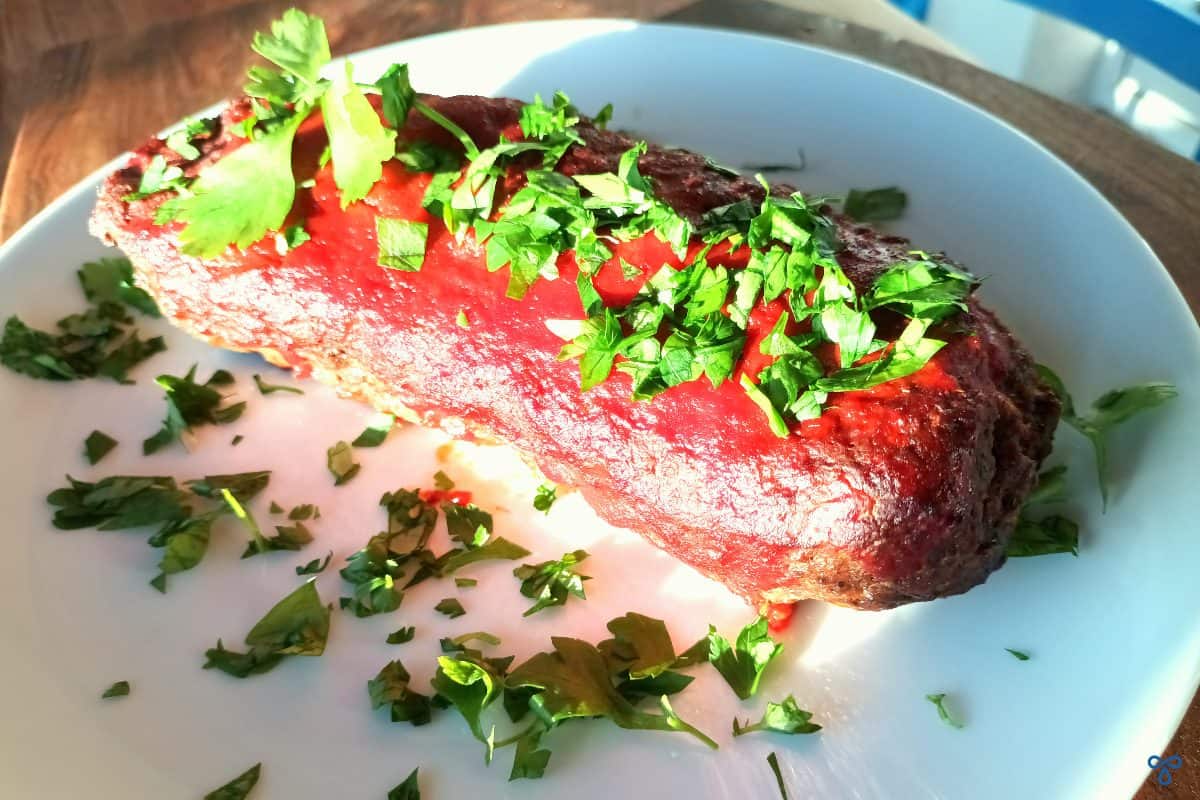
It’s up to you how thick or runny you want the sauce to be.
We like it to be a consistency that coats the meat and takes on a sweet sticky consistency. However, some people prefer a gravy consistency.
We let our cooked meatloaf rest for a while before slicing and serving.
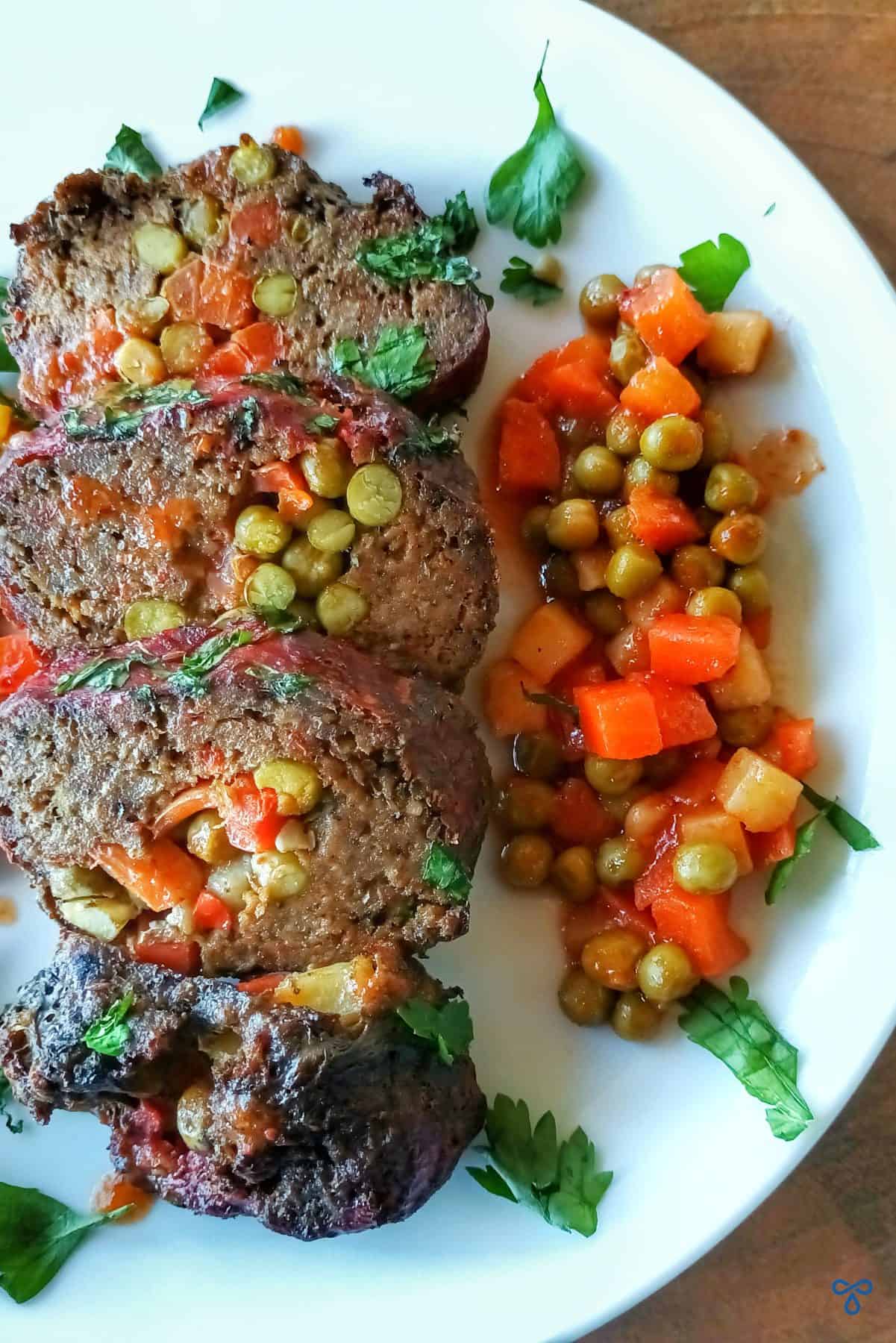
And you can serve your Dalyan Köfte with an accompaniment of your choice.
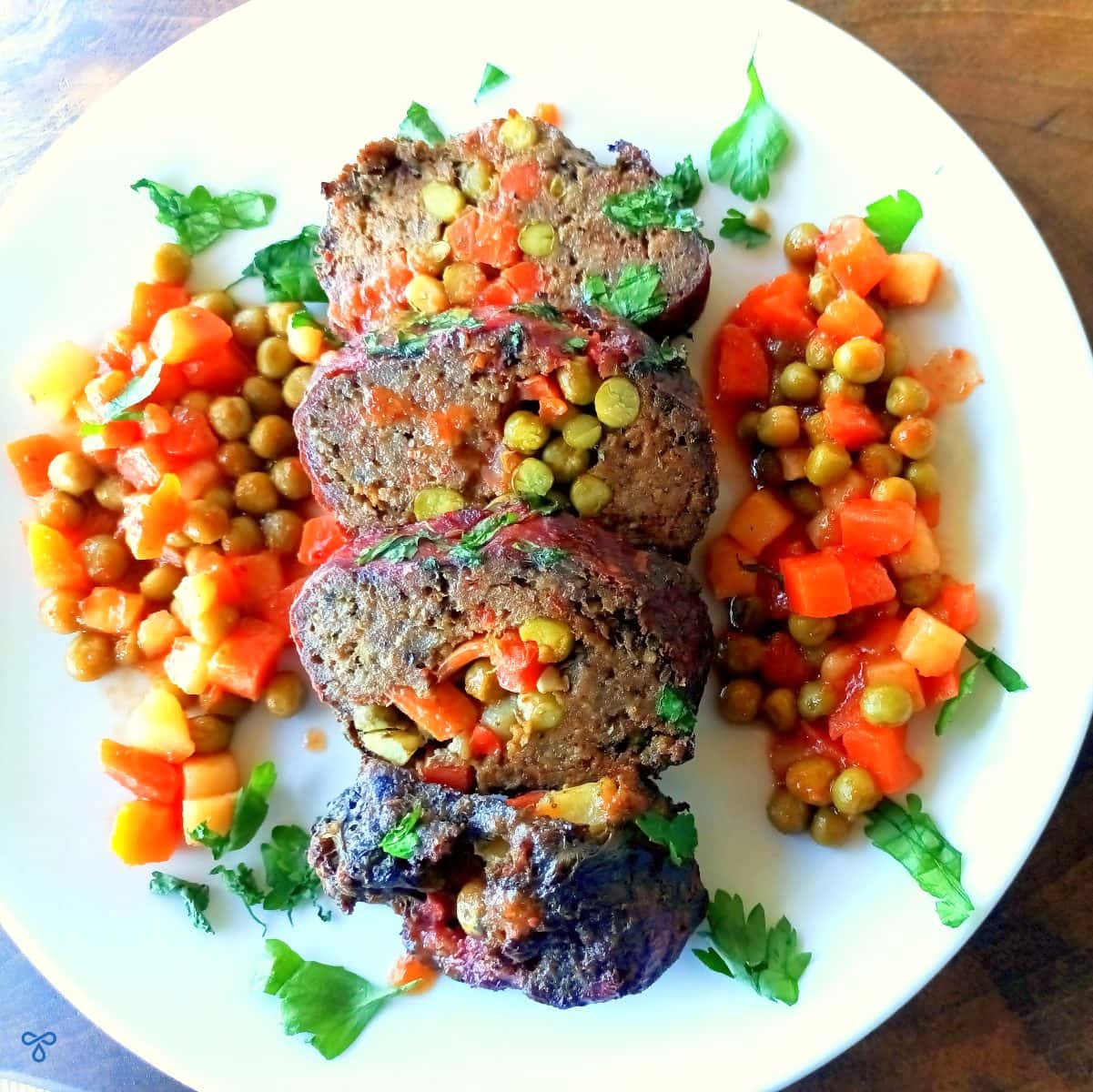
For this one, we had some mixed vegetables and some tomato sauce mix left over. So we heated the remaining carrot, potatoes and peas in the sauce.
Then we served them on the side along with a separate bowl of Turkish shepherd’s salad.
Mashed potatoes – patates püresi – or fresh, crusty chunks of bread are also popular.
Make-Ahead Turkish Meatloaf
If you’re someone who likes to be organised by doing meal prep in advance, you can cook your dalyan köfte ahead of time. Just allow it to cool to room temperature and then freeze it or refrigerate it.
To allow it to defrost quicker, before you freeze it, portion your meatloaf out and wrap each portion in freezer safe plastic wrap and foil.
You can defrost it and then bake in the oven when you are ready to eat it.
Freeze it for up to 3 months.
If you are cooking ahead for a meal in the next couple of days, you can store your meatloaf whole in the fridge, covered, for around 3 days.
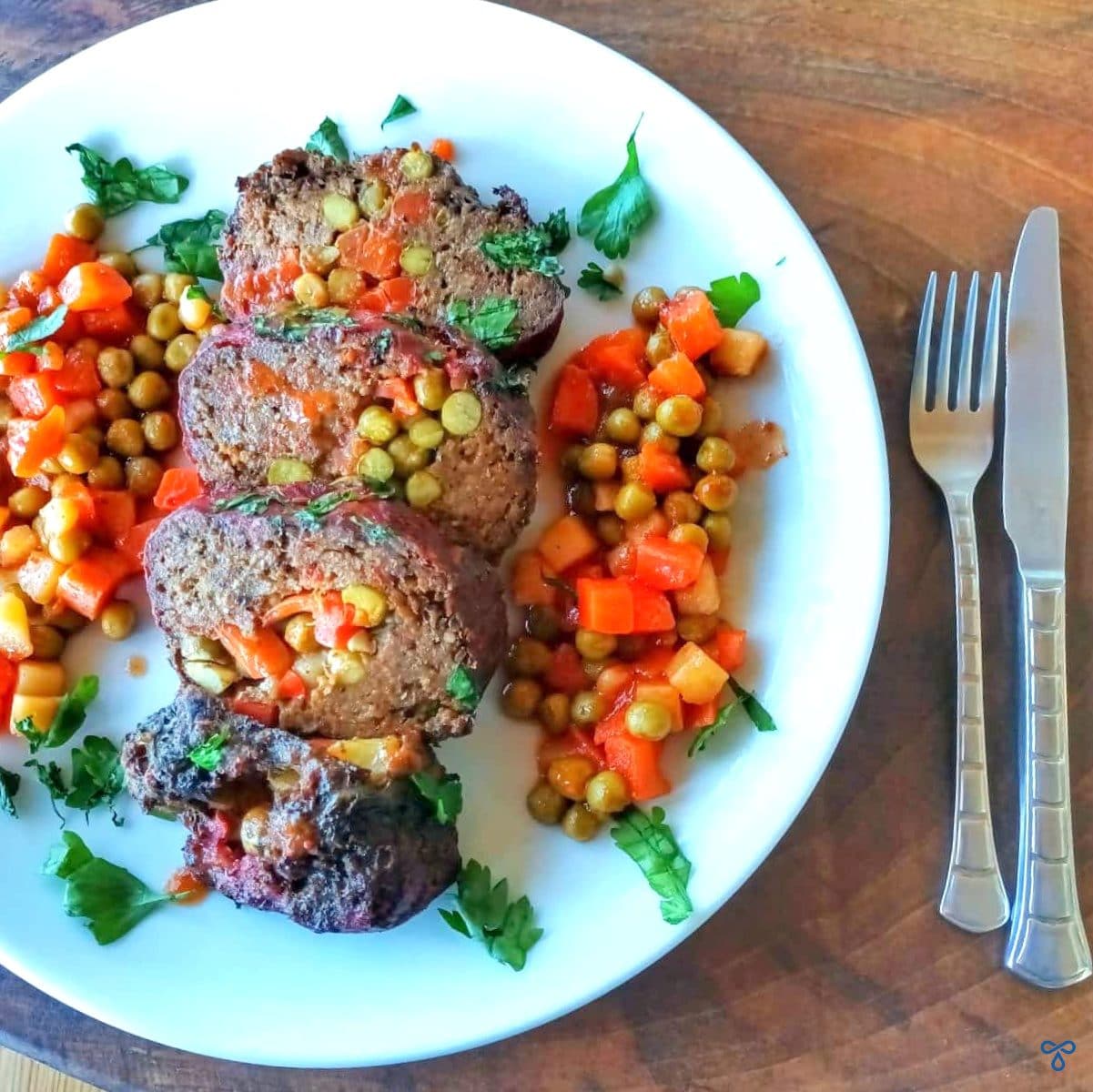
When it’s cold, it’s easier to slice.
When you’re ready to serve the meatloaf, slice it up and place each slice on a baking sheet or tray. Then bake for a few minutes in a preheated oven at 200 degrees Celsius (390 degrees Fahrenheit).
The servings you can see in our photos are individual slices that we sliced and baked the following day. A lovely meal – still succulent and tender and juicy!
Our Dalyan Köfte Recipe (Turkish Meatloaf)
Let’s start prepping and cooking…
Dalyan Köfte – Turkish Meatloaf Recipe
Equipment
- 1 sharp knife
- 1 chopping board
- 1 mixing bowl
- 1 pestle & mortar
Ingredients
For The Dalyan Köfte
- 400 grams minced beef (ground beef)
- 1 medium onion (peeled & grated)
- 1 egg
- 2 tablespoons breadcrumbs
- 3 cloves garlic (peeled & grated)
- 2 teaspoons chilli flakes
- 1 teaspoon allspice
- 1 teaspoon dried rosemary
- 1 teaspoon cumin seeds
- 100 grams garnitür (cooked and diced carrot, potatoes & peas)
- 1 teaspoon peppercorns
- 1 teaspoon salt
For The Sauce
- 2 teaspoons tomato paste
- 2 teaspoons tomato ketchup
- 2 teaspoons olive oil
Instructions
- First of all, grind your peppercorns and cumin seeds in a pestle and mortar.
- Now, except for your mixed vegetable filling and the sauce, add all of your dalyan kofte ingredients to a mixing bowl, breaking your raw egg over the top.
- Mix and knead the mixture for a couple of minutes, adding a small splash of water as you go so that you have a soft, pliable meat mixture.
- Bring all the mixture together into a rough elongated substantial köfte shape and place onto a sheet of baking/parchment paper.
- Form an oval shape and make an indentation along the centre so that it resembles a dinghy boat.
- Pour your mixed vegetables into the 'boat' and then bring the sides of the meatloaf together so that you make a roll, concealing the vegetables inside.
- Preheat your oven to

 200 °C
 - Now roll the parchment paper around your dalyan köfte so that it is parcelled and tuck the ends in. Roll this in a second sheet and, again, tuck the ends in.
- Place your parcelled Turkish meatloaf onto an oven tray or rimmed baking sheet and put into the centre of your oven and leave to bake for 45 minutes.
- Meanwhile, you can make your tomato paste, ketchup and olive oil mixture. Mix these together and add a splash of water to loosen it. You need enough sauce to spread over the top and around the sides of your meatloaf.
- After 45 minutes, remove your meatloaf from the oven and carefully remove the parchment paper.
- Spread your sauce over the top and around the edges of the meat and place the meatloaf back into the oven – uncovered – for a further 15 minutes.
- After this time, remove your dalyan köfte from the oven and leave to rest for around 10 minutes.
- Either serve whole and a centrepiece for the table or cut it into thick slices for individual servings.
- Enjoy with further mixed vegetables, mashed potatoes or salad.
Notes
- As with all of our recipes, our Turkish meatloaf recipe’s nutritional information is meant as a rough guide only. Values are calculated by a 3rd party API. Please do your own due diligence if you have any special dietary requirements.
- We use a medium fat (orta yağlı) minced beef and sometimes need to drain off some of a little of the juices before we the meatloaf back into the oven for the final 15 minutes. Using a medium fat meat mix keeps your dalyan köfte moist and juicy after cooking.
- If you can’t get readymade ‘garnitür’ mix, feel free to make your own mixed vegetables.
- We serve our dalyan köfte with leftover garnitür in the same sauce we use to spread over the meatloaf, along with a side salad. Fresh crusty bread and mashed potatoes are also popular side dishes.