
Mastering Turkish Rice: Tips from Our Kitchen
Turkish rice (şehriyeli pilav) - definitely one of the most famous dishes in Turkey!
If you're familiar with Turkish food, you'll know that rice features quite heavily in the eating process. A lot of Turkish recipes end with, 'serve with rice'.
If you go to a lokanta (a type of Turkish restaurant), whichever dish you choose from the bain marie, it's highly likely that you'll be asked whether you would like a side serving of rice to go with it.
The rice is never on the same plate; pilav is a dish in itself and is served separately.
As soon as we moved to Turkey, we were keen to get our hands on an authentic Turkish rice recipe!

Tasty Fluffy Rice
Thankfully, Turkish rice is very tasty.
It's rich and buttery and is indeed delicious on its own. Or with a good bowl of natural yoghurt on the side, too.
Whenever our friends come to Fethiye to visit us, they always say, 'I can't wait to have some Turkish rice'.
It's a staple side serving in most restaurants. So it's a dish holidaymakers become familiar with straight away.
One of our Turkish friends is an amazing cook (and loves to cook). But her husband says he's happy just eating Turkish rice with yoghurt.
Whilst this makes her mad, it's surely a good example of how rice is much-loved by many in Turkey. Even if it does drive our friend round the bend!
So, it was becoming increasingly difficult to live in Fethiye and not be able to produce a good bowl of Turkish rice for the table whenever we had friends round for dinner.
One night, when we were round at another friend's house for food, we stood watch in the kitchen as she prepared different dishes.
We studied her method for how to make Turkish rice - the Turkish way!
Since that time we've followed and adapted her methods to make our own version of the recipe work for us.
This is now our tried and trusted method which gives us the best results.
Turkish Rice - About The Ingredients
Before moving to Turkey, we had no idea what şehriye was.
And, when we were in restaurants, eating meals, we always wondered what those 'golden brown bits' were in our servings.
Well, those 'brown bits' are orzo (şehriye) and are a type of pasta. As you can see in the photo below.
Some recipes will use vermicelli, instead. Both are quite common.

When you are sauteeing your orzo pasta (aka risoni), it's important that you keep a close eye on it. Once it starts to brown, it can burn very quickly.
That will ruin the flavour of your pilav dish. If you are using vermicelli, it will brown quicker.
Add your rice immediately after you notice the change in colour and keep stirring with a wooden spoon.

Baldo Pirinç
If you are in Turkey and you want to make this recipe, there are different varieties and types of rice you can buy to suit different purposes.
The best type to buy for şehriyeli pilav is a rice with grains of medium length, called Baldo Rice (Baldo Pirinç).

Our Turkish Rice Recipe
This is a quicker version to the completely traditional method of making şehriyeli pilav.
It's a method that works very well for us.
And, based on lots of feedback over the years, this recipe works for others, too.
This recipe makes enough pilav to serve as a side dish for four people.
Liquid To Rice Ratio
However much you decide to make, the easy thing to remember is you just use twice as much water as rice. If you do that, it should cook perfectly.
So, what about that traditional method we mentioned earlier?
Well, in Turkey, before cooking, people will rinse their rice thoroughly to get rid of all the starch so the rice doesn't become sticky.
Some people will also soak their rice in warm water before cooking.
Adjust & Experiment
If you want to cook rice pilaf in this way, you will need to alter cooking times. You will also need to adjust the amount of water or stock you use.
We tend to use chicken stock (chicken broth), but you can use whatever you have to hand.
It won't make too much difference to the overall taste of the finished dish.
It's all down to experimenting, as you will see in some of the comments below.
For us, the best type of rice for Turkish rice pilaf (by far) is Baldo - but other short-grain rice such as Arborio rice or basmati rice will do the trick. Shorter-grain rice has a high starch content, which helps it to cook up fluffy.
While it's not strictly essential (we've been guilty of skipping this step on occasion), some people say it can improve the finished dish if you wash the rice before cooking it.
Don't stir the rice too much while it is cooking, as that can make it a bit sticky. Also, we've found that it's a good idea to let your rice rest for a few minutes after it is cooked, before fluffing it with a fork.
Let's make rice pilaf...

Our Turkish Rice Recipe
Ingredients
- 1 cup rice (we use a standard tea/coffee mug)
- 2 tablespoons orzo (or şehriye or vermicelli)
- 1 tablespoon butter
- 2 cups hot water or stock (use same-sized cup you used to measure the rice)
Instructions
- Heat your butter in a deep saucepan over a low to medium heat.
- Now add your şehriye (orzo) to the pan and stir around for a few minutes until you see it start to change colour.
- As soon as you notice the orzo start to go brown, add your rice and continue to stir. Remember to keep the pan over a low heat and keep stirring, otherwise your rice and orzo will burn.
- After 3-4 minutes, add the water or stock.
- There will be a big sizzle and the liquid will bubble up. Turn up the heat and bring the rice to the boil, fully.
- Once the rice is boiling, give it a couple of stirs around, put a lid on the pan, leaving a small gap, and reduce the heat to medium-low.
- Leave your rice to simmer for 8-10 minutes until the water or stock has absorbed.
- Now remove from the heat, put the lid firmly on the pan and leave the rice to stand for 5 minutes.
- After 5 minutes, remove the lid and fork through your rice.
Notes
- If you find the butter too rich in your Turkish rice, we sometimes just use a glug of olive oil or vegetable oil. This is not traditional and does change the flavour slightly but it makes for an occasional, tasty variation.
- Whatever size cup you use for your rice, make sure you use the same for your water or stock.
- Calories are approximate and are calculated on using butter and water as opposed to stock.
Nutrition
Now that you know how to make Turkish rice, why not get some ideas about all of the different sorts of Turkish dishes you can serve with it?
And, if for some reason you aren't a huge fan of rice, then really good alternative Turkish side dishes you could serve up instead of this recipe include kısır, bulgur pilaf and green lentil salad.
If you've enjoyed this recipe, you may want to add us as a preferred source in Google which allows you to choose websites you like reading so you can see more of their content in search results and AI summaries.
Does it work with any kind of rice, or must be a Turkish brand? I live in N. Carolina and can't find Turkish rice (the only USA, Indian rice).
Hi Susan, you should be okay to make the Turkish rice with any long grain rice. Just not 'quick cook' rice. Good luck. 🙂
@Susan Aizenkait, I live in North Carolina and I have no problem finding Baldo rice. Try going to a Middle Eastern International grocery store. My little town even has a Turkish store. The rice is so good you will be happy you did.
Don’t you wash the rice before you add it to the pan?.
Thanks for the recipe.
Hi Virginia, lots of Turkish people do wash their rice in warm water before adding it to the pan to get rid of some of the starch. Turkish rice is very starchy. We like it to be a bit sticky so most of the time, we just add it straight to the pan. Thanks a lot for the rating. Much appreciated. 🙂
Great recipe, and I love all the comments! I’m not Turkish, so I guess my way isn’t traditional. I bought some Baldo rice by accident, and ended up here while trying to figure out how to cook it.
Hi Barry, hope you liked the Turkish rice! 🙂 Yes, lots of comments and different ways of cooking the rice. We use a little less water these days - about 1 3/4 cups.
Thanks. I followed the recipe and it turned out great. I used basmati too as that’s the only rice I had in the cupboard...Can I ask is it a must to wash the rice as I didn’t when I first cooked the it. I was thinking of washing it the next time round but will this effect how much water I need to add?
Hi Sheyi, it really depends on the type of rice you are using and if you are using warm water to wash your rice. Some rice is more starchy than others. Turkish rice tends to be quite starchy which is why lots of people wash the rice first. If you want to do that, you may need to reduce the amount of water a little. Maybe 1 3/4 cups. You will need to experiment with whichever rice you are using. 🙂
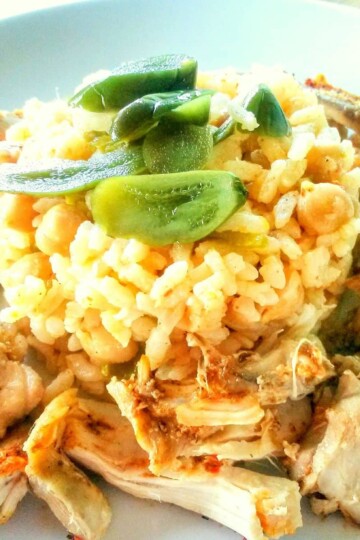
I've been looking for a Turkish rice recipe with chick peas as recently seen in a soap opera. Any suggestions?
Hi Emma, that's nohutlu pilav (rice pilaf with chickpeas). Commonly served with chicken. Here's our recipe - skip the chicken if you don't want to put it in. 🙂
Great recipe, and I love all the comments! I'm not Turkish, so I guess my way isn't traditional. I bought some Baldo rice my accident, and ended up here while trying to figure out how to cook it.
I cooked 2 tbsp orzo in a few tbsp of olive oil. After it started to brown, I added 2 rice cooker measures of Baldo rice, and continued to cook. After the orzo was nicely browned, a few minutes, I put it into a rice cooker and added cold water up to the 2 cup line. Then you just push the start button and cook like usual. It's not necessary to pre-heat the water.
If you want to add a bullion block, like I do, you can dissolve this in a small amount of hot water and add at the beginning. You can also put the cube in whole, and open the rice cooker and stir after it starts boiling. I use bullion powder, and stir it in at the beginning.
I really like the way this comes out.
Hi Patrick. Thanks a lot for your comment and for your rating on our Turkish style rice. Much appreciated. 🙂 Glad you have found a way to enjoy your baldo. We've never used a rice cooker before. Love the use of orzo in Turkish rice. A bit of colour and texture.
Excellent recipe, I loved it so much, thank you for sharing
Glad you enjoyed the Turkish rice.
I love cooking rice here. My Turkish family love my rice. I always wash my rice first to remove the starch. 2-3 rinses nornally. I always put a small amount of olive oil in the frying pan first and cook the brown rice till colour changes. Then i put my rice in and stir it all together for about 2 minutes. At this point i add a dollop of homemade butter and a stock cube. Then i just get the kettle with hot water in and cover the rice. Put the lid on and cook it on a low heat for about 15 minutes undisturbed. Once all the water has boiled away turn off the heat and leave to stand with a teatowel covering it. 5-10 minutes later serve rice as it is and fluff with fork yourself in the dish.
Thanks for your ideas, Colette Yüksel. You obviously have a good eye with how much water to use with your rice. A lot of our friends say they just can't get their Turkish rice right so we offered the cup measurements. 🙂
It really amazes me just now many people cannot cook rice, eg "it sticks to the bottom of the pan" or "it goes all soggy" As for this method of cooking rice, my mum taught me to cook rice like this over 60 years ago, I always presumed everyone did it like this.
Thanks a lot for your comment, Fred Catterall. Guess the problem, at least in the UK, is everyone buys the quick cook rice or even 'boil in the bag' and microwave versions. Think lots of us are forgetting how to cook - we certainly only learned how to cook (Turkish) rice in this way when we moved to Turkey and yeah, it is amazing how simple it is. 🙂
After reading through all the comments, I feel compelled to add to them. First, Turkish rice pilav is a dish. It is NOT steamed rice. It is a recipe mainly based on rice as an ingredient. None of the quick cooking methods will come close to it. Secret to successful pilav lies in aggressively rinsing off the surface starch from the rice grains, sauteing in fat of your choice (I prefer the authentic butter but a neutral tasting oil such as canola can also be used. I personally find that use of olive oil detracts from the authentic pilav flavor, even though I love good olive oil and use it frequently in dishes that traditionally call for it. Finally, the optimum rice-to-water ratio usually hovers around 1 to 1.5-2 range. This can vary with the batch of rice you have. You need to experiment. The sticking to pot issue can be due to the amount of water, and/or level of stove top heat. So experiment. The crispy bits stuck to the bottom are considered a delicacy by some cultures, so try to scrape and taste them if you end up with them unless they are really burnt.
Thanks a lot for your comment, Ahmet Talug. Our Turkish rice recipe is definitely a quick version, we know. we're going to make some additions to it so people can rinse and soak their rice if they like. And as for those burnt bits - yeah, we don't mind a bit of crispiness in our rice dishes! 🙂
When you fry the Şehriye And rice in oil if you want your meal (pilav) to be lighter you better use coconut oil or pure vegetable oil. Olive oil will make it heavier. But the butter will be the best taste. Just adjust the amount of butter. And use salty one.
when it comes to adding water better to use boiled water. Because if you add normal water it will take too much time to cook and rice will stick to each other and that is not a nice appearance for turkish rice.
Any question you guys can mail me.
Bigoceansm@yahoo.com
Thanks, Mustafa. 🙂 We only have our rice in butter as a treat as we eat in lokantas a lot where they use butter. That's why we use oil at home. We'll try other oils, too. The water has always worked well for us but we're always open to new ideas so we'll give boiled water a try, as well. 🙂
@ nikki: We love Ortaköy. Fab view of the bridge. 🙂 Enjoy.
@ Anonymous: Oh in that case, hope your Turkish friends like it. They might well prefer it with butter rather than olive oil. We just use oil to try and be a *bit* more healthy. 🙂
Thankyou...loving your blog....and ill definitely be trying some of the jacket potatoes in ortakoy too:)
Perfect....we are going to istanbul soon and our turkish friends from fethiye are coming to join us....''omg...what am I going to cook for them''....solved:)...just the casserole recipe to find...I know they like that as we eat it when we go to their house for dinner! Xxxx
@ Anonymous: Yes, orzo is the same. In Turkey, baldo is best to use and basmati is expensive here, too, but it's probably the best rice to use elsewhere. 🙂
A Turkish friend has made this for me several times. She uses Orzo and Basmati.
@ Gina Clarke: Thanks for your comment. Yes, we're a bit more educated these days on the different pastas you can get in the UK and orzo is the same. Glad you can find it where you are. 🙂 A lot of the restaurants here are actually starting to use vermicelli but we prefer the şehriye. 🙂
I use Orzo in the UK. It's exactly the same 🙂
@ April: Thanks for that. 🙂 A lot of people in the UK have manged to find it, too.
You can actually get the arpa şehriye if you look for orzo and regular şehriye as vermicelli in the Italian section of your grocery store.
@ Samiah Khan: The best rice for this is called Baldo Pirinç. We've been cooking with jasmine rice recently but not sure if it's not too fragrant for this type of dish.