Just 9 kilometres west of neighbouring Rhodes, the tiny Dodecanese Greek island of Halki (Chalki) is a pocket-sized oasis of beauty, calm and relaxation.
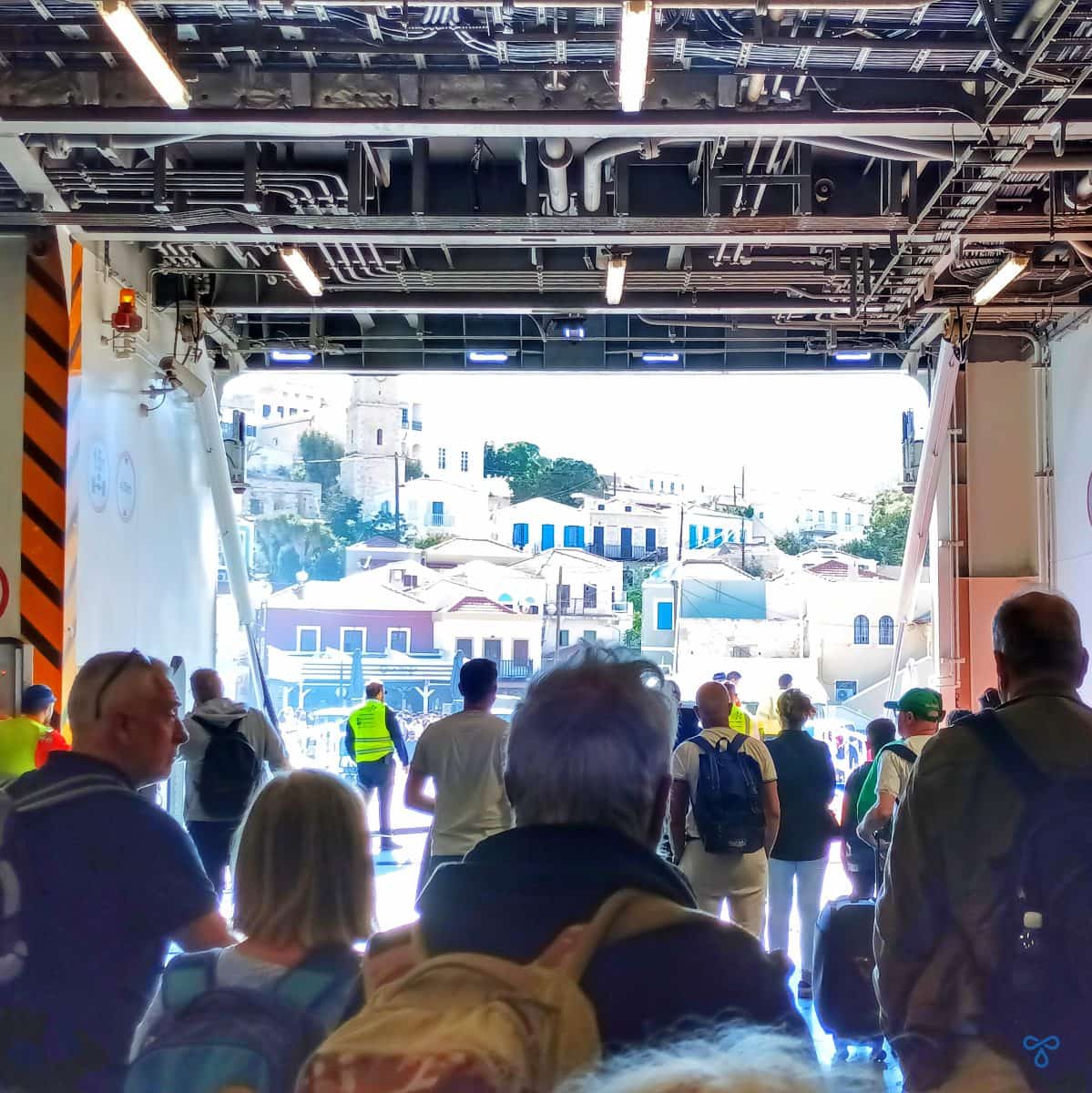
And it took us only a matter of minutes for that relaxation to wash over us as we arrived by ferry from the port of Rhodes Town.
Exploring Halki Island
Halki island is the ideal place to chill and unwind!
It was early May and our wedding anniversary – a trip away from Turkish shores was on the agenda.
But where to go?
Well, living in Fethiye, we’re blessed with the fact that we can simply walk along the harbour to the port and get on the high speed ferry from Fethiye to Rhodes.
From there? Well, let’s explore some Greek islands.
We loved neighbouring Symi when we headed there a while back.
So, this time, we plumped for a night in Rhodes Town before making the short trip across a small stretch of the Aegean Sea to visit Halki island.
Also part of the Greek Dodecanese Islands, Halki had been on our radar for some time.
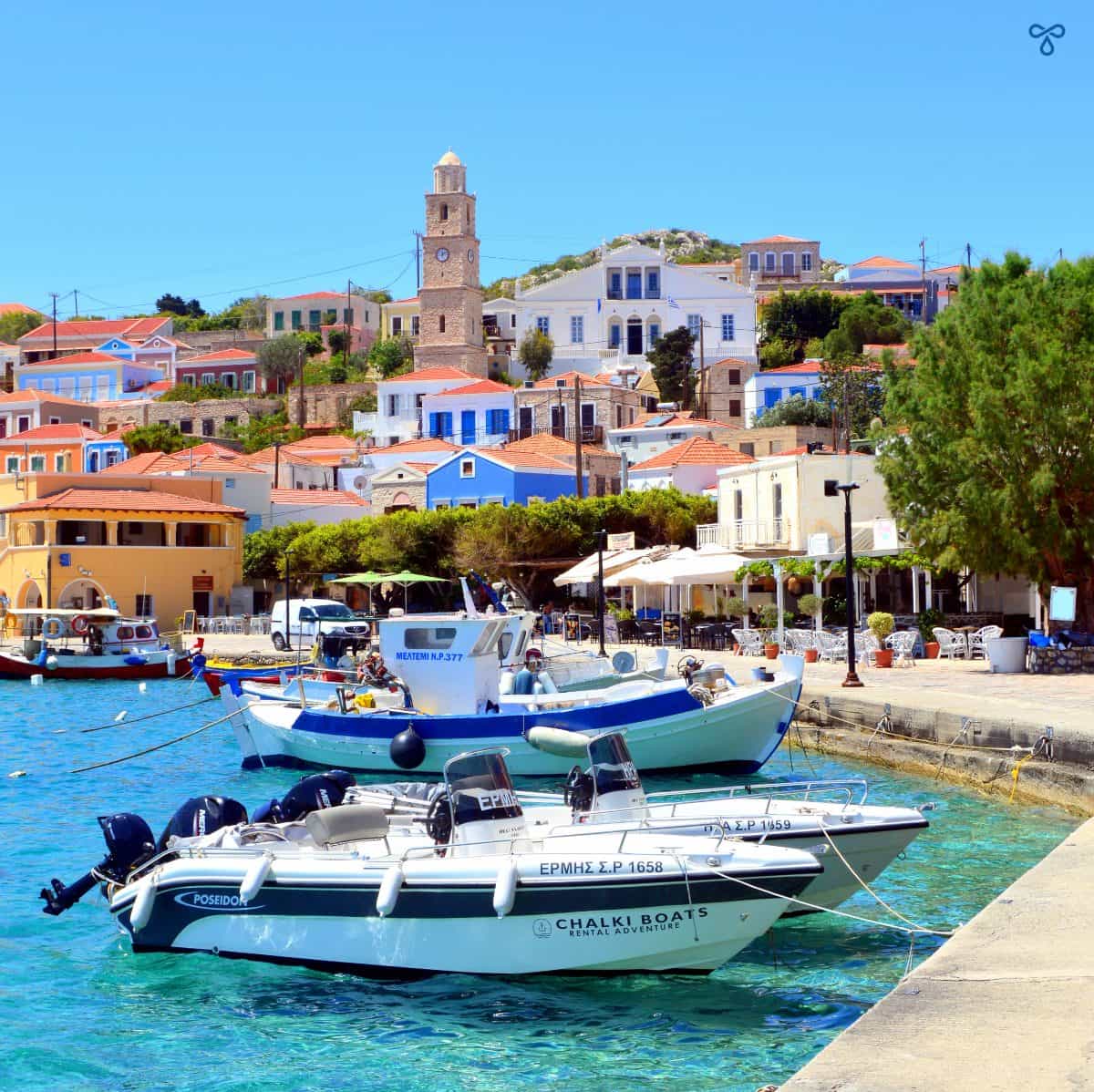
The same-style colourful neoclassical houses framing its harbour, as on Symi and Meis (Kastellorizo). Guaranteed picture postcard prettiness!
Our Halki Accommodation
It being a tiny island, there’s only one hotel on Halki – the Aretanassa Hotel, right on the seafront at the far end of the harbour.
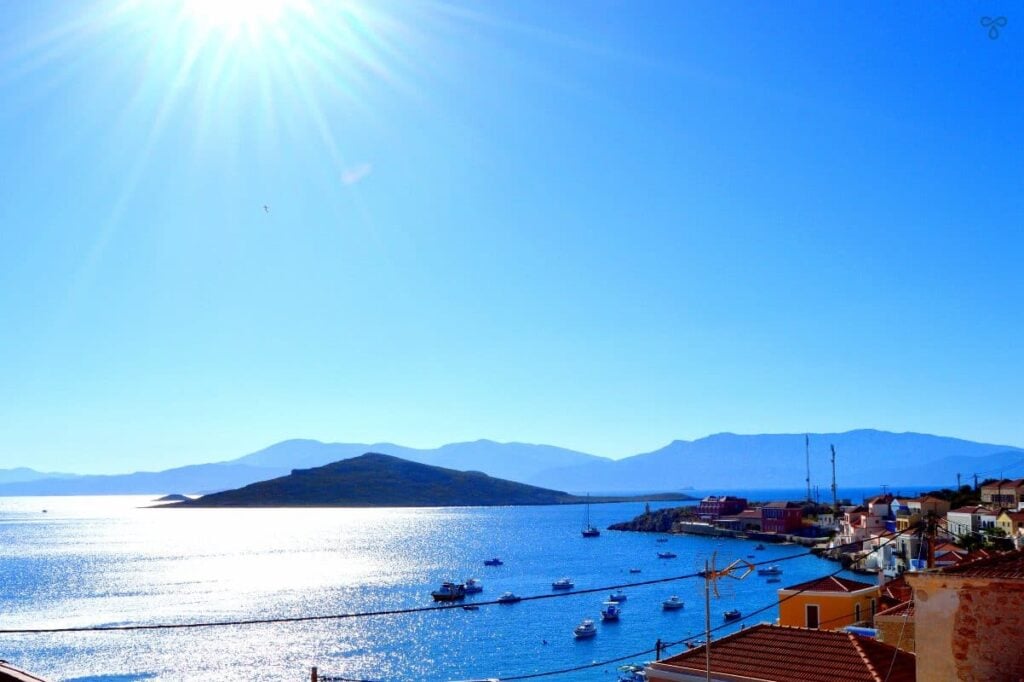
This was the old sponge factory. Because, like other islands in this area, sponge diving was the main driver of the economy until the early 1900s.
The rest of the accommodation is scattered around the hillside of the harbour and only village, Nimporio, in pretty, restored Greek houses. We took this latter option.
No mass tourism, here.
Accommodation is limited. So, even though we were there very early season, we booked ahead.
Halki has its die-hard regular visitors who love the place and stay on the island for weeks at a time. We wanted to make sure we had a bed!
And a very pretty bed – and place – it was, too. Recently renovated, wooden ceilings and a mezzanine bedroom.
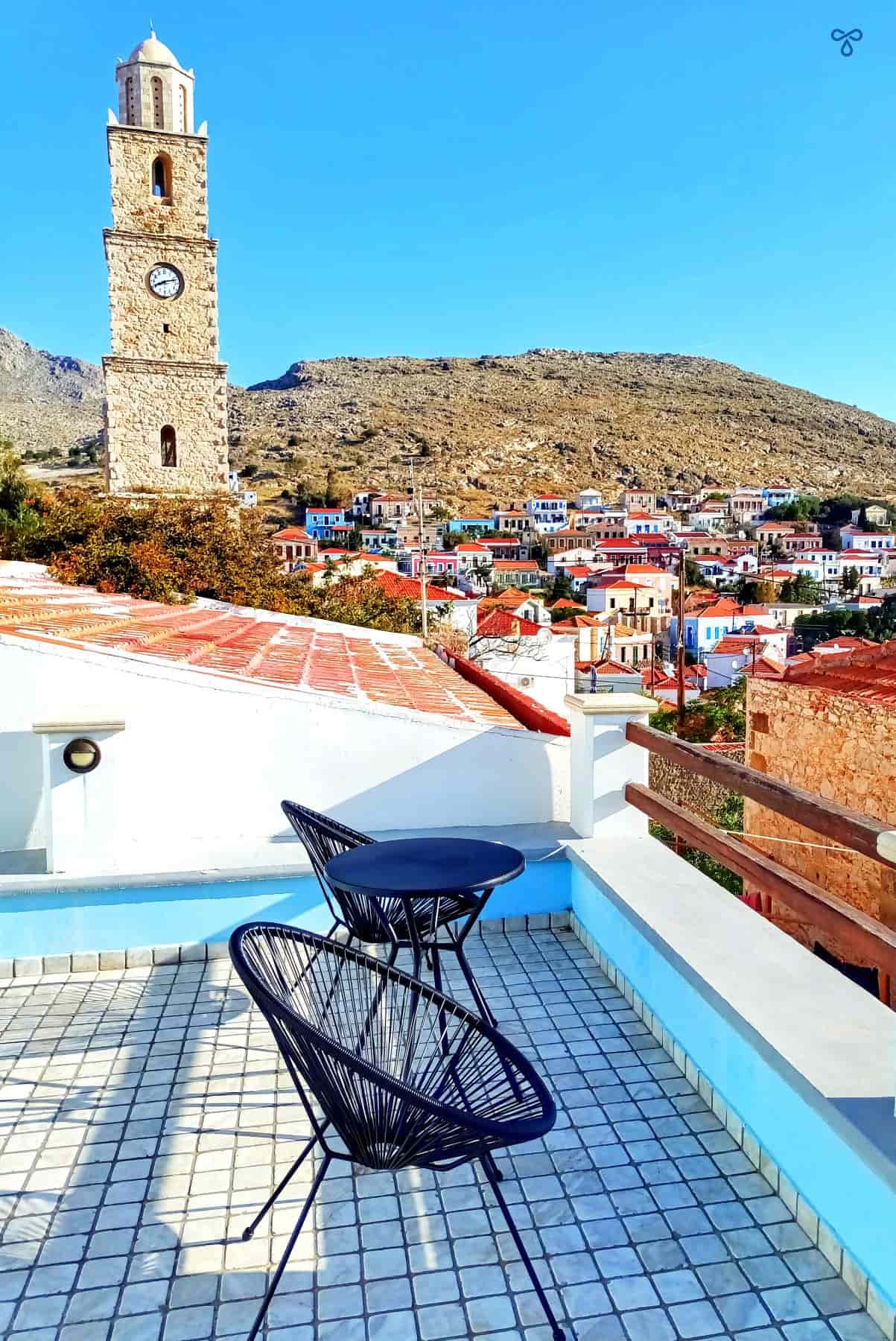
And outside, a large, shared terrace overlooking the harbour and the hillside.
Our door and terrace was right next to Halki island’s famous landmark; the historic 19th century stone clocktower which was restored in 2022.
As you can imagine, from just about anywhere where you stand in Nimporio, the clock tower dominates the skyline.
Don’t rely on it for the time, however. Those hands never moved all the time we were there.
Halki Island Beach Life
Whilst we’re not beachy people in the sunbathing sense, we do love a wander, beach scenery – and a beachside taverna.
We only had two nights on Halki island. So on our first full day, we were out early and out wandering.
We had a few sights – and beautiful beaches – we wanted to see. Early May. Sunny and breezy. Perfect wandering weather.
Ftenagia Beach
First stop was Ftenagia Beach which we’d read was just around the tip of the harbour, beyond the only hotel.
The harbour promenade, however, is a dead end. So that gave us the opportunity to climb the stone steps, uphill and through the pretty, narrow streets of Nimporio.
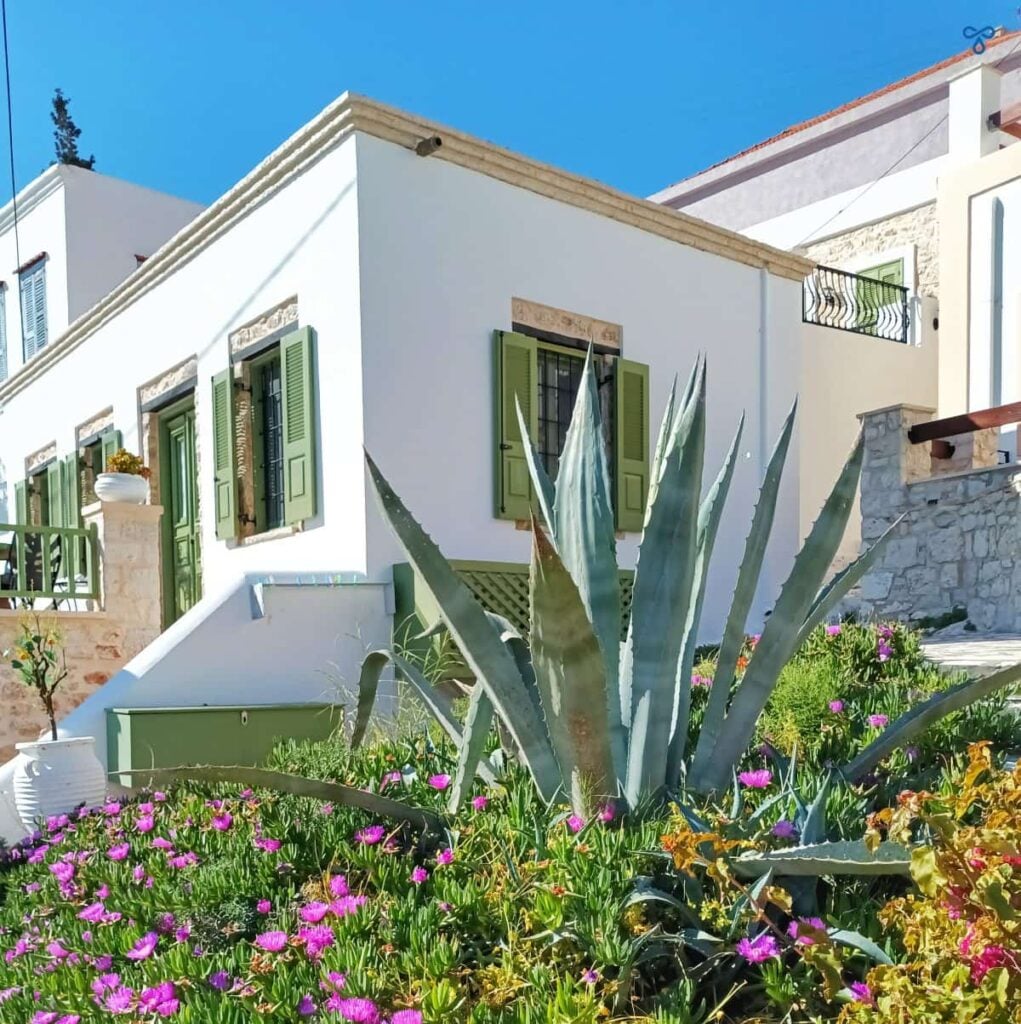
Whilst many of the properties of Nimporio are holiday accommodation, there is also a thriving – if small – population of Halki locals who clearly work very hard to make sure they keep their island in pristine condition.
Down from 3,000 in the late 19th and early 20th century, the permanent population, today, stands at around 330 (just short of 500 if we include Halki municipality islets).
As you might expect, this swells in the summer months with both tourists and returning diaspora.
If you’re anything like me, you’ll take numerous photos as you walk these streets with their occasional vistas of the harbour below.
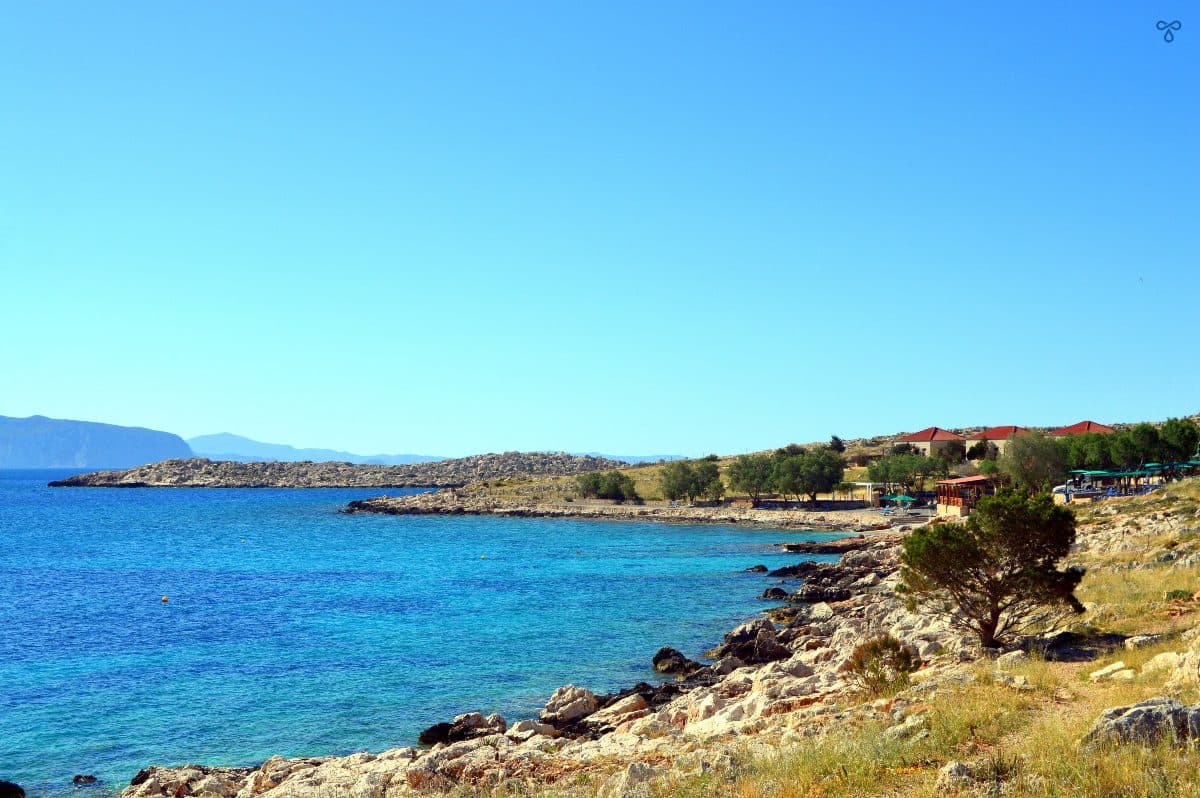
After a few minutes, we followed the makeshift sign pointing us along a scrubland footpath to Ftenagia Beach.
We’d seen online that the taverna had just opened for the summer season. So we were looking forward to a beachside leisurely breakfast and an ice cold Greek frappe!
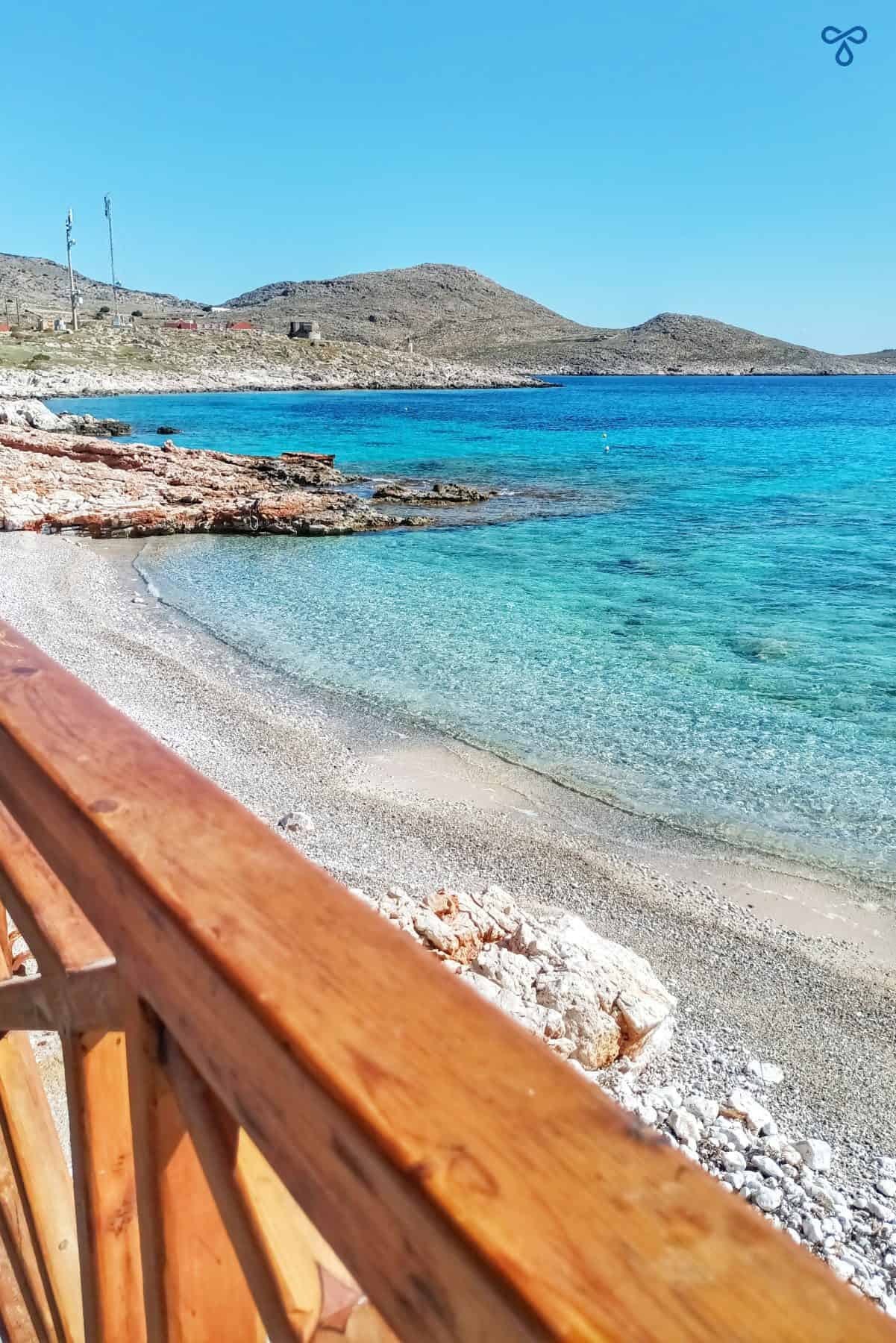
Is it possible to feel any more relaxed when you’re the only customers in a beach taverna with just the sound of the calm waters lapping the pebble beach?
The story of Ftenagia Beach is framed on the wall of the stone-built taverna. In 1998, local man, Nikolas Irakleidis had a dream to build a taverna here.
No roads at the time (there are still precious few), no power, no water supply. The stone had to be loaded onto his fishing boat and transported to the site.
Eventually, the power, the water – and one narrow road – came. And, a story with a happy ending, so did we, the people.
Sun loungers and parasols are in a separate, shaded area to the side of the taverna. And no doubt in high season, there are numerous ‘bums on seats.’
But for our morning visit, it was just the two of us. Bliss!
We could have stayed here much longer. But exploring to be done…
Onwards To Pondamos Beach
Aside from cooler temperatures making a good wander much more pleasurable than searing summer temperatures, one of the other great pleasures of travelling in spring is the wildflowers.
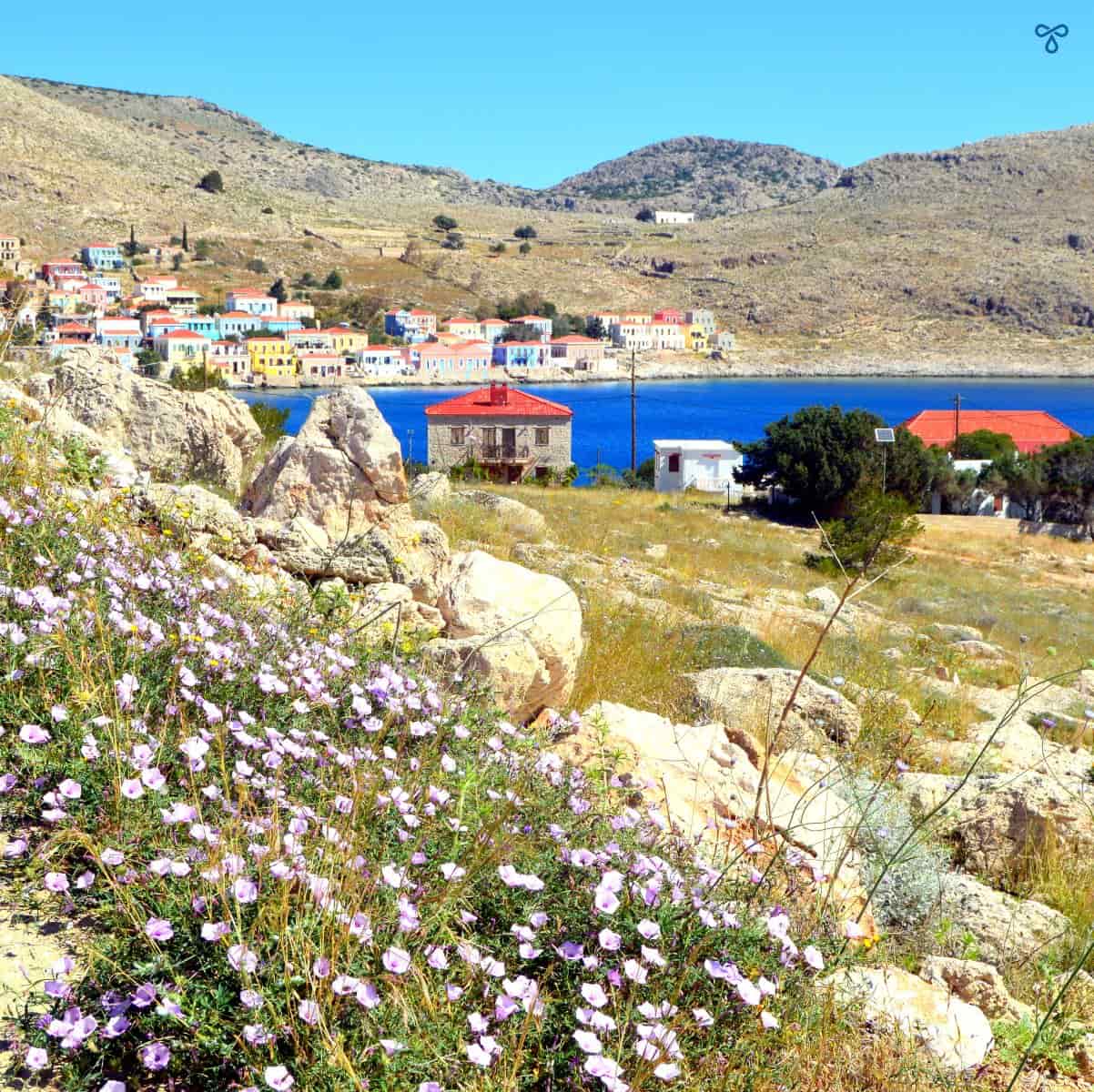
As we climbed the road away from Ftenagia Beach and towards the famous Halki windmills, wildflowers lined the roadside and filled the rocky gaps of open land.
Halki island is far from what you would call lush and green. A whole different kind of barren natural beauty, here.
But springtime gives us those pretty pockets of green and splashes of colour from the new growth. Crimson poppies, wild iris, crown daisies…
Via The Halki Windmills
The road from Ftenagia Beach will take you to Pondamos Beach. And you can also make a detour to climb the hill, up to the Halki windmills.
There are apparently great views over Nimborio and the harbour from here.
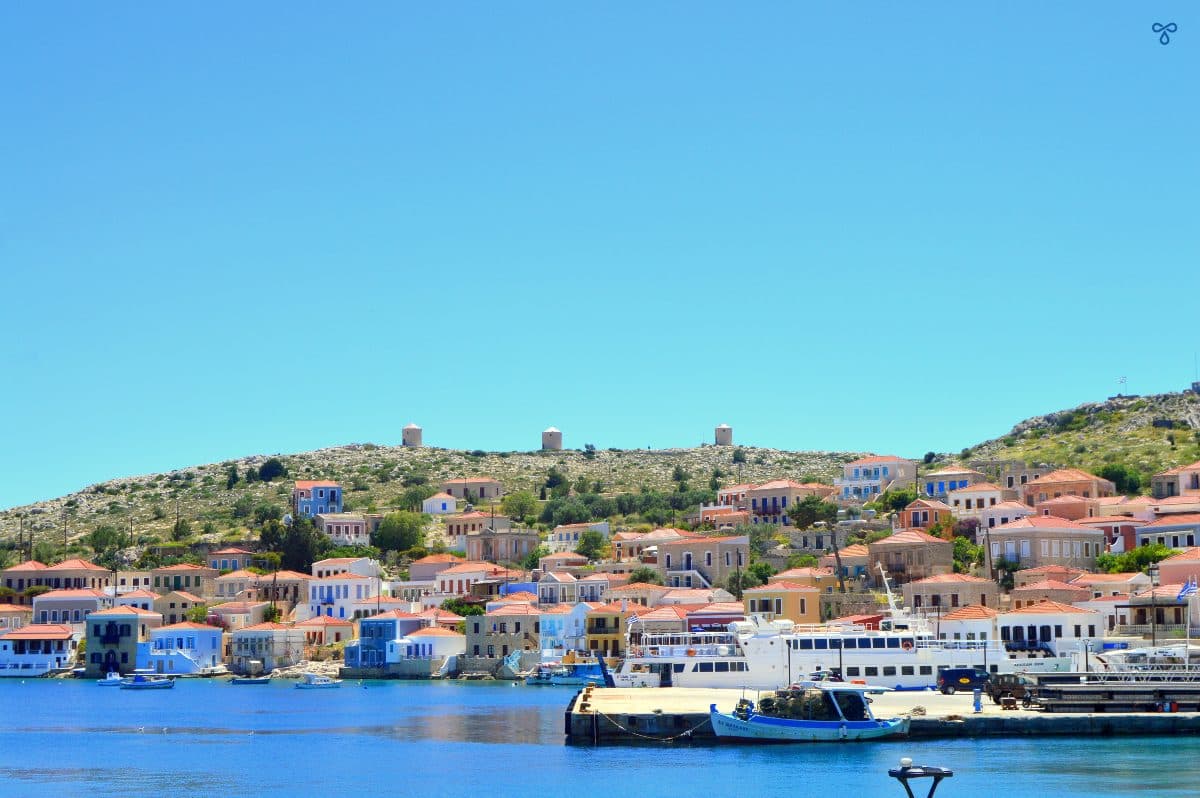
However, if you do climb up there, don’t do as we did by following the road. This will lead you to what seems to be a helipad right next to the windmills – which are fenced off from here.
So we couldn’t get across. No panoramic views for us!
Instead, keep your eyes peeled for a little footpath that goes directly up the hill to them. How official this path, we don’t know, but we did see people up there in the distance the following day.
And Via The Cemetery
Walking to Pondamos Beach via this longer route will give you beautiful views over the bay where the beach is.
And it will also take you past the peaceful Halki Cemetery.
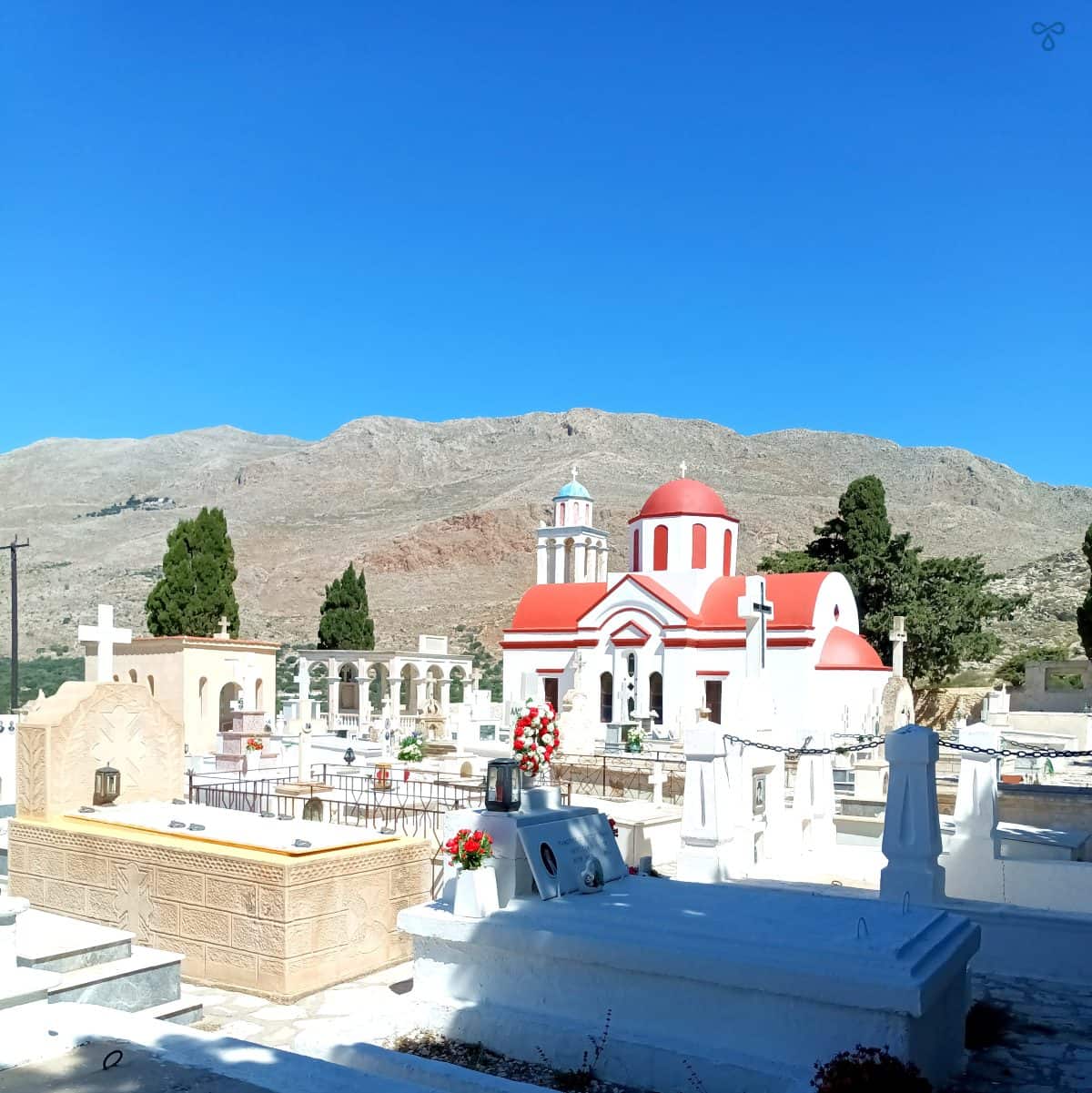
We just had to pause here for a moment.
A pristine cemetery with neat rows of whitewashed graves all facing the sea.
And just to the right, a small chapel.
From photos we’ve seen online since returning, we’ve seen the chapel in a newly repainted state – encouraging to see as others commented on its neglected state in previous years.
To Pondamos Beach
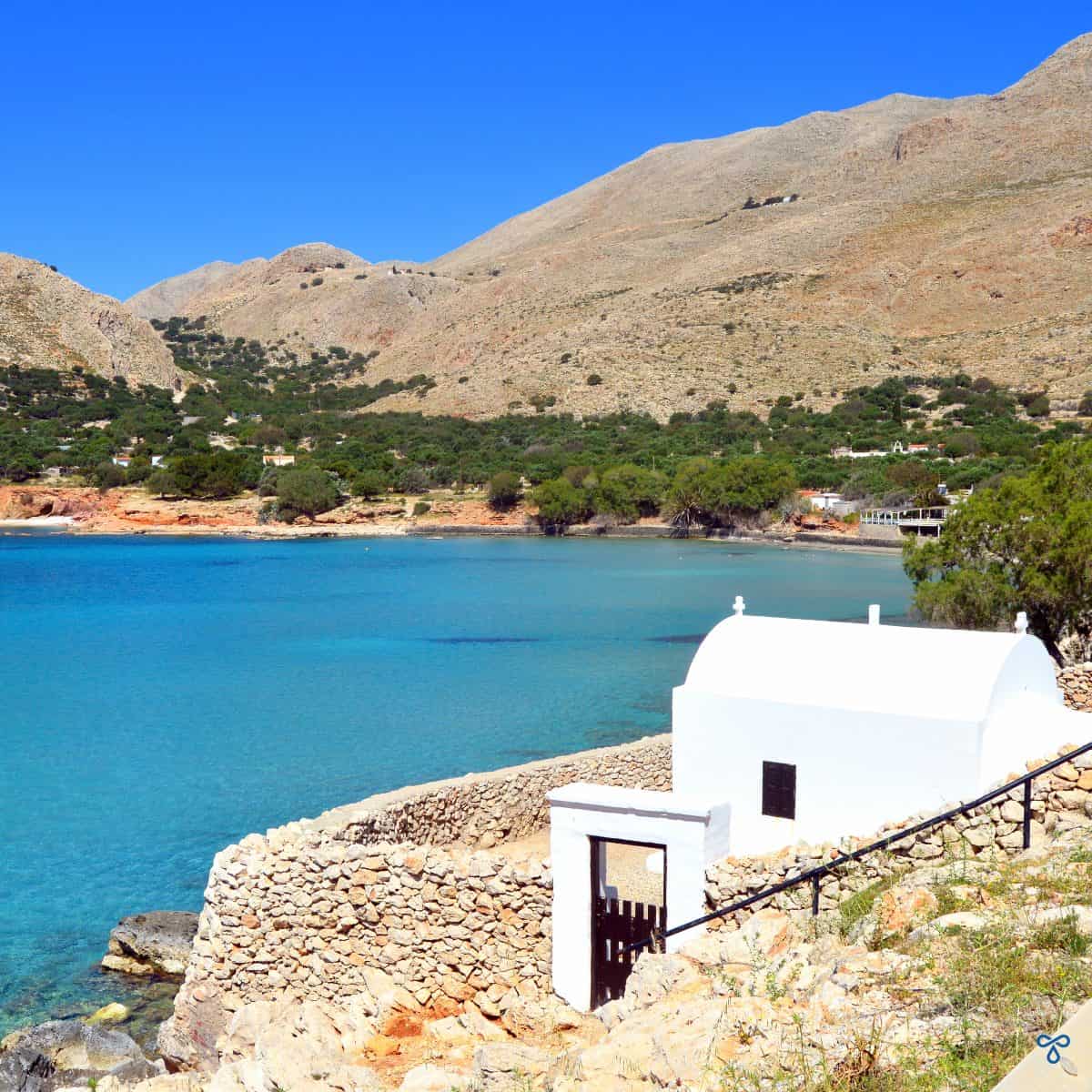
Pondamos is probably the shortest, easiest walk from the harbour as there’s a quick route over the hill, but our slightly longer route gave us the opportunity to soak up more of Halki island’s unspoiled beauty.
From the amount of beds and umbrellas on Pondamos Beach and the size of the taverna and beach bar, we’d guess its closer proximity to the harbour means it gets busy in high season.
We had a couple of leisurely beers watching the smattering of early summer beach goers brave the sea.
Calm crystal clear waters here and it’s also a very shallow bay. Swimmers waded out for quite some distance and were still only up to their knees.
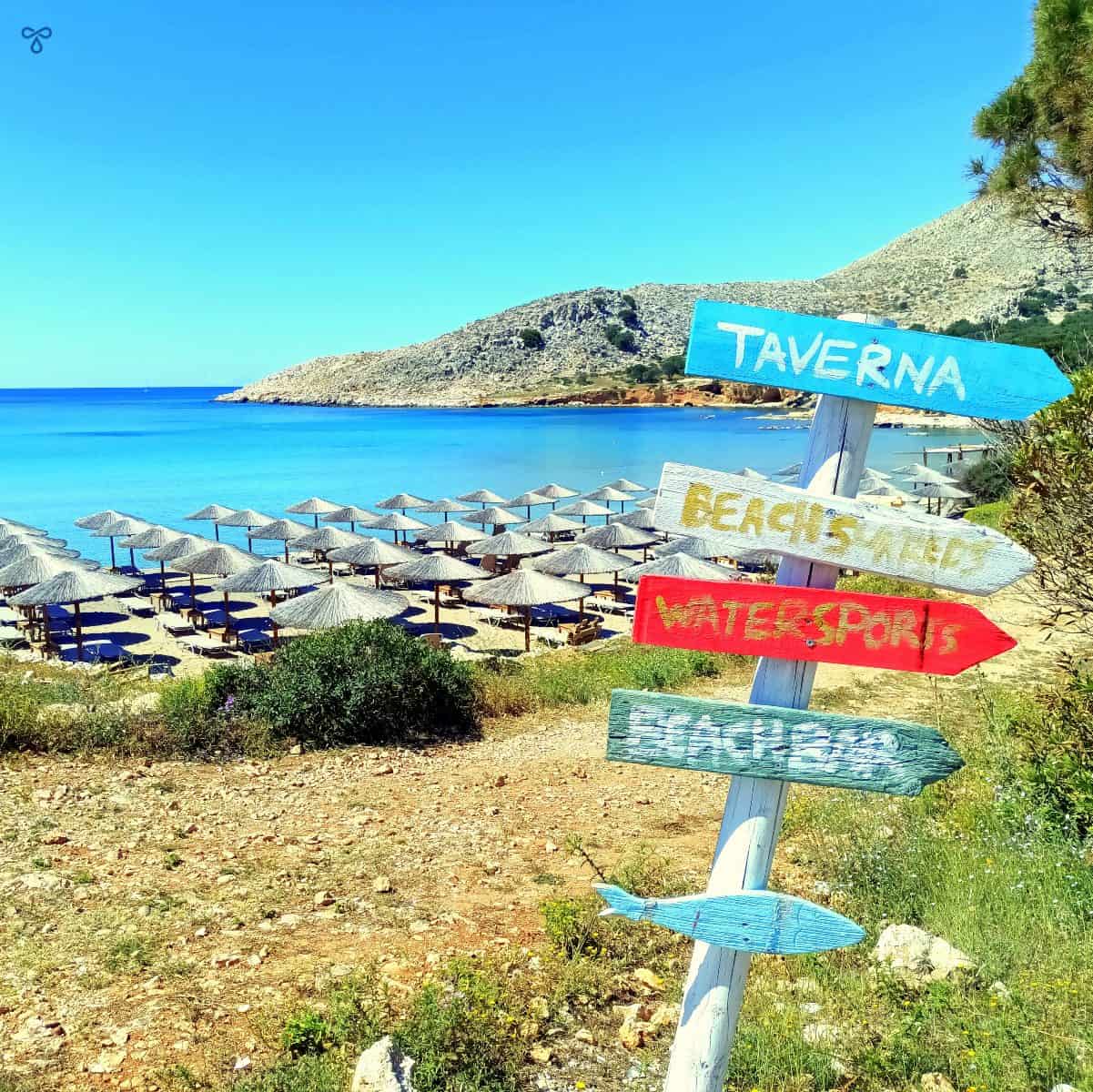
From photos we’ve seen online, it looks like you can hire boats and pedalos, here, in high season. But for us, in low season, just more blissful calm.
Choosing Kania Beach
A limited time on Halki island meant making choices.
On our last day, before the ferry back to Rhodes, we had a choice to make: a walk over the hill to Kania Beach or a walk to the ruins of the abandoned ruins of Chorio, the old capital of Halki.
This area is a significant part of the history of Halki. Just above the abandoned village, perched high on the hill is also the 14th Century castle of the Knights of St. John.
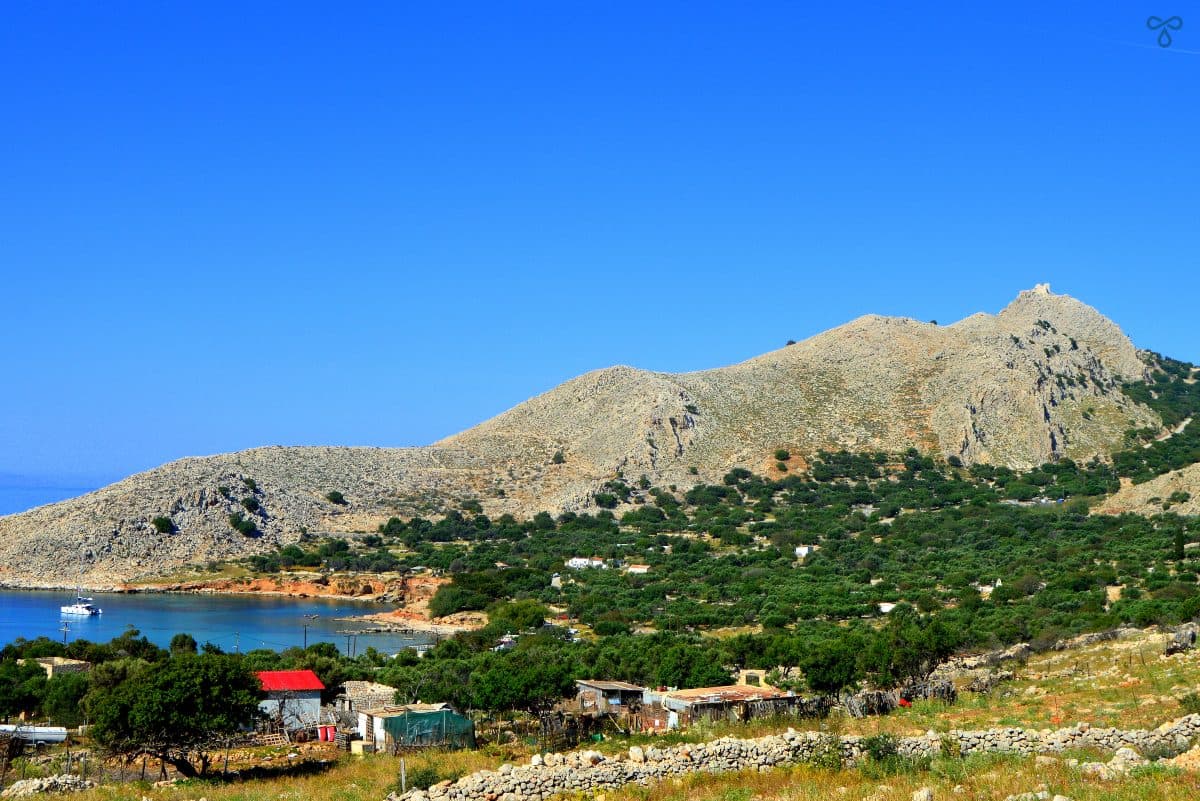
Despite being an island of sponge divers, the residents of Halki were forced to live here, away from the sea from medieval times up to the 19th century because of the threats posed by pirates.
As the pirate threat reduced, that’s when islanders started to move to the port area we see today.
It’s described as a ‘breathtaking view’ from the castle. But on the day when we had to make a decision, the skyline was hazy.
So we opted to set off on the route to Kania Beach. A climb up and over a hill, seclusion and stunning views.
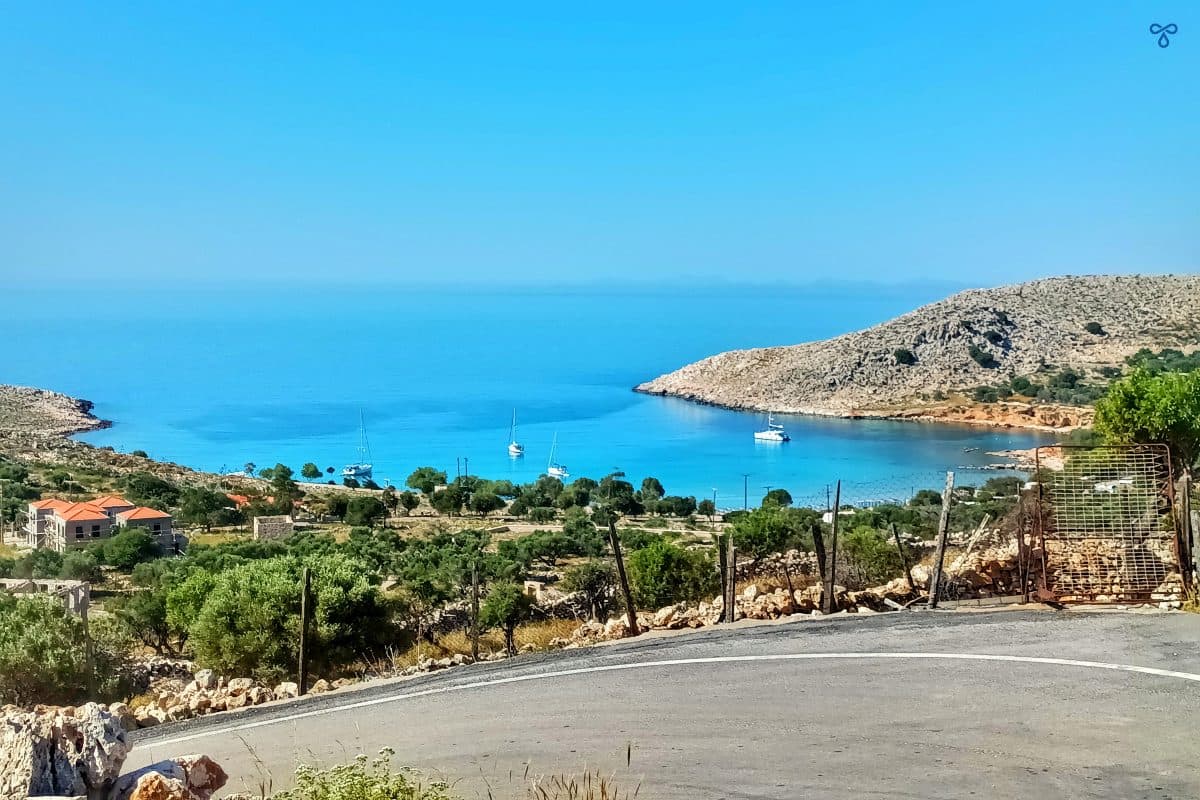
Don’t be put off by the fact that these are road walks. There are precious few roads on Halki island – and there are precious few vehicles that use them.
No mopeds zipping around. No hire cars. Just the one taxi!
So it was just us and our Halki surroundings. And a couple of goats en route.
Plus a bit more greenery – we saw vines growing here and a good few fig tree saplings. A move towards a bit more self-sufficiency?
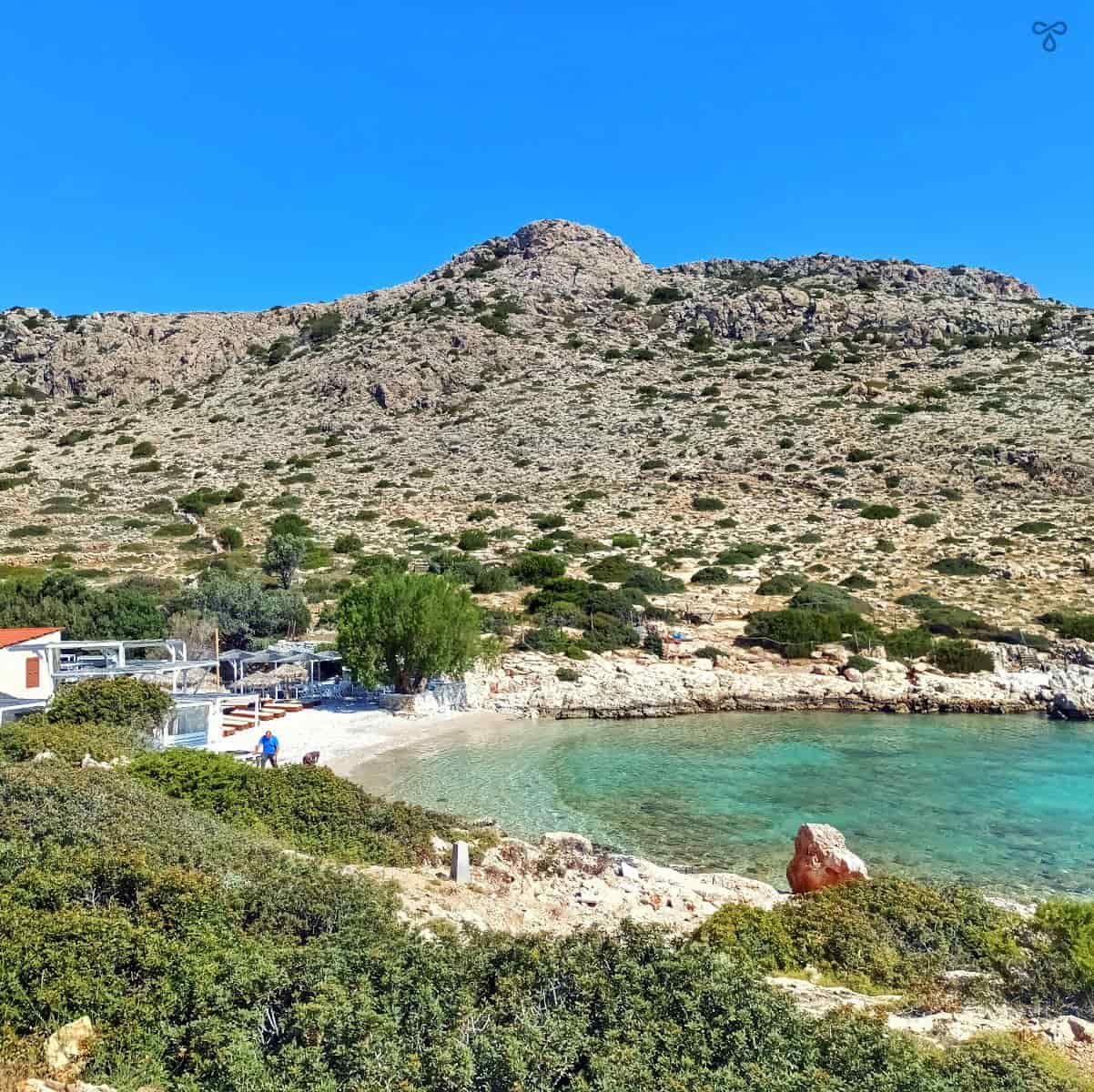
As we arrived, Kania Beach looked just perfect – and closed! Not yet open for the season.
We’d brought water and the walk was the most important. So not to worry!
And a walk to the end of the road, further along revealed the island’s boat yard (we’d been wondering where it was) and the all important solar panels.
The Greek island of Halki is self sufficient on energy!
The initiative was launched in 2021. And the Greek government aims to extend this to all of the islands with the aim of gradually turning the islands into 100% green and sustainable autonomous destinations.
Halki does feel different as a result of this. The solar park means islanders can fully cover their energy needs without relying on Rhodes island as they had to in previous years.
Halki Island Boat Service
But don’t worry if you’re not fancying walking everywhere just to get to the beach.
There are local boats available to rent from the harbour that will take you on day trips to these beaches along with two others – Areta Beach and Trachia Beach – accessible only by boat.
These are for the hardcore beach lovers – and we are anything but.
Halki Nimborio Life
We love a good leg stretch – but we also love to wander localities, too. Checking out the streets and alleyways – and the food and the drink!
None of this is overly taxing on Halki island as the harbour area is pretty much it!
The Traditional House Of Halki
Whilst we knew it was a part of the neighbourhood, we stumbled across the Traditional House of Chalki whilst we were exploring the narrow streets and alleyways of Nimborio.
The lady who created this set up is Anthi Fanarakis and the house is a big box of memories – a display of traditional Halli life.
Her Halki life.
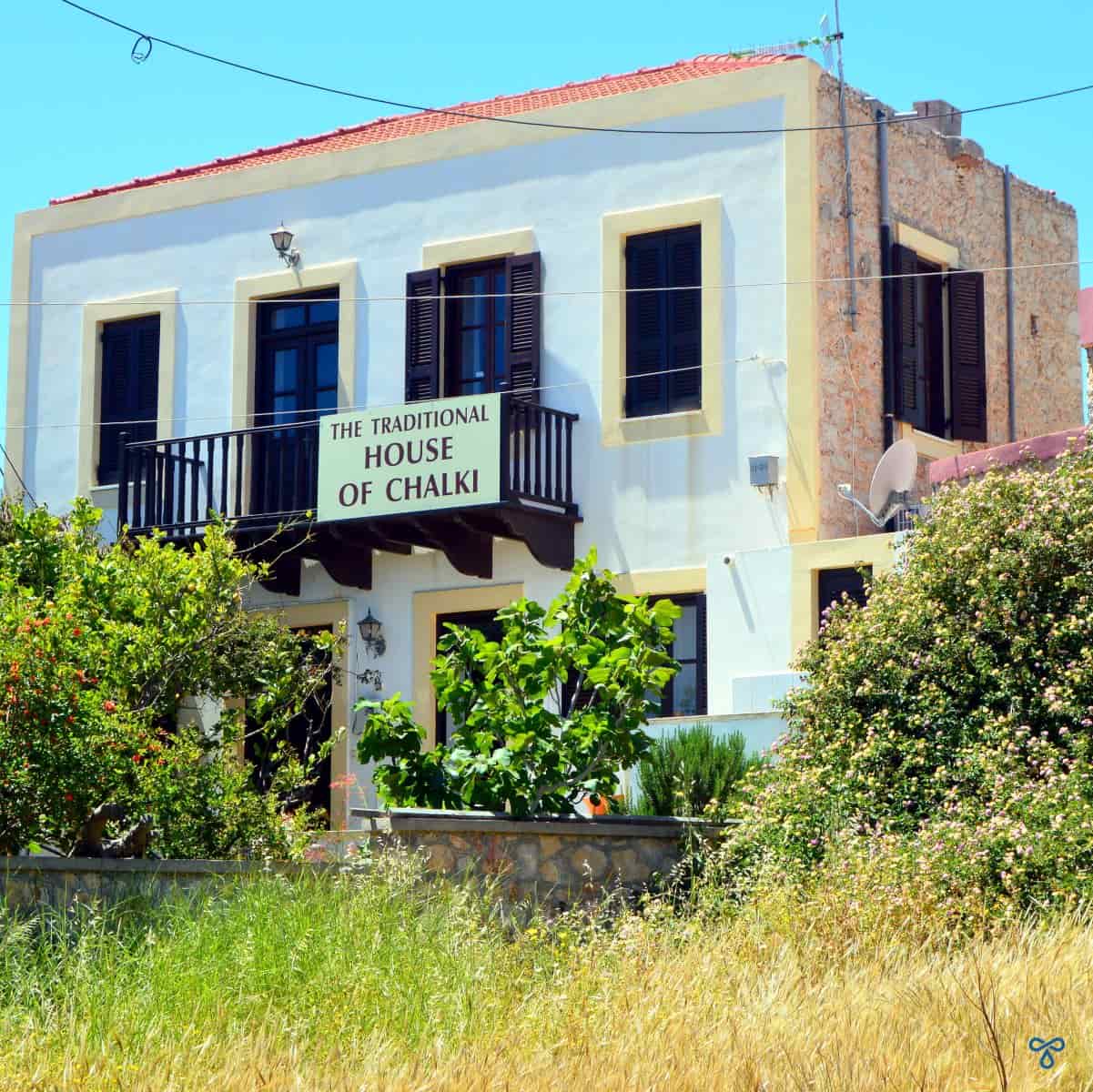
Her old family photos, crockery, the window drapes she made herself, the old olive press they used – so much to see in a tiny space.
And it all felt so personal – a lady dedicated to preserving what was, using her own collections. We didn’t take photos inside – we’re sure she wouldn’t have minded – but it felt a bit too intrusive.
Well worth a look.
The Church Of Agios Nikolaos
You can’t miss the clock tower and the huge (in relation to the size of the current population) town hall of Halki just next door.
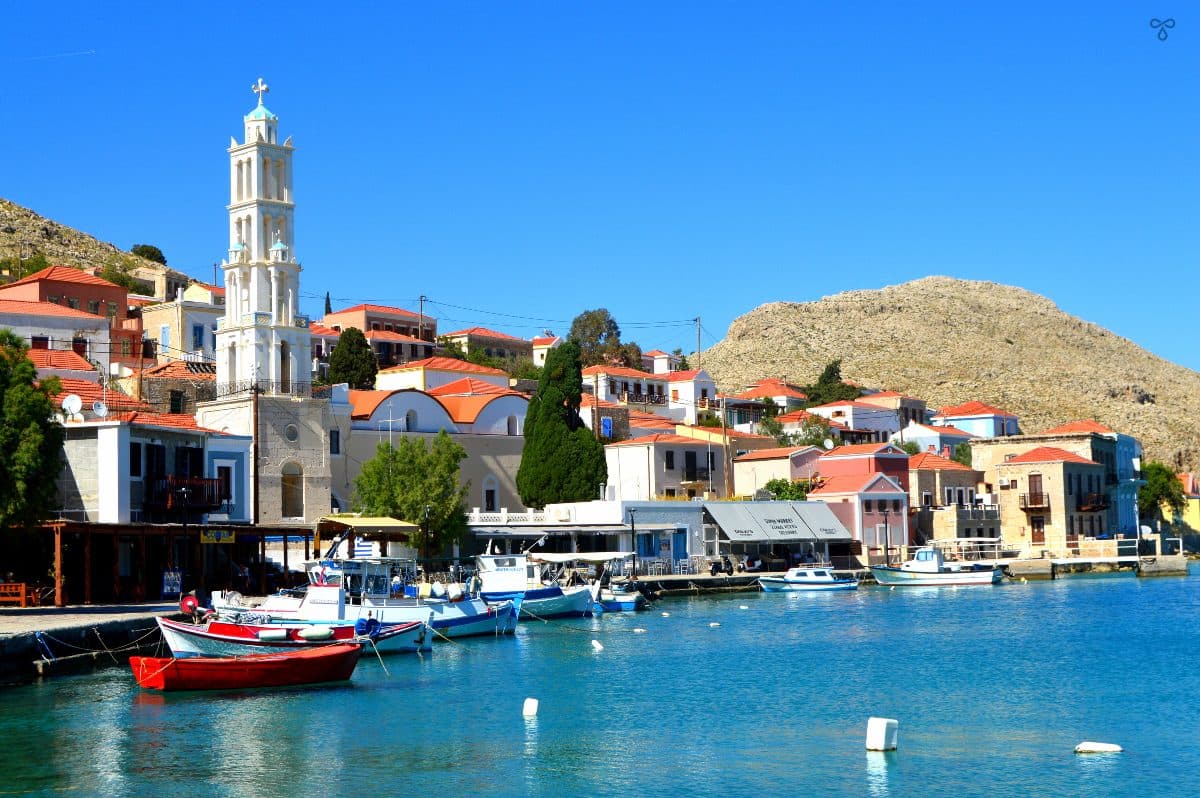
And right on the seafront is the island’s Church of St. Nicholas (Church of Agios Nikolaos).
This is an active church. And you can enter at the weekend – of course, we weren’t there on a weekend day – but even when it’s closed, it’s possible to enter the courtyard.
This is worth doing as the traditional Dodecanese Chochlaki (black and white pebbled mosaics) is pristine.
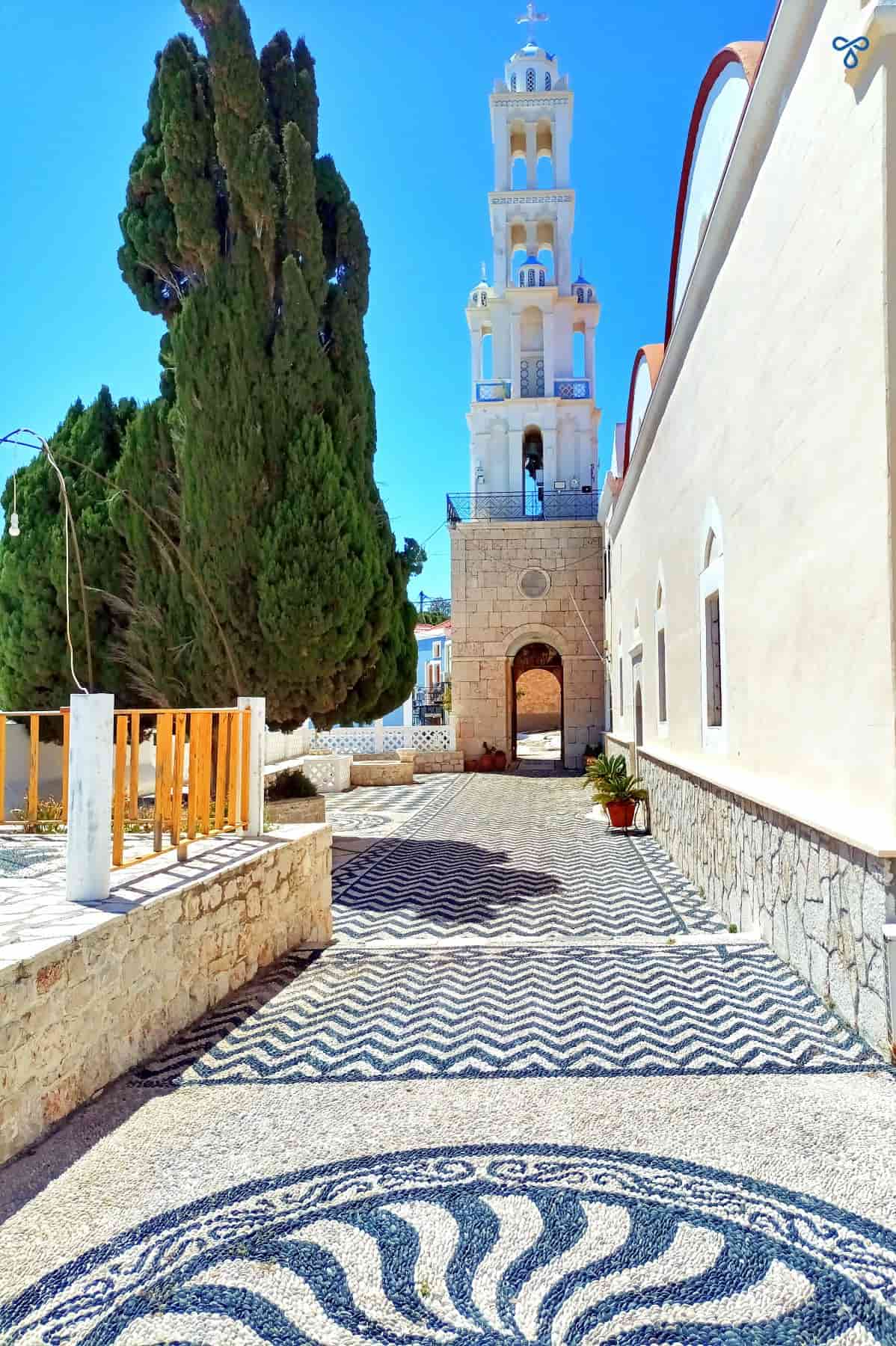
And, as you exit via the archway under the bell tower, look up at the colourful mural depicting St. Nicholas – patron saint of children and sailors – leading a boat filled with sailors to safety.
Good Food, Good Mood
Such a small island with much of the population concentrated around the hillside of the harbour. An island whose economy is built on sustainable tourism, small scale fishing and green energy.
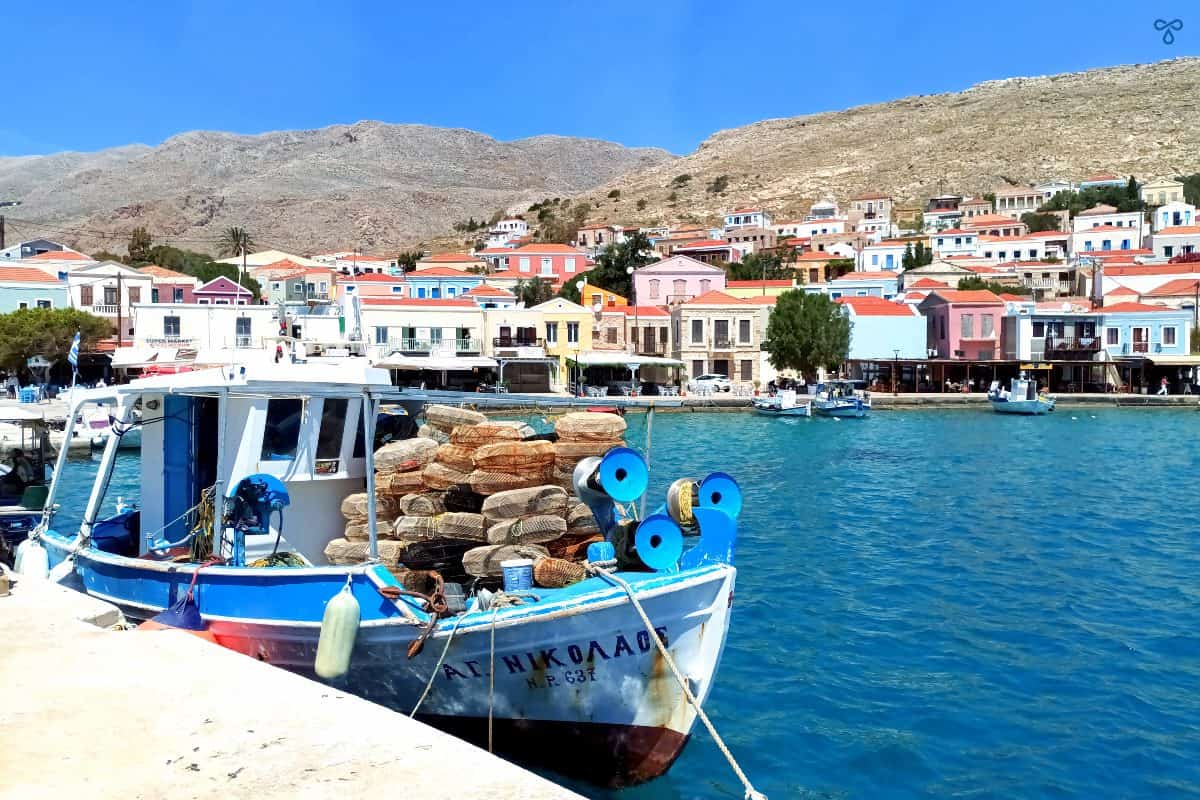
A handful of tavernas line the seafront on Halki island and you will eat well!
Whilst some foods are brought over from nearby Rhodes, fresh fish and the famous locally caught Halki shrimps are on the menus.
You’ll see traditional Greek cuisine classics that we all know and love – taramasalata, Greek moussaka, kolokithokeftedes (my favourite)…
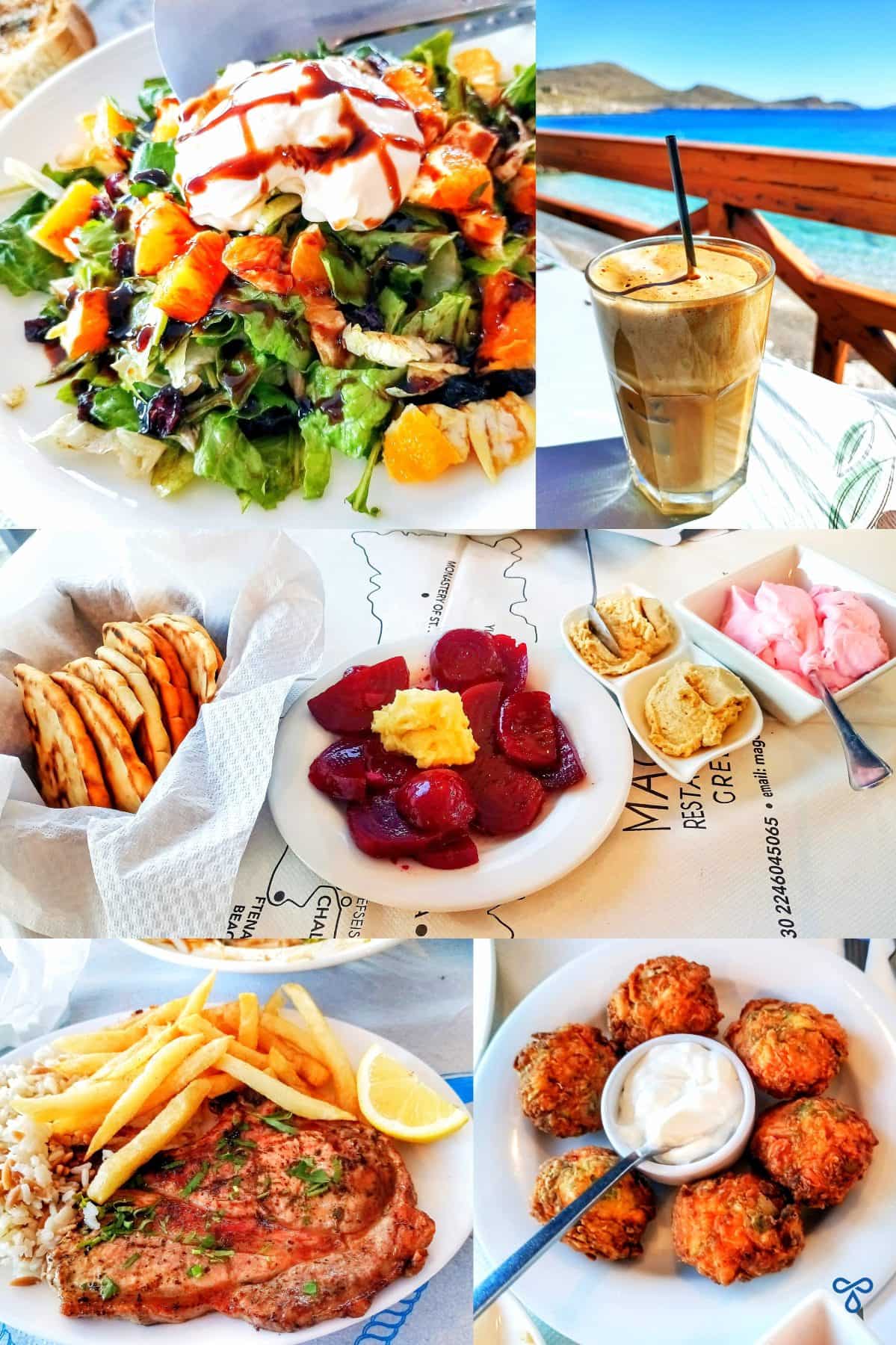
But you’ll also see some great seafood dishes and salads that are just a bit different. The sea urchins in the water are huge! One taverna had a sea urchin salad on the menu.
And there was sometimes a distinct crossover with Turkish cuisine, too.
Turkish rice pilaf is pilafi. Nar ekşisi (pomegranate molasses) was on every table as a condiment – and on our salad, as you can see.
The salad was huge and filled with dried fruit and walnuts. Pickled beetroot (yes, that is a huge dollop of smashed fresh garlic on top of it) and hummus.
And, as we said, no mass tourism, here. It’s all very low-key and chilled.
Each night, we were given a free dessert – ice cream and mosaic cake – and, in one place, a free post-meal shot, too.
We went back to that place for our last couple of hours whilst we waited for our ferry back to Rhodes. Return visitor? Here’s a gift.
We’re now drinking our morning coffee from two mugs, gifted to us from a Halki taverna.
If you want to go to a beautiful Greek island and chill and not feel like you ought to be rushing around ticking off sites and sights, Halki island is that place!
Halki Island, Greece – FAQs
If you love serenity and a relaxed pace of life on a Greek island that is going all out for sustainability, then Halki is definitely for you.
If you like shopping, vibrant nightlife and sights galore, you might prefer a different destination.
There is no letter in the Latin alphabet for the Greek pronunciation of X in the Greek alphabet. This has led to the variations in spelling.
If you want to walk/hike to different beaches and also explore Chorio, the castle and monasteries, May to early June and September will be the best time to visit.
In recent years, Halki is becoming increasingly popular as a day trip from Rhodes. So the harbour area and the nearest beach could be busy in the day times in the summer season.
There is no airport on Halki so you will need to arrive by ferry.
From Athens, it is possible to get a ferry from the port of Piraeus. However, this is a journey of around 20 hours.
Most visitors fly to the closest airport, Rhodes Diagoras Airport, and take a ferry from the island. There are direct flights to Rhodes from many European countries during the summer season.
Depending on which company you book with and the day you travel, ferries leave from different ports on the island.
Kamiros Skala is on the west of the island and is perhaps the best place to take a ferry from as the journey takes less than one hour.
Larger ferries leave from Rhodes Port and take two hours.
We travelled to Halki island by taking the high speed ferry from Fethiye to Rhodes. This is also an option from Marmaris.
Although we stayed overnight in Rhodes (just because we wanted to), depending on your day of travel, it is possible to do the journey in one day, catching an onward afternoon ferry to Halki.
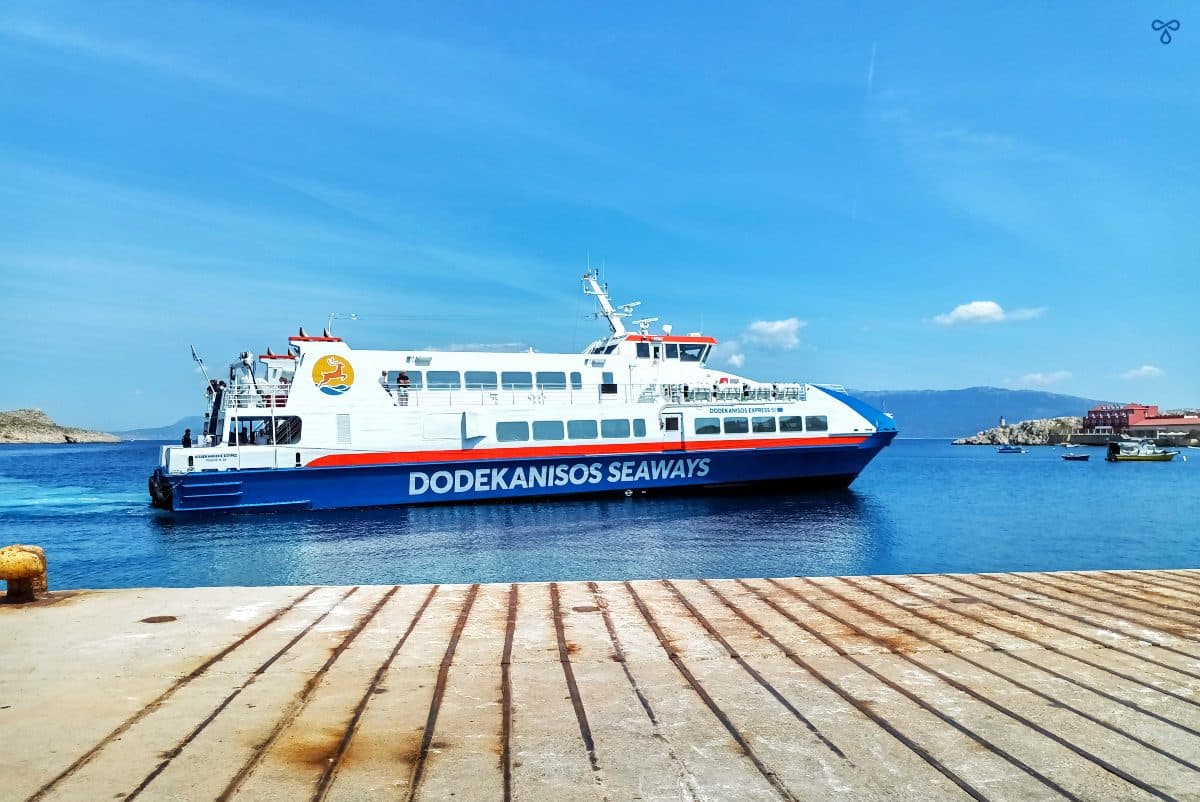
We sailed to Halki on a large ferry that was en route from Athens to Santorini. We returned to Rhodes by high speed ferry (see photo, below).
Make sure you are there, waiting, for the high speed ferry. Turnaround time is very quick and they leave as soon as they have arrived.
All of our trips were booked via the Ferryhopper app.