Homemade Pickled Beetroot Recipe - Irresistible Pancar Turşusu
If you know Turkish food, you will know pickles (turşu) feature widely! And pickled beetroot or beets - pancar turşusu is very much a favourite pickle recipe of ours.
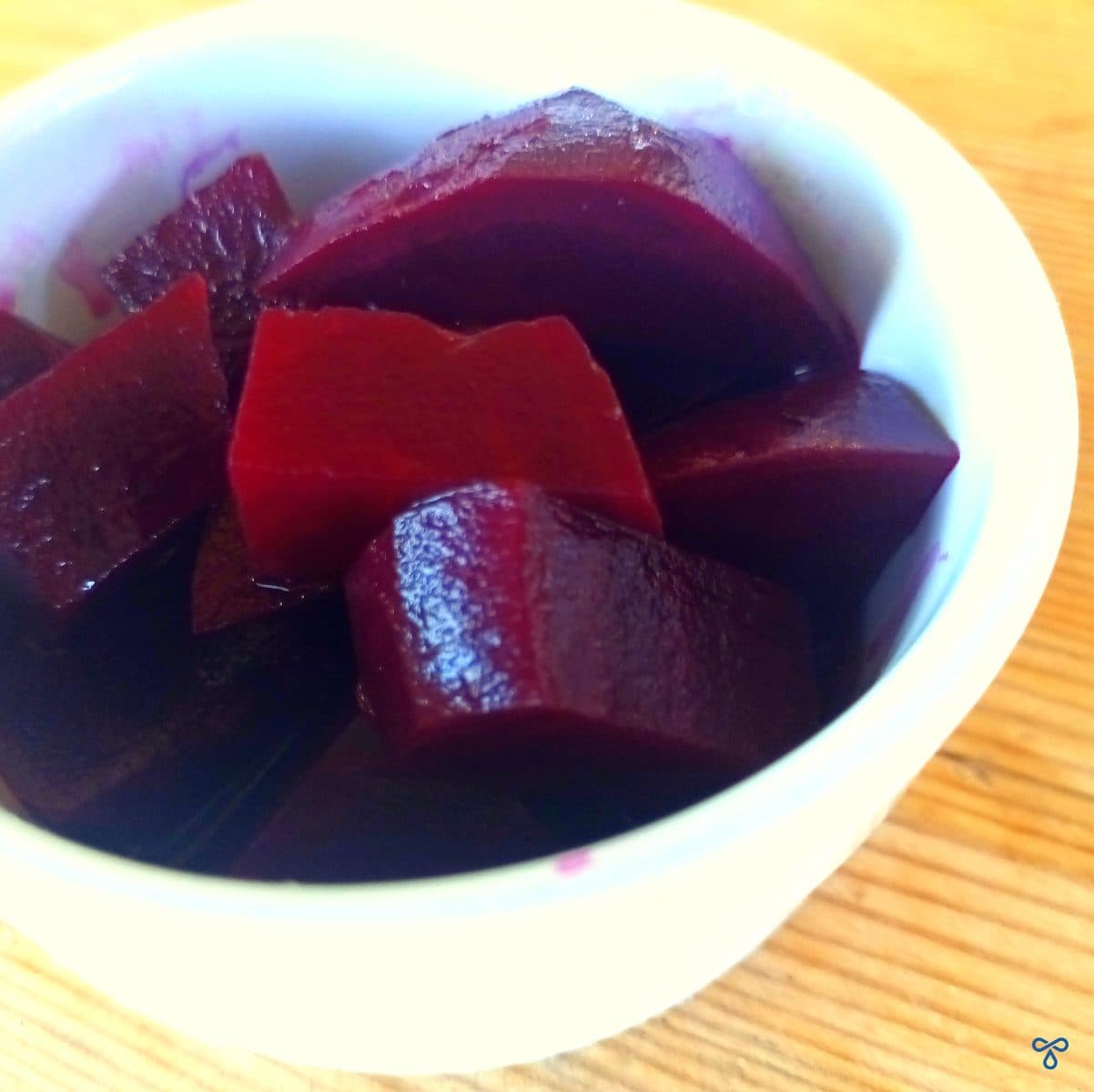
Pickled Beetroot - Pancar Turşusu
We LOVE pickled beetroot. And, along with pickled red cabbage, it is very definitely the pickle that I make the most of throughout the year.
A perfect side dish. If you can make them last that long and resist eating them straight from your glass jars, that is!
I am forever plunging a spoon into the jar and eating a few chunks - vinegar and all - when I open the fridge door.
As Brits, we love pickled beetroot or red cabbage as an accompaniment to our meat and potato pie.
So it's often a part of our Turkish-British Christmas and New Year recipes (New Year's Eve meat and potato pie is a tradition for us).
And pickled beetroot is also one of the Turkish meze plates we always order when we're having a treat meal at local Fethiye restaurants.
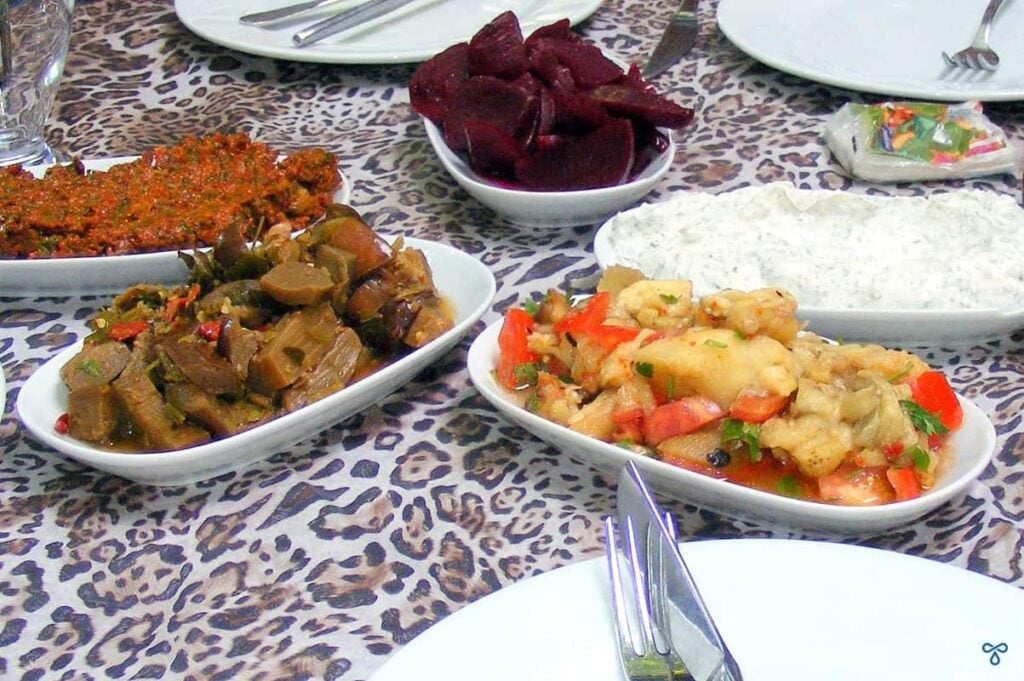
It compliments so many dishes so it doesn't really matter what other meze plates you choose to go along with it.
A Great Addition
A great addition to almost anything else in the display fridges!
You'll know our regular meze choices if you read this blog a lot.
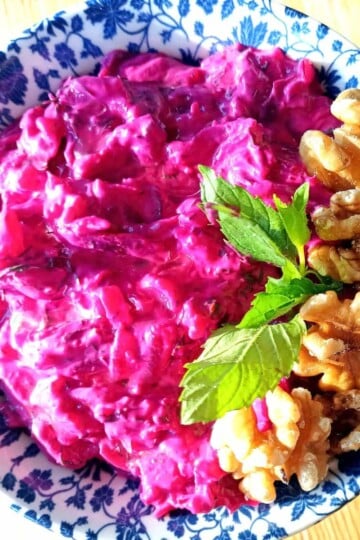
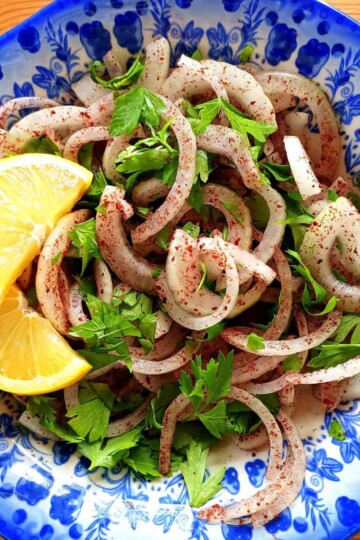
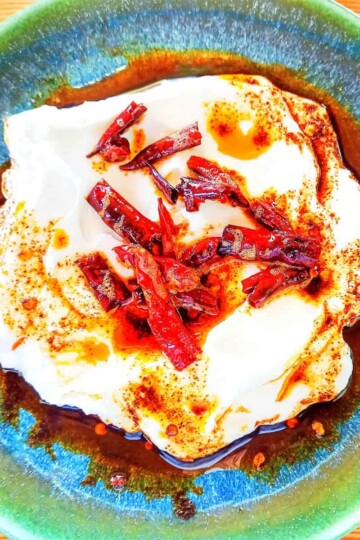
Alongside our pickled beetroot - pancar turşusu - there's often fiery atom, cooling haydari yoghurt dip, spicy Antep Ezmesi, other pickled vegetable varieties - the super-spicy pickled aubergine is a delight that we're yet to make at home - and a Turkish salad or 'yeşil tabağı' (green plate) of some description.
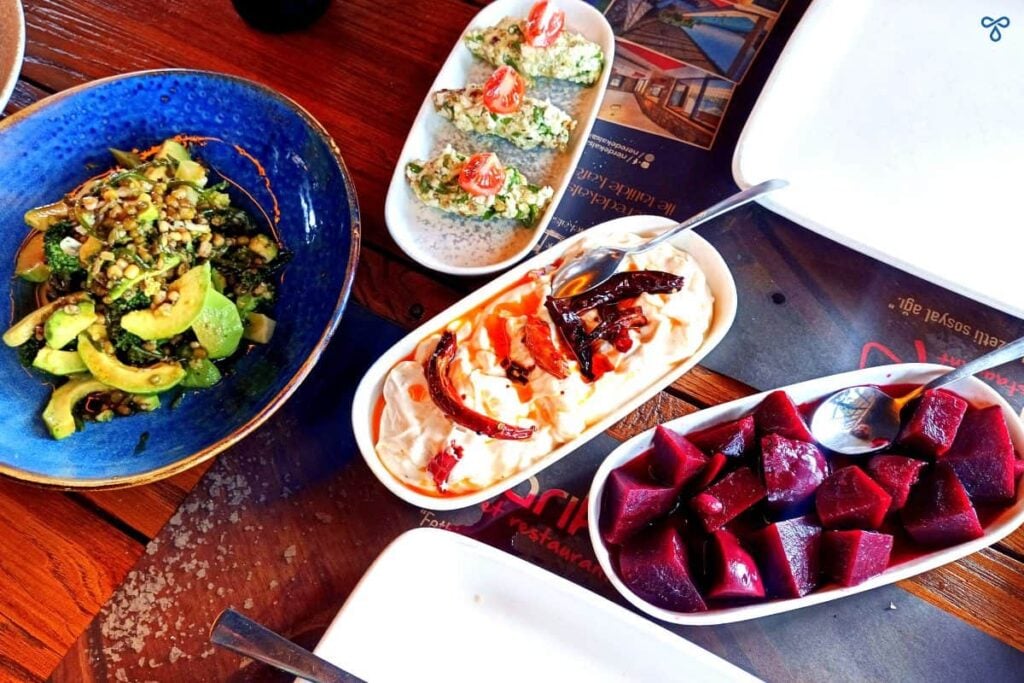
We love to make the yeşil tabağı of mung bean, broccoli and avocado salad that we were introduced to at Çarıklı Et Restaurant along Fethiye harbour.
When you order pickled beetroot as a meze, it is often slightly spicy. And for us, the spicier the better.
So, when we do our own pickled beetroot recipe at home, there are always chillies involved - be they fresh chillies, dried or pul biber (hot chilli flakes or red pepper flakes).
And, as you can see in the photos above, you can cut your beetroot into chunks or thick slices. Whichever you prefer.
Pickling the beetroot is definitely a favourite way of eating this root vegetable!
Beetroot Superfood
And the great thing about delighting in pickled beetroot is you know you are getting oodles of health benefits.
It's a real superfood with an above average amount of vitamins and minerals per gram.
Shown to promote cardiovascular health and enhance exercise performance, many athletes drink beetroot juice as part of their nutrition programme.
As we always say, we're not nutritionists so we leave those articles to those who are.
How To Cook Your Beetroot
If we decide to do some quick pickled beetroot, we'll buy a pack of ready-cooked beets. Then just put them straight into a homemade pickling vinegar solution.
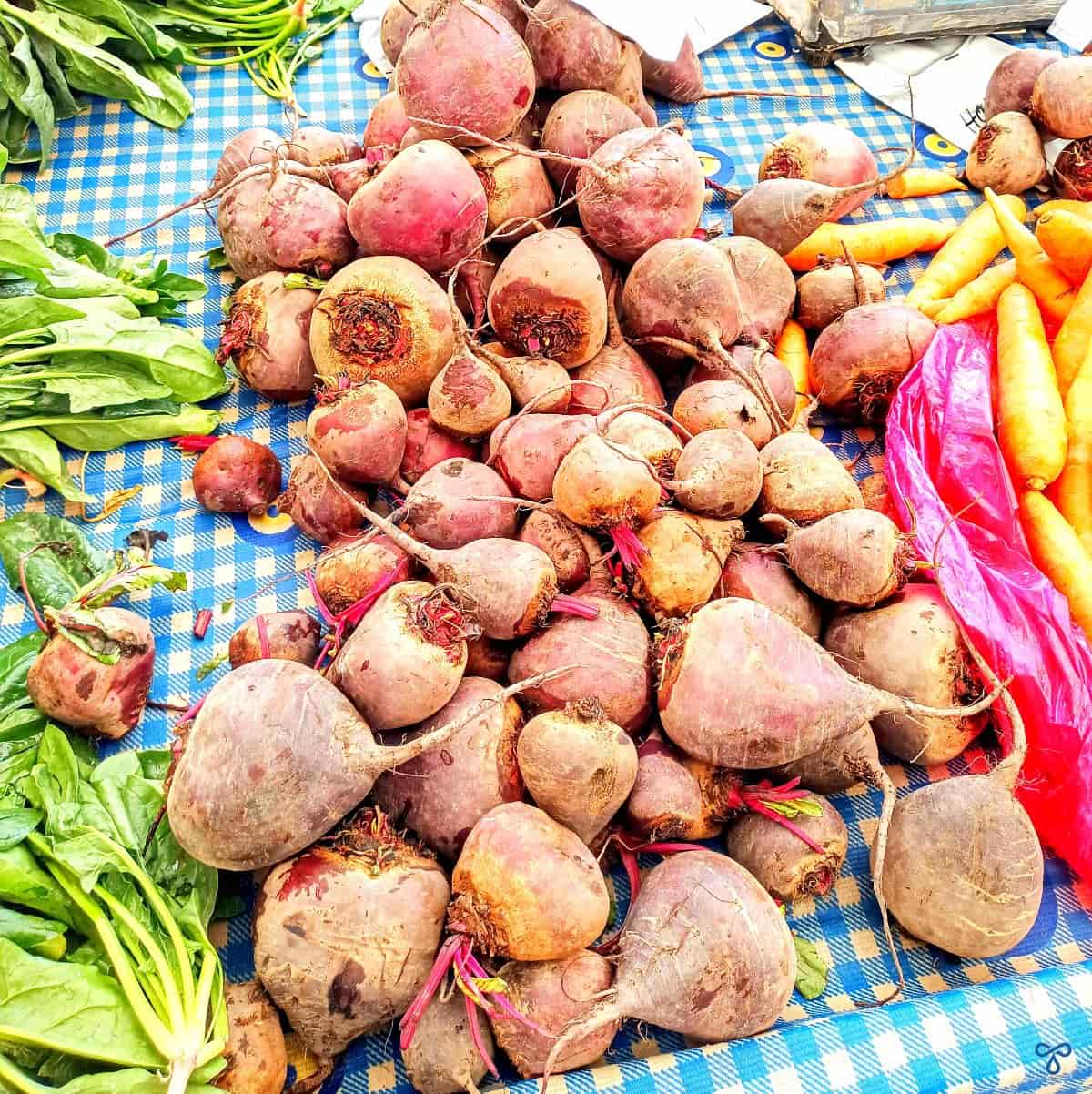
But our best pickled beetroot recipe uses fresh beets or beetroot from the local markets.
Full control over our ingredients and full control over how firm we want our cooked beetroot to be.
Bake Rather Than Boil

We also roast or bake our beetroots rather than boiling them.
They apparently keep more of their nutrients in this way. And, well, we just find it to be the easiest way to cook them. Less mess.
Just try to make sure your beetroots are roughly the same size so that they all cook at roughly the same rate.
If they're different sizes, you'll need to check on the smaller ones to make sure they're not going too soft.
Give them a scrub. And, if they have their stalks and leaves on, cut these off (don't discard them - they're great in salads) but make sure you leave a little bit at the top.
This will help to prevent your beets from bleeding.
Bake In Tinfoil
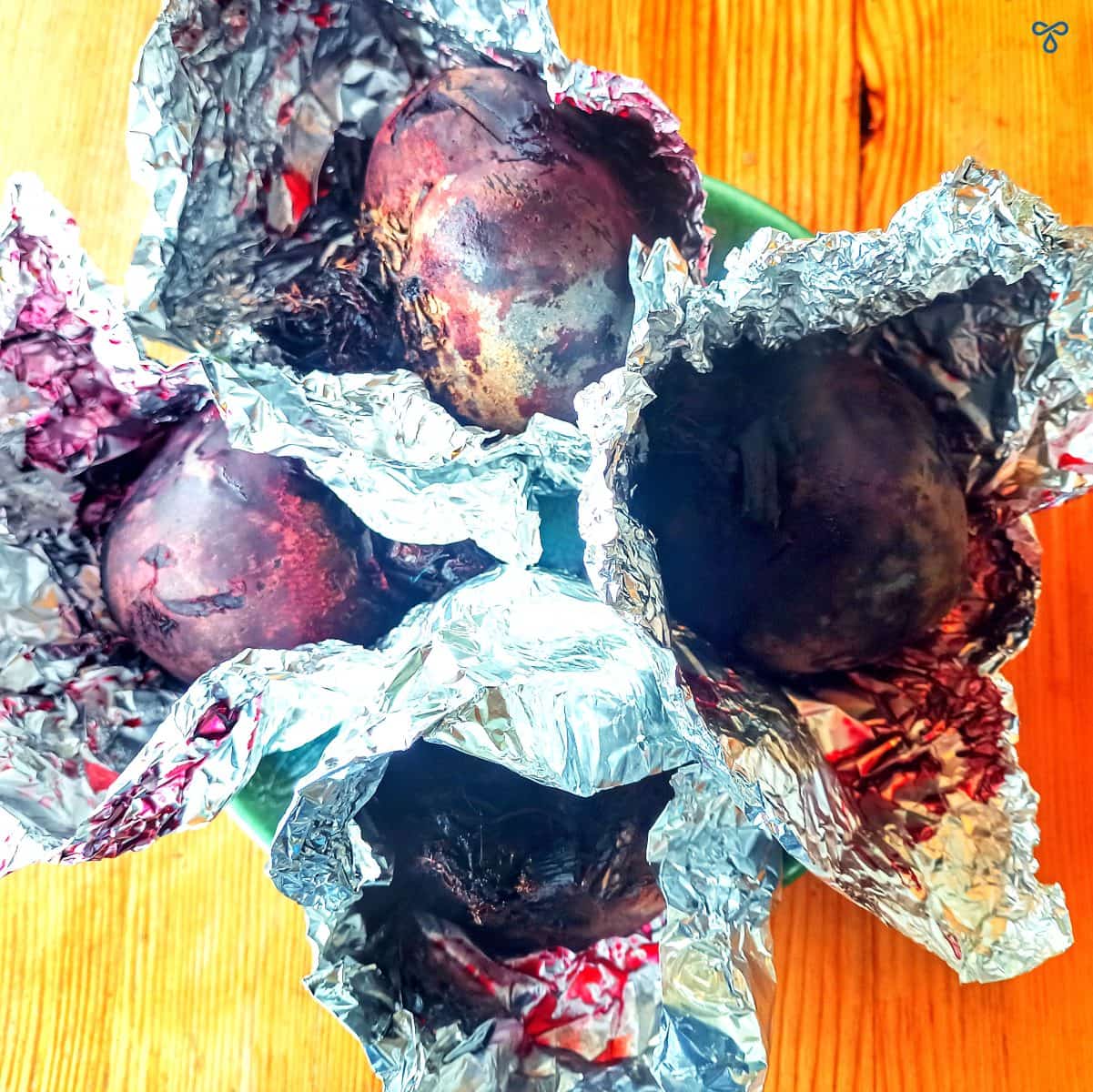
We bake our washed beetroot, wrapped loosely in tinfoil, at 200 degrees for approximately 1 hour 20 minutes. You're looking for a firm beetroot that is soft enough for a sharp knife to pierce easily.
The length of time you need to bake them is obviously going to depend on the size of your beetroot. And how your oven behaves.
In this photo, our beetroots were approximately 250 grams each so we had a kilo in total.
And, as you can see, they still manage to bleed a little during the cooking process.
Gloves
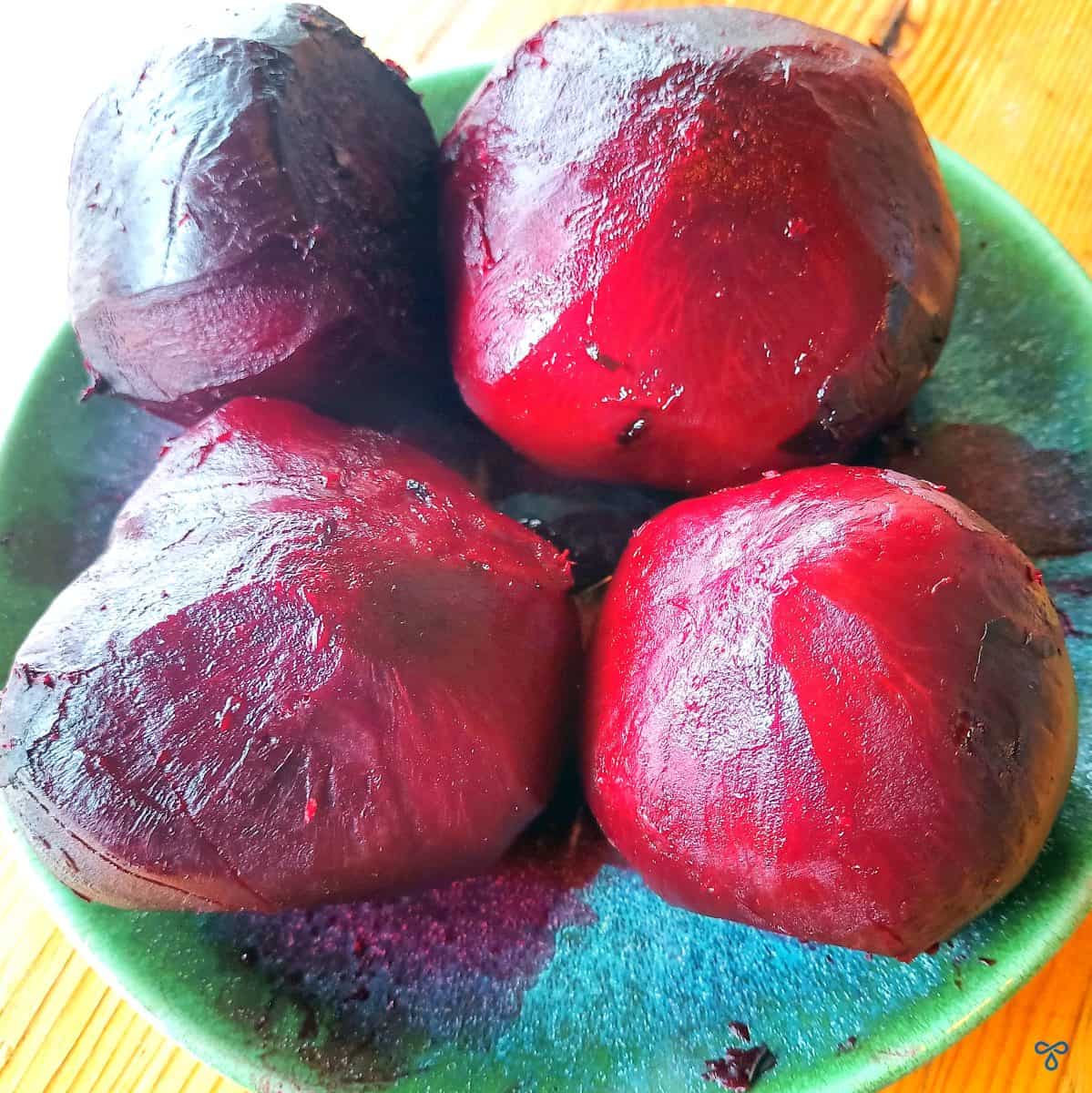
If there is one thing we never do at home, it's using gloves to prep or cook food.
Even when cutting beetroot up, I just make sure to wash my hands immediately afterwards. If you're quick enough, no pink stains.
However, when it comes to peeling beetroot, this is where I cave in and use the gloves. Things soon get very magenta-ish!
We let them cool to room temperature and then peel them with a vegetable peeler.
And then it's up to you whether you want to cut thick slices or whether you prefer chunks. We fall into the chunk camp.
Pickle Vinegar Experimentation
Whilst you're cooking your beetroots, you can also prepare your pickling liquid. Which, of course, will mainly consist of vinegar.

Typically, Turkish pickles tend to be a more salty brine. But when it comes to pickling beetroot, we love the strong spicy vinegar flavours at our local restaurants.
Our spices are not hard and fast but, generally, we use whole spices like whole cloves, mustard seed and coriander seed. And not forgetting the chillies!
We also like to add a little fresh ginger, too. You can leave this whole or grate it.
In a small saucepan, we bring our vinegar mixture to a rolling boil as your sugar dissolves and then we let it simmer on a low heat for a few minutes.
And then we remove it from the heat but leave the lid on.
The simmering takes some edge off the vinegar and also allows your spices to infuse.
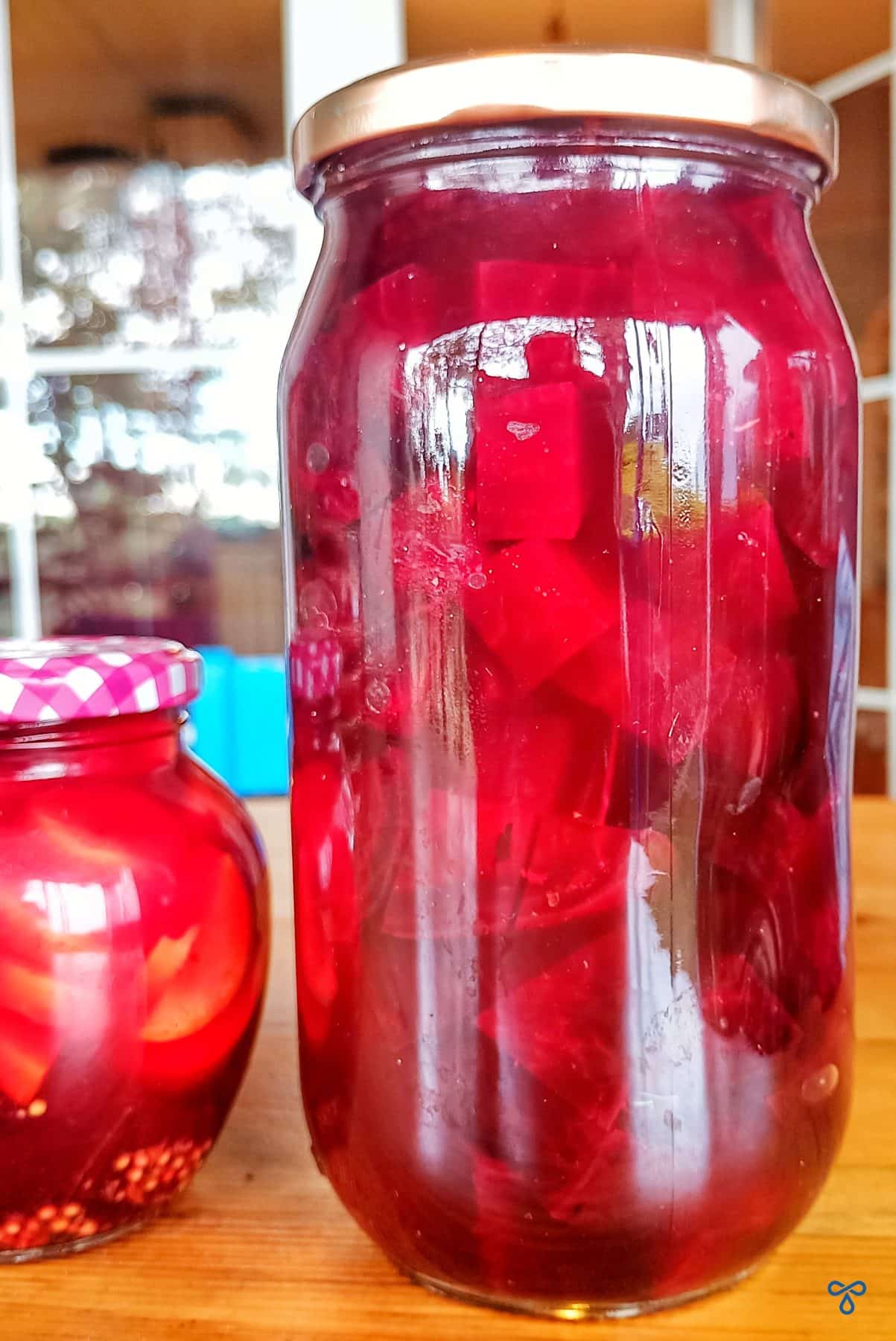
And once your hot vinegar has cooled to just above room temperature, you can load your beetroot into sterilised glass jars, pour over the lukewarm vinegar mixture and seal.
And the great news is, your beetroot will absorb your vinegar really quickly so you can start to enjoy them within three days...
...and then they don't last too much longer after that in our house!
Pickled Beetroot Recipe - FAQs
The real answer is, it's up to you which type - or types - of vinegar you use for pickling your beetroot, depending on your taste and how long you want to store your pickles for.
Growing up in the UK, we've grown up with strong pickles so we like a strong vinegar. We use the standard Turkish grape vinegar; üzüm sirkesi (this is similar to UK standard malt vinegar). We also add a splash of apple vinegar (apple cider vinegar), water and a touch of brown sugar just to take the edge off.
This mix gives us the type of pickled beetroot meze (pancar turşusu) flavours we're familiar with here in Turkey.
If you prefer, you can use malt vinegar, plain white vinegar, white wine vinegar or red wine vinegar.
And if you want a sweet pickled beetroot, you can use balsamic vinegar.
I often make a quick grated pickled beetroot without first boiling the vinegar. This is fine for immediately adding to salads and sandwiches.
For eating as part of a Turkish meze experience, however, where the pickled beetroot is served on its own plate and enjoyed as it is, the flavours from the infused spices, salt and sugar are much better when the vinegar has been boiled.
As a very general rule of thumb, one kilogram of beetroot will fit into a one litre jar and you will need around 700 millilitres of pickling vinegar to cover them.
We'll be honest; when we make pickled beetroot, we have eaten it all up before the time comes where we would need to worry about sterilising the jars very carefully.
But, if we are making multiple jars and we want to store our pickled beetroot over a period of months, we wash the jars and lids in hot soapy water, rinse them thoroughly and then pour boiling water over them in the sink and leave them immersed for a minute before removing.
Make sure your lids are immersed in boiling water, too.
If you have made numerous jars of pickled beetroot for long-term storage, stored unopened in a cool dark place, your pickled beetroot will last for approximately a year (less for balsamic vinegar as this has a lower pH level).
Refrigerate your beetroot after opening and you'll have around three months to enjoy it.
As with many pickles and chutneys, a period of maturing is often advised before you crack open your pickled beetroot - usually around 2 weeks.
We're impatient and often break the seal after around three days. Unlike some other vegetables. beetroot absorbs your flavours quite quickly.
Pickled Beetroot Recipe - Pancar Turşusu
Okay, let's make our homemade pickled beetroot.
And if you love this root vegetable as much as we do, check out another meze from our Turkish recipes collection; the wonderfully colourful pembe sultan.
We also add beetroot to our springtime green pea and feta salad.
Homemade Pickled Beetroot - Pancar Turşusu
Equipment
- 1 chopping board
- 1 sharp knife
- 1 saucepan
- 1 sterilised glass jar with lid (approximately 1 litre)
- 1 vegetable peeler
Ingredients
- 1 kilogram raw beetroot (left whole with tops on)
- 600 millilitres grape vinegar (or vinegar of choice)
- 50 millilitres apple vinegar
- 50 millilitres cold water
- 1 centimetre ginger (peeled)
- 1 teaspoon coriander seeds
- 1 teaspoon mustard seeds
- 1 teaspoon cloves
- 1 teaspoon hot chilli flakes (or 1 dried chilli, roughly chopped)
- ½ teaspoon black peppercorns
- ½ teaspoon brown sugar
Instructions
- Preheat your oven to
 200 °C whilst scrubbing your beetroots.
 - Now loosely wrap each beetroot in tin foil and place on a baking tray in the centre of the oven.
- Meanwhile, add your spices (except the salt, sugar, chilli and ginger) to your saucepan and toast on a low heat for a couple of minutes until they release their aromas.
- Now turn the heat to high and add your vinegar and water mix.
- Bring to the boil and add your salt, sugar, chilli and ginger.
- Now reduce the heat to low, cover and leave the mix to simmer for 10 minutes before removing from the heat and leaving to cool with the lid on.
- How long you cook your beetroots depends on their size. We cook 4 large ones - approximately 250 grams each - for 1 hour 20 minutes. Smaller ones will take less time so check them after an hour to make sure they don't get too soft.
- When your beetroots are cooked, unwrap the foil and allow them to cool.
- Once cooled, use gloves to peel your beetroots with a vegetable peeler and then either cut them into thick slices or chunks.
- Now add the beetroot to your jar, making sure it is snugly packed.
- Pour over the pickling vinegar mixture, ensuring the top layer of beetroot is submerged and then secure with the lid.
- Now wait (im)patiently for a minimum of three days until your pickled beetroot is ready to enjoy.

Notes
- As with all of our recipes, the nutritional information for our pickled beetroot recipe is meant as a rough guide only. They are calculated by a 3rd party API so if you have any special dietary requirements, please do your own due diligence.
- We use standard Turkish grape vinegar for pickling as we like the strong flavour. Feel free to use other vinegars and/or more water if you prefer.
- Try to get beetroot / beets that are roughly the same size so that they bake at the same time.
- Lots of people leave their pickled beetroot to mature for 2 weeks before opening. We find 3 days is enough but you can leave yours as long as you like. Refrigerate after opening.
Nutrition
Afiyet Olsun!