
A Bodrum To Kos Day Trip - Exploring Kos Town On Foot
A trip on the ferry to the Dodecanese Greek island of Kos was in order!
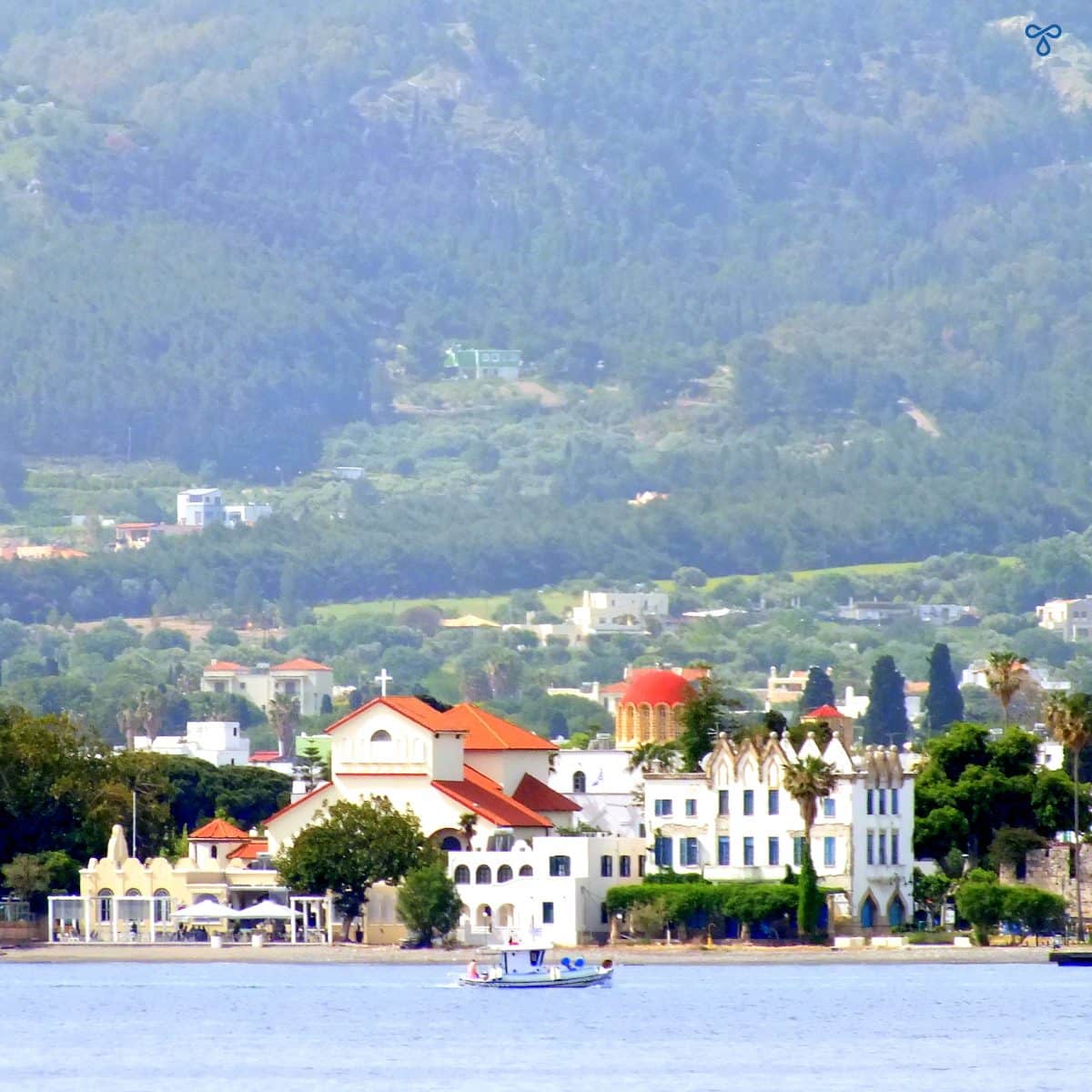
Want the practical stuff first? Jump straight to ferry prices, visa info & booking →
This beautiful country of Turkey that we live in; so much to see and do. And we do and see a lot.
Still much of the Turkey map to be explored of course. But there are also other places, in close proximity, that tempt us across borders and waters.
Some of the Greek islands are so close to the Turkish coast that you feel you could almost reach out across the water and touch Greek shorelines.
On one particular Bodrum jaunt, we decided it was high time we took advantage of this close proximity.
A Bodrum To Kos Day Trip - Exploring Kos Town

Isn't it great? The excitement of being in another country even if just for a day trip?
These trips are like little taster sessions.
You can see Kos island, second largest of the Dodecanese Islands, clearly from Bodrum.
But to get there, passports need stamping, residency permits need to be shown (in our case).
And, on arrival, the familiar tones of the Turkish language become the less-familiar Greek tones of the passport police.
Oh, and then there's the slight matter of the completely unfamiliar Greek alphabet, too, of course.
Kos Town was to be our whole new world just for a few hours.

Almost Missed The Ferry To Kos!
And lucky we even made it to Kos, actually.
Alarm clock set on phone. And I woke up to the sound of footsteps of hotel guests, outside our room, heading for breakfast.
Our alarm clock hadn't gone off!
A mad dash ensued.Frantic shower, things thrown in bag (please let everything be in there) and off we strode down the street towards the harbour...
Arrival At Kos Town
Anyway, all was well. And a couple of hours later, after a gentle sail across the Aegean, we were standing on Greek soil, on the harbour of Kos Town, the capital of the island.
Phew!
Let's have a wander around Kos Town...

I love how each of the Greek islands has its own look and personality.
There's certainly no case of 'once you've seen one Greek island, you've seen them all.'
Tiny Meis with its pretty pastel-coloured houses and churches is a perfect relaxation zone.
Arrive at Rhodes by ferry and you're greeted with imposing castle walls; an archway leading you into the mediaeval area of Rhodes Town.
The Castle of Neratzia, Kos Town
In Kos Town, we were again greeted by densely-thick castle walls. Not quite so imposing in their height, though, the walls of the Neratzia Castle.
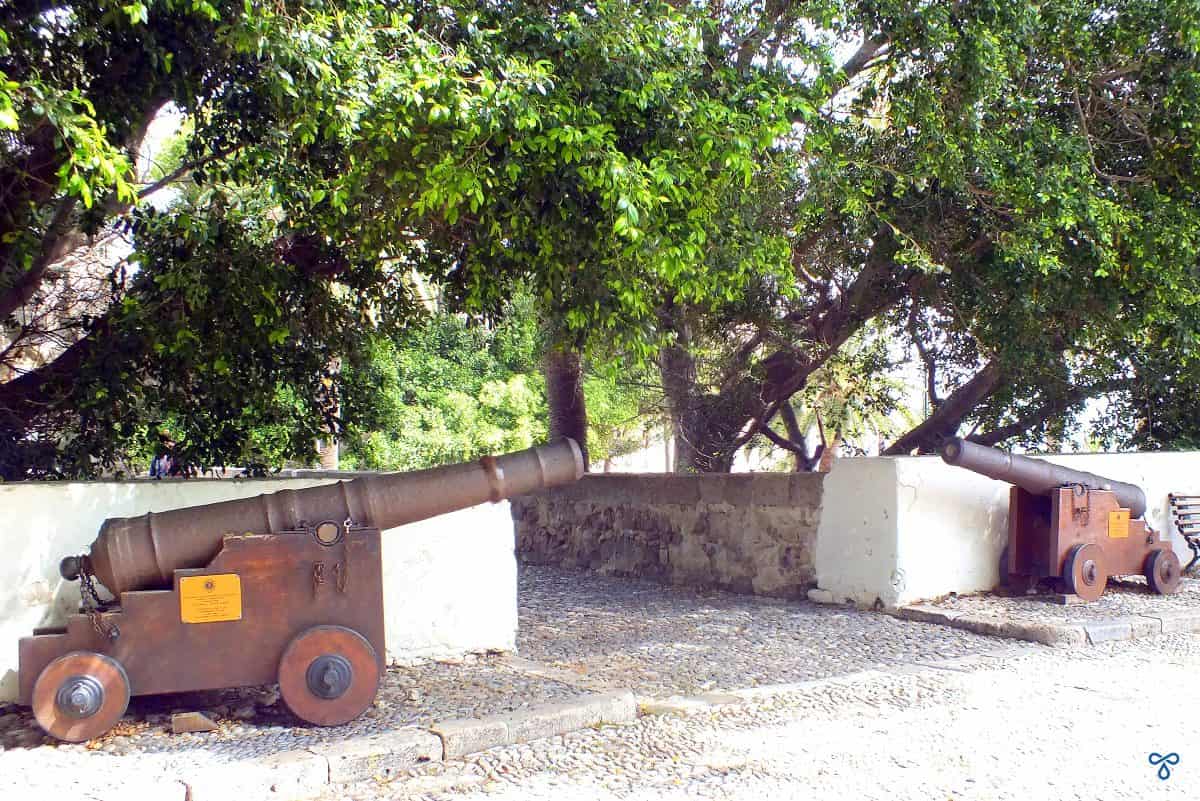
It seems the Knights of St. John were going for surface area rather than height when they constructed this in the 14th Century. It's quite an odd sight.
A 'bungalow castle.'
Neratzia Castle apparently has stunning panoramic views around the harbour and back over to the Turkish coast from the castle walls.
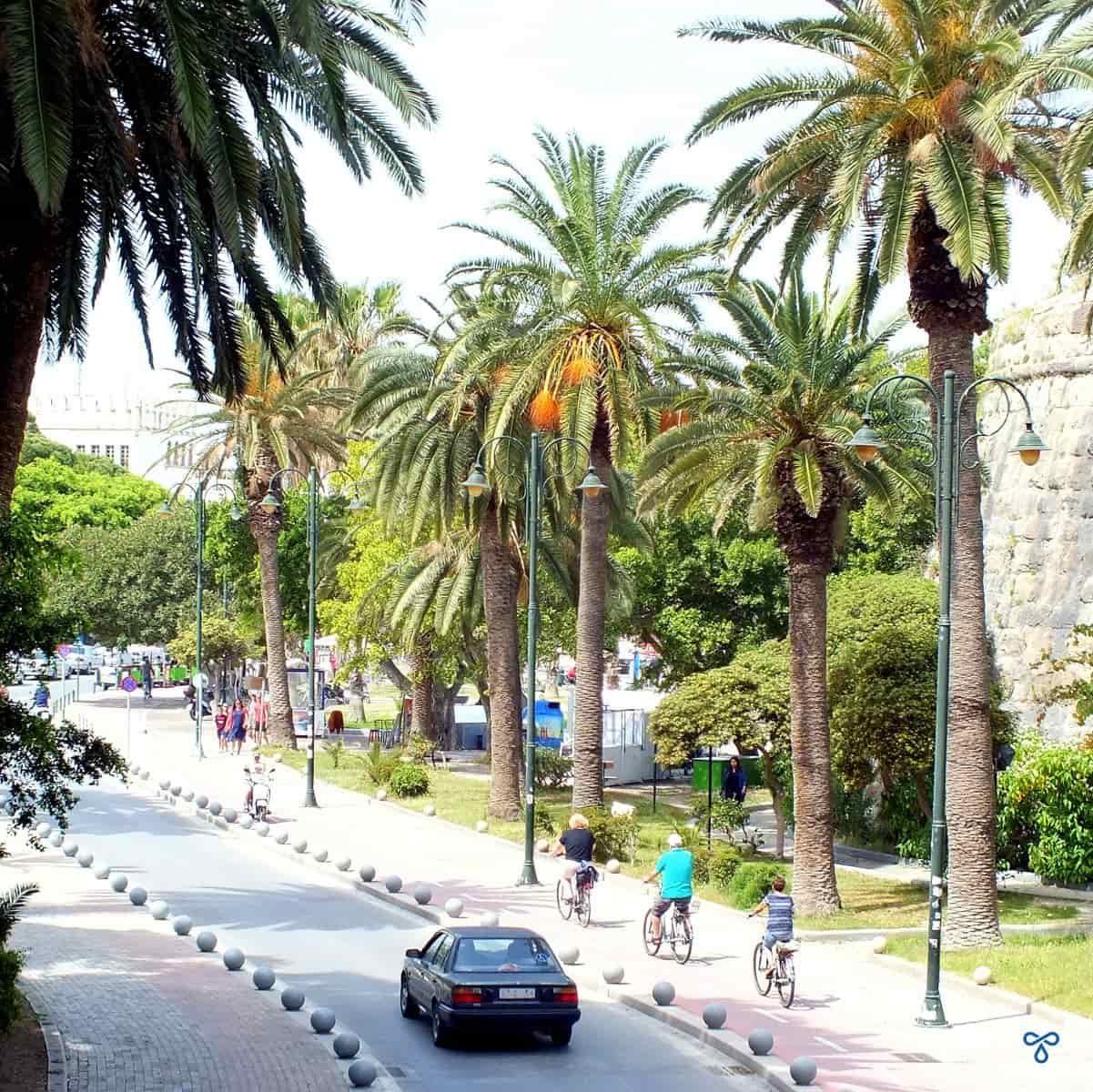
The nearest we got were the not-unpleasant views from the bridge that lead to the castle entrance.
Above is the view of the famous Phoinikon Street - an iconic street in Kos Town because it is lined with palm trees.
Online reviews from 2026 show that the castle is now open to visitors after some restoration.
'Neratzia' is the Greek word for the evergreen bitter orange trees that are planted along streets in Greece (also common in our hometown of Fethiye).
Getting Around Kos Town
When we'd booked the ferry to Kos, we were handed a booklet produced by the Bodrum Ferryboat Association.
Usually, we don't take much notice of these little tourism handouts, but this booklet - Discover Kos In A Day - was actually wonderfully useful!
Obviously, you're not going to see the whole of Kos in a day. More accurate would be 'Discover Kos Town In A Day.' Many of the main attractions.
This part of the island is really flat. So the booklet gives you a choice.

- You can hire cycles and pedal your way around the sights
- Or you can do what we did and follow the historic trail around Kos Town on foot
- And if walking or pedalling isn't going to cut it for you then no need to miss out. You can hop onto the cute train/tram above for a quick tour of Kos Town, too
Anyway, we love ourselves a little amble around the sights on a first visit to somewhere. So we set off along the Kos Town Historical Path...
Strolling The Kos Town Historical Path
Plane Tree Of Hippocrates
Kos is the island of Hippocrates, Father of Medicine. He was born here, on the island, in 460 BC.
After photographing the castle entrance, first stop for us was the plane tree of Hippocrates.
Barry's degree is in Philosophy so this was of special interest to him.
For me, I was more interested that a tree could be so old and still standing!

Well, the plane tree of Hippocrates is indeed still standing. Albeit with the help of metal scaffolding frames supporting its gnarled branches.
And this tree is actually said to be a descendant of the original tree - but it is still an impressive 500 years old.
Over the years, these branches have climbed out at a multitude of angles and it's hard to work out where the original trunk is. Depending on which source you read, the trunk has a circumference - or diameter - of 12 metres, making it the largest plain tree in Europe.
Anyway, whilst the plane tree of Hippocrates can most certainly lay claim to being ancient, of course, the official tale is only that 'legend has it' that Hippocrates would sit under the shade of the tree, teaching his students.
Ahh, lovely to imagine that scene, all the same.
In 2023, a statue of Hippocrates teaching his students was unveiled in the park, next to the plane tree.
Mosque Of Gazi Hasan Pasha (Loggia Mosque)

Close to Hippocrates' plane tree, we come to the 18th Century Mosque of Gazi Hasan Pasha.
This is a bit of Ottoman Kos. And, like Rhodes, evidence of this Greek island's Ottoman past is stark.
The mosque is in a really pleasant setting, though. So it's worth taking a bit of time here to take in the multi-layered history of Kos Town.
And we're glad to read that in 2026, the Gazi Hasan Pasha Mosque is under renovation. It's a beautiful building.
You'll see more of this layered rich history as we take you around the historical trail.
No Real Travel Plans
For now, though, back to our little situation...
We're a bit last minute when it comes to travel plans. We're not ones to sit and think things through and plan, plan, plan.
By now, we'd started to notice lots of padlocks on the doors and gates of various sites.
It was when we were standing and admiring the stonework of this 1786 mosque that the penny dropped. Today was Monday!
It seems, at least on this Greek island, museums etc are closed on Mondays. Same as Turkey!
But we don't do things by halves. Not only was it Monday. It was May Day!
A noisy Labour Day (peaceful) protest taking place along the street. And not a high street shop open!
Not that we had time for all that anyway.
We had a historic trail to follow. And we'd already noticed the 'refreshment stops' were open and in full swing.
Well, the Greek islanders were off work for the day, bar those in hospitality roles of course. So no worries for us as day trippers.
Back to the culture bit, for now...
The Almost-Hidden Ancient Agora Of Kos

Kos might be one of the most popular of the Greek islands for British package holidaymakers.
But much of Kos Town - especially the ancient ruins - feels a bit undiscovered.
Yeah, it was early season when we were there, so there were no crowds to speak of. Maybe that played a part.
This ancient marketplace was the heart of Kos's economic centre and excavations since 1933 have revealed mosaics, commercial buildings, statues, a 5th Century AD Christian basilica and ancient temples dedicated to Aphrodite and Hercules.
One to return to when we have more time.
1933 Earthquake
A huge earthquake on the island in 1933, whilst destroying many of the island's traditional buildings, also revealed various archaeological sites.
And it feels a bit like no one's quite got around to doing too much about them just yet.
The agora, for instance was almost buried under long grasses and spring wildflowers. Ancient columns rising from the undergrowth gave the game away.
That's not a complaint, by the way. It's beautiful.
Some of the ancient sites have ongoing excavations taking place and are well kept.
But we also loved the 'abandoned' feel to other areas.
These are the places we found ourselves lingering for longer.
Time For Reflection
We continued to follow our historic trail around Kos Town. And, although it wasn't mentioned on our little tourist map, we just had to have a peek at the Agnus Dei Catholic Church whose long straight entrance lane had caught our eye.
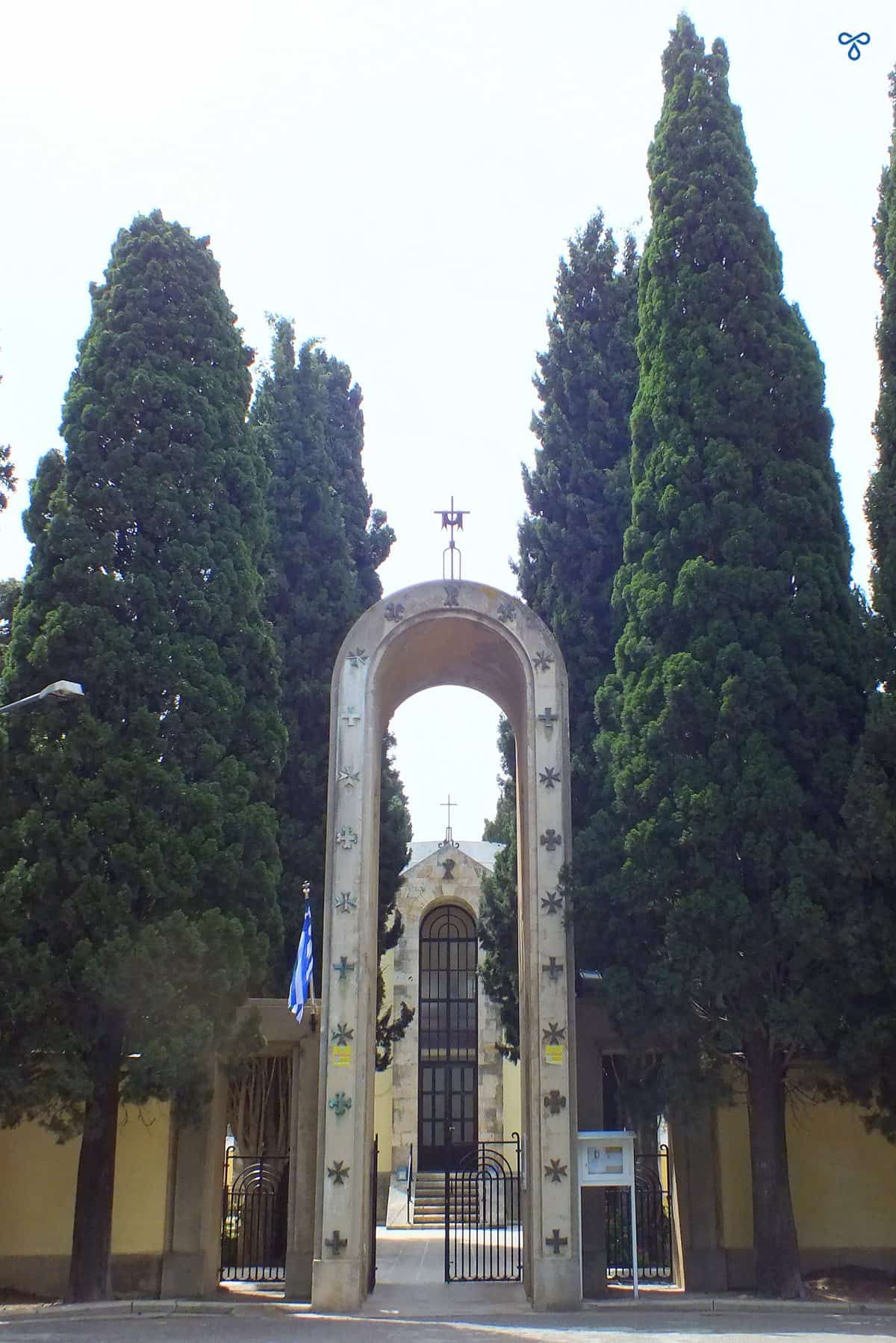
A long straight lane, lined with tall fir trees on either side led us to the gate.
One aspect that really stood out for us in Kos Town was the Italian history.
In the garden of this church is a memorial to Italian soldiers who were executed in Kos by the Nazis in 1943.

Memories of our times in Italy paying respects at the WW2 Commonwealth cemetery in Cassino and the Polish cemetery at the foot of the monastery of Monte Cassino.
Now it was time to take a moment here, too.
The church itself is only small. But, apparently, they do mass in various languages each Sunday so that all who want to go feel welcome.
The Roman Odeon

Close to the church, a little further along the main road is the site of the 2nd Century AD Roman Odeon which would have been used for musical performances.
Statues found at the Roman Odeon are on display at the Kos Archaeological Museum.
We were in Kos Town right at the beginning of the island's tourist season, so we had the theatre to ourselves.
We also passed Casa Romana - a Roman house, too. Closed, of course.
I would love a peek inside there at some point in the future as the outside of it resembles more of a 1980s newly painted warehouse building than a Roman villa.
Inside must be a whole different story, surely?
West Archaeological Site

And now across the road to the West Archaeological site.
Everywhere, vibrant, pretty spring wildflowers were peeping between the ancient stonework of the site.
Many photographs were taken around here. There are relics from Hellenistic, Roman and Byzantine times.
Despite the site being closed, the perimeter wall is low, so we could still see all we wanted to.
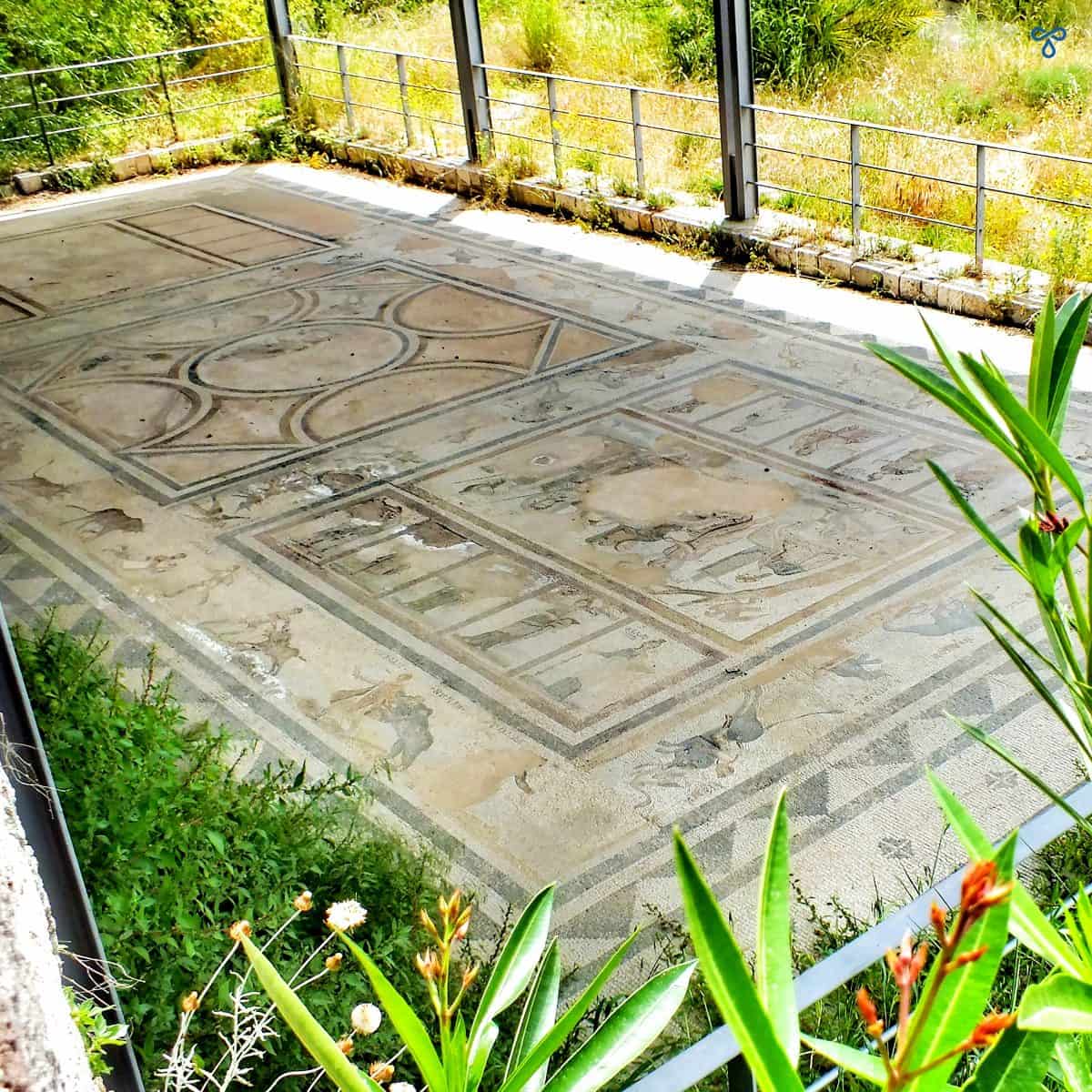
A bit of clambering was necessary to view two of the protected Roman mosaics that have been uncovered. But a little bit of determination meant that we didn't miss out.
The West Archaeological Site is definitely an area we would like to return to explore further.
Residences, baths and mosaic floors from Roman times and a stadium and gymnasium from Hellenistic times amongst lots of other ancient public buildings. This is the ancient city of Kos.
But, as you can imagine, by now, we were feeling a tad hungry and thirsty, ourselves!
Food Time At Diagora Square
Our trail skirted Diagora Square - also called Diagoras Square - but we could see through a little alleyway, stone steps leading to an old minaret - that it looked really pretty.
So we took ourselves off for a closer look.
Perhaps there'd be some places here where we could eat up here?
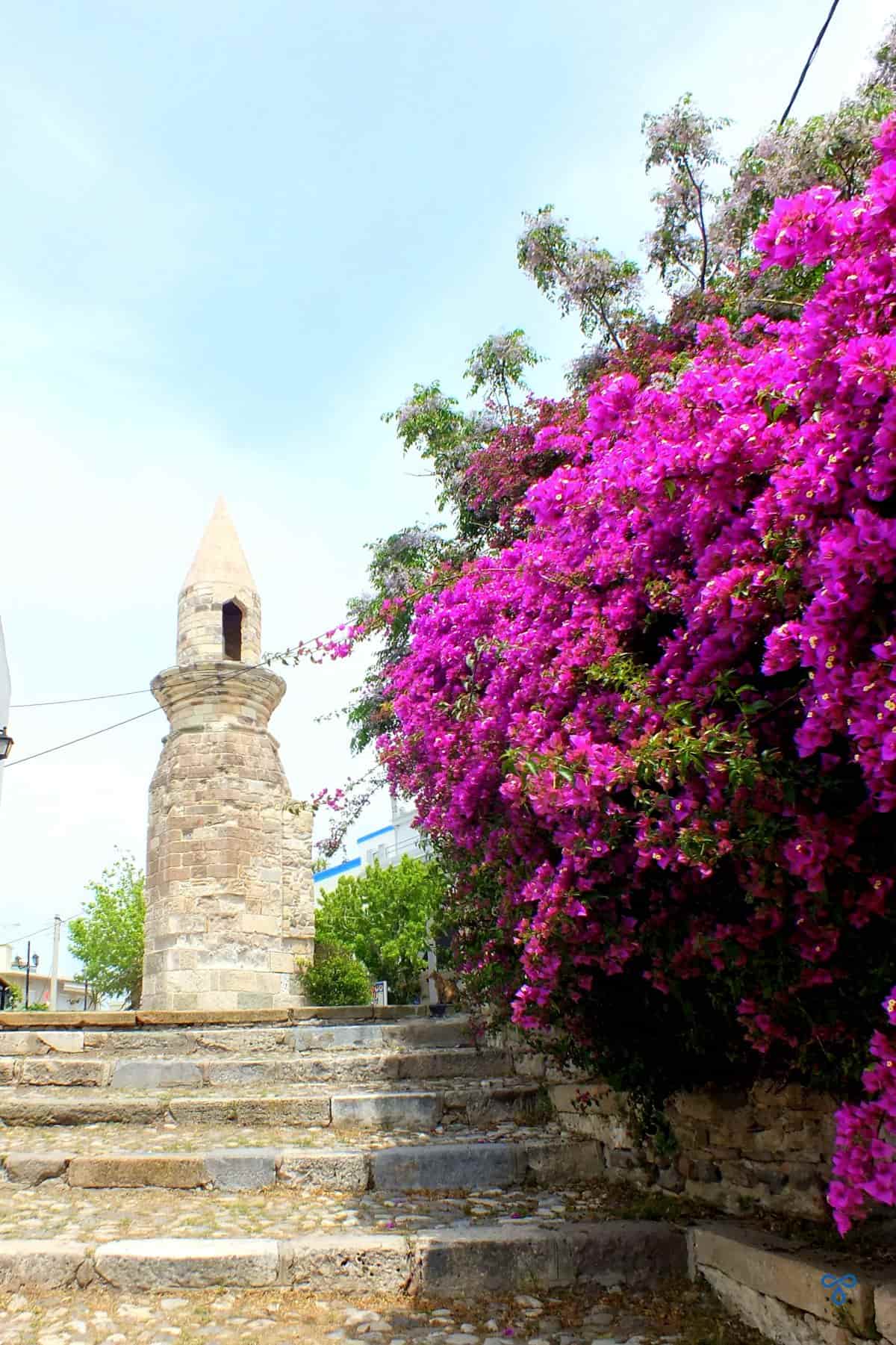
Maps are a guide, not an instruction. Let's explore...
The stone minaret we could see at the top of the bougainvillea-lined steps belonged to the 16th Century Bab Gedid Mosque; the oldest mosque on the island.
It is known today simply as Eski Tzami (Old Mosque). And the minaret is all that is left standing.
That 1933 earthquake, again!

Ahh, and as we passed the minaret, we could immediately see that Diagora Square was indeed very pretty. It was also a small square with restaurants around its edges.
Perfect!
Firmly on the tourist trail (one of the restaurants was called Zorba's). So let's not pretend we're anywhere hidden and secret, here.
But we'd glanced at other places en route and we decided this was our place to eat!
A Feast Of Pork
Now, let us remind you that these two day trippers had arrived from Turkey.
So, what do we do when we hit Greek soil?
In Kastellorizo, it's the huge, homemade pork sausages that tempt!

In Kos Town's Diagora Square, we plumped for the Ambrosia Restaurant and skipped through the menu straight to the pork dishes.
Souvlaki for me. And a huge pork chop for Barry.
I love how Greeks do fried courgettes, too. So that was a perfect little accompaniment. Garlic bread with tapenade was a complimentary bonus.
A lovely ice cold Mythos beer to wash it all down.
And now we were refuelled and ready to wander again.
Neighbours
All the time we were walking around Kos Town, I was checking in online, filling in my little map of travels.
You can see names of other people who have checked into the same places as you. And what was telling was that the vast majority of these names were Turkish.
Of course, that could just mean the islanders of Kos are not big on leaving an online footprint. But it also shows that both the Greeks and Turks make use of the close proximity of Kos and Bodrum.
In Bodrum, that morning, we'd heard lots of 'Kalimera,' (the Greek for 'good morning') greetings.
In Kos, there was lots of 'Merhaba' and 'Hoş geldiniz' (Turkish for 'hello' and 'welcome').
It wasn't just polite pleasantries. There was much familiarity. And it was lovely to observe.
As well as the tourists, there's lots of coming and going, here. These ferries run all year, both ways, and it's a short crossing.
So, why not?
Kos Town Souvenir Shopping

Hmm, yes, if you know us, you'll not be surprised to know that we did no souvenir shopping whatsoever.
However, we do love us an old quarter. And Kos Town has its equivalent of Fethiye's Paspatur or Antalya's Kaleiçi.
From Diagora Square, filled to the brim after our porky lunch, we ambled back via the pretty, narrow streets of old town of Kos.
Various shops selling Kos tea towels, trinkets and other souvenirs galore. Along with a good smattering of bars and restaurants.
If we were staying in Kos Town overnight, we could see ourselves spending a lot of time around this little area.
Bougainvillea and awnings shading shoppers and diners from the sun. And night time must be so atmospheric.
But, we only had a couple of hours left on the island. And we'd spotted a square on arrival that looked ripe for a spot of people-watching...
Eleftherias Square (Freedom Square)
A walk through the old town brought us out on to Eleftherias Square (Freedom Square). And it's here where you feel you really could be sat in an Italian piazza.
After the 1933 earthquake, during the Italian occupation, the fascist party started to rebuild in traditional Italian layout.
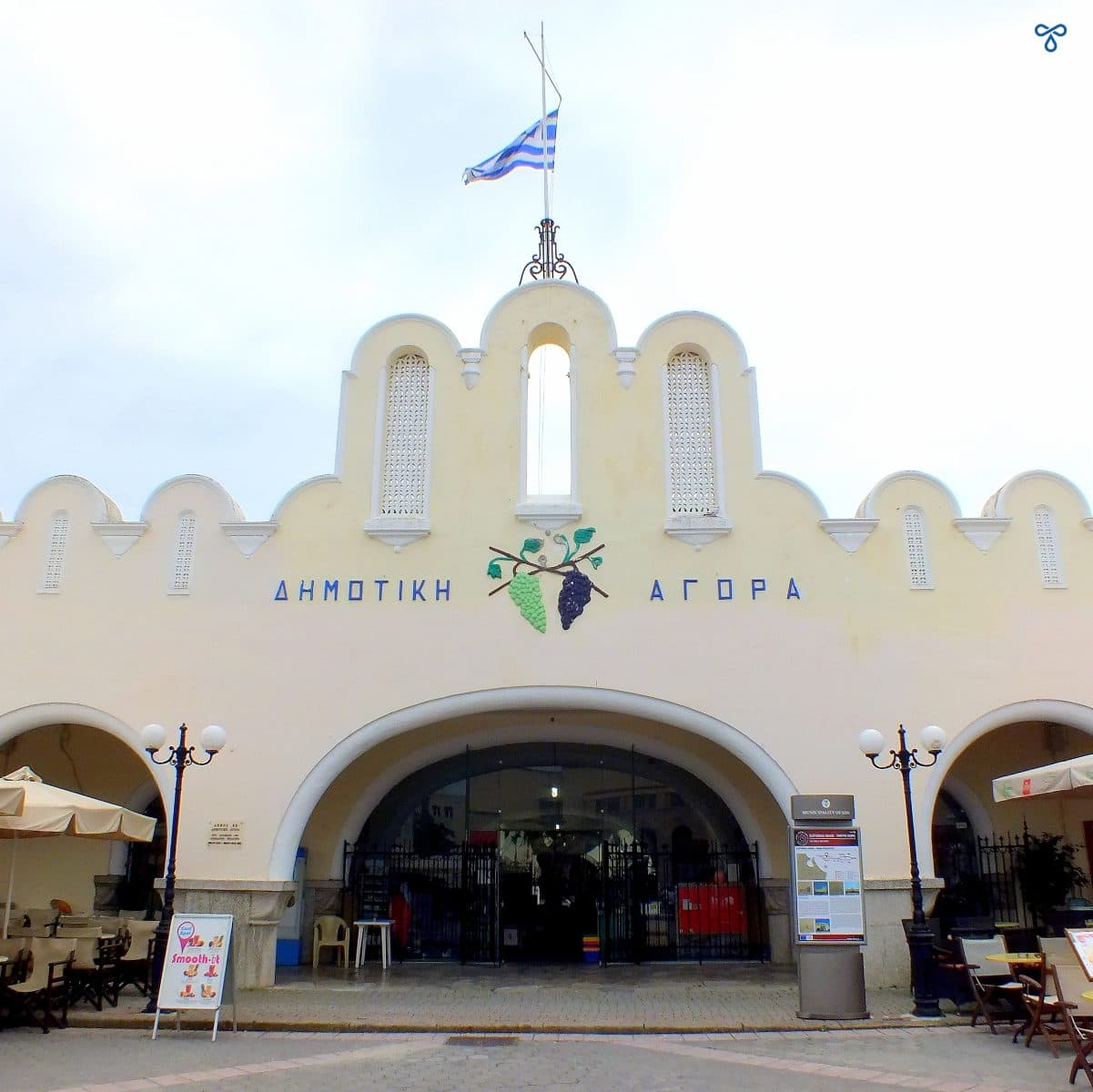
We took our seats on the edge of the main square at a cafe bar housed in the old municipal market hall.
A beautiful building, built in the 1930s in the style of the Italian colonial buildings in North Africa. There's also shopping to be done, here, if that's your thing.

Opposite us in this pretty traffic-free square was the old offices of the Italian fascist party; imposing buildings built very much in the art deco style favoured by the Italians.
Apparently, this building housed a cinema where propaganda films would be played to convert the masses to the fascist way of thinking.
Archaeological Museum
Eleftherias Square is also home to the archaeological museum.
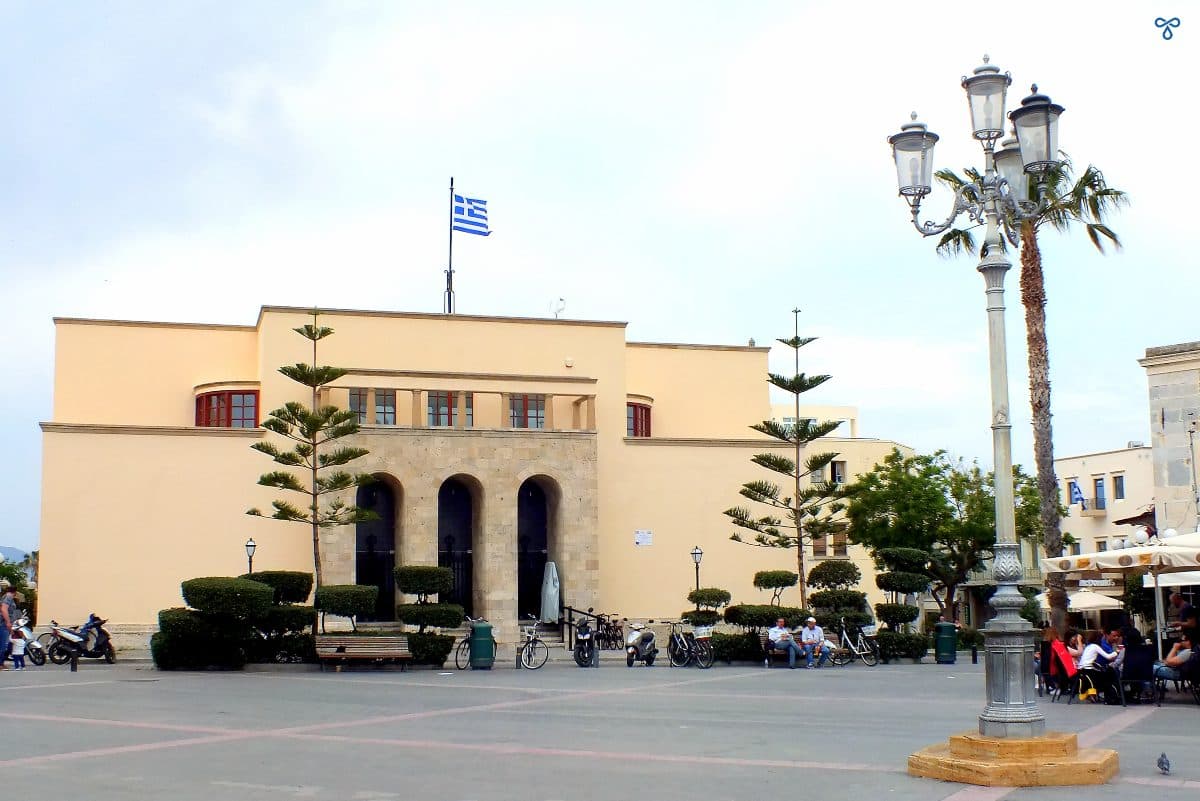
And there's also the 18th century Defterdar Mosque; another of Kos Town's Ottoman mosques, again with cafes surrounding its edges.
Sadly, this mosque has been unable to bear the brunt of earthquakes that have hit the island and has undergone various restorations.
Our photo is from May 2017. A few weeks later, on 21st July, Defterdar Mosque was once more badly damaged in the earthquake that hit the island. The minaret toppled.

According to this Wikipedia article, however, restorations were once more completed in June 2026.
As we said, the Italian and Ottoman influence in Kos Town is very much there for all to see - various architectural styles.
A Greek church, Greek flags and a few Kos locals sat in cafes drinking Greek frappe reminded us that we were indeed in Greece.
Bring your camera. Eleftherias Square is definitely photogenic. And the heart of Kos Town!
From Kos To Bodrum
A couple of Mythos beers as we watched the world go by in Eleftherias Square. And then it was time to head back to the Bodrum ferry.
We'd loved our little taster visit to Kos. And we definitely want to see more, as well as visit many more other Greek islands, too.

We left one Knights of St John castle behind in Kos Town and arrived to another, perhaps Bodrum's most famous landmark.
A great day in another country, Greece.
Now time to enjoy Turkey again...
Bodrum To Kos Ferry – FAQ
Prices vary by season and operator. But expect to pay around €25–€40 for a same-day adult return. Fares tend to rise in peak summer months, so it's worth checking directly with the ferry company before you travel.
At the time of writing, UK and most Western passport holders don't need a visa for a short visit. You'll need a valid passport (and residency permit, if you're a Turkey resident like us).
Two border changes are worth knowing about for 2026: the EU's new Entry/Exit System (EES) - fingerprint and facial biometrics at passport control - is now in place.
Also ETIAS, a small pre-travel authorisation (expected to cost around €20), is due to launch later in 2026, though its start date has already slipped more than once. Check the official ETIAS site closer to your travel date rather than relying on this (or any other) blog post.
Book at least a day ahead. There's no reliable walk-up ticket on the day. We booked directly with the Bodrum Ferryboat Association; their office is on the harbour, just past the castle entrance.
Around 45 minutes on the regular ferry. A faster catamaran also runs, but also costs a bit more. And departs from the cruise port rather than the old harbour.
The Bodrum ferry to Kos runs daily in high season. But it's always best to check out the latest schedules by the local ferry operators - especially in low season.
We got around 5 hours, which was ample for the historic trail, lunch, and time to sit and people-watch. You won't see the whole island, but Kos Town itself is very manageable in a day.
The main sites and museums are closed on Mondays, same as in Turkey. If it's your first visit and you're happy following the historic trail and viewing things from the outside, like we did, Monday can work in your favour, as it's usually quieter.
Other Useful Info
- Already done Kos? In high season, you can also reach Kalymnos, Leros and Patmos from the Bodrum Cruise Port.
- Kos is part of the Dodecanese group of Greek islands. We have also had short breaks on other Dodecanese islands:
- Travel to Rhodes Town from Bodrum, Marmaris or from Fethiye on the Fethiye to Rhodes high speed ferry
- Explore Meis (Kastellorizo) by making the short crossing from Kaş on the Kaş Meis ferry
- And both Symi and Halki are easily accessible from Rhodes
The Roman house is well worth a visit. Zero Cafe Bar just off the seafront is fabulous for fresh orange and a large range of Greek craft beers, all served by the friendly and knowledgeable Kostas. We visit every time we stay on Kos.
Hi Lesley, thanks a lot for your comment. We're very much due a return to Kos and will stay for longer next time. Greek craft beers sound appealing! 🙂
Hey I'm just asking what the price to travel from bodrum to kos for the day return? And u need visa to go kos?
No visa needed for Kos at the moment. The price (for last year) from Bodrum to Kos is in the information section. It might be different this year but not too much. 🙂
really nice posting and lots of good stuff.
Thanks a lot, Alan. Looking forward to more Kos (and beyond) visits in the future. 🙂
Sounds like an awesome introduction to the island! We're excited to be heading out on a 2-week cruise through the Dodecanese at the beginning of July, and are in the process of sourcing self-guided walking tours on each of the islands. We'll definitely take heed of your "Monday museum closures" reminder, and alter our agenda accordingly.
Wishing you continued safe and happy travels!
Sue & the Crew
Sue F. Well Kos Town is easy enough to get around in self-guided walking fashion. Love the Dodecanese. Kos is so green. Have a great cruise. 🙂